



Is Putin moving to reshape power in Türkiye and Ukraine?
NATO’s Ankara summit, Trump’s Türkiye move and new praise for Erdoğan raise a strategic question: Is the West trying to block a Russian regional play?



Yusuf Inan
Journalist and Author | Political and Strategic Analyst
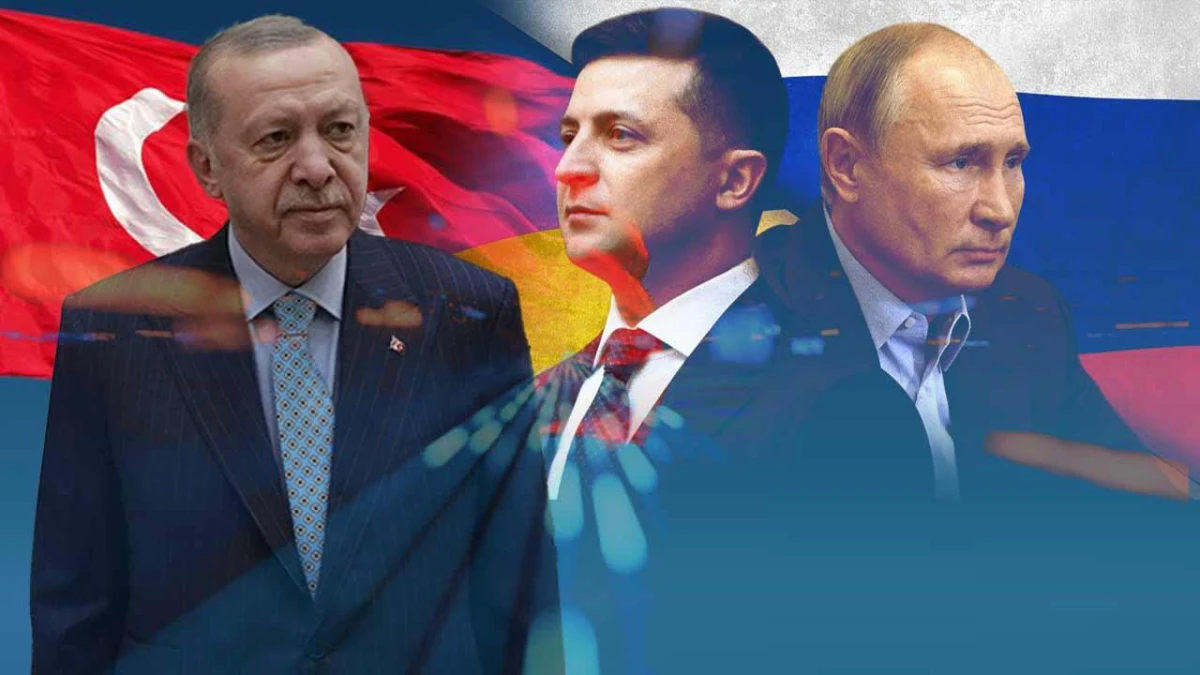
ANKARA, TÜRKİYE — NATO’s sudden focus on Türkiye and President Recep Tayyip Erdoğan ahead of the Ankara summit has raised a difficult question: Did Western capitals see a larger Russian move coming?
There is no publicly verified document proving that Russian President Vladimir Putin has launched a direct plan to change power in Türkiye or Ukraine. Yet a chain of developments across Ankara, Washington and Europe has made one question unavoidable: What did the West see that suddenly pushed Türkiye and Erdoğan back to the center of NATO’s calculations?
Ahead of the NATO summit expected in Ankara on July 7-8, Erdoğan’s emphasis on “unity and resilience,” his demand for the removal of defense trade restrictions against Türkiye, and his call for Ankara to be included more deeply in European security initiatives all suggest that this is not an ordinary alliance meeting.
Is the Ankara summit an ordinary NATO meeting?
NATO summits are often political photographs of an alliance’s direction. But the Ankara summit carries a heavier meaning in the current environment.


The Russia-Ukraine war continues. Europe is uncertain about the future role of the United States in NATO. New crises are growing in the Middle East through Iran, Israel, the Gulf and energy corridors. Black Sea security, Crimea, the Turkish Straits and the Montreux balance have returned as strategic issues.
In such an atmosphere, holding a NATO leaders’ summit in Türkiye cannot be reduced to simple host-country protocol. Ankara stands out as NATO’s southeastern pillar, the gate to the Black Sea, the alliance member that can still speak to Russia, and a country that has played a balancing role in the Ukraine war.
That is why the recent change in Western tone toward Türkiye is striking. NATO allies appear to have rediscovered Ankara’s strategic weight after Russia’s full-scale invasion of Ukraine.


Is the West praising Erdoğan, or afraid of losing Türkiye?
The recent increase in praise directed at Erdoğan has become too visible to be explained only as diplomatic courtesy.
European capitals may see Türkiye and Erdoğan as a balancing force at a time when Trump-era unpredictability could create new tensions inside NATO. Erdoğan is one of the few leaders who can speak directly with Trump, keep channels open with Russia, maintain relations with Ukraine and remain inside NATO at the same time.
This raises the central question:
Has the West truly rediscovered Erdoğan, or is it afraid of the strategic vacuum that could emerge in an Erdoğan-less Türkiye?
Türkiye does not have to formally leave NATO for such a risk to appear. A more subtle danger exists: Türkiye may remain inside NATO but move away from the West in its decisions; it may draw closer to Russia, Iran or China on certain strategic files; it may stop following the line expected by the West in the Black Sea and Ukraine equation.
For Western capitals, that may be the real nightmare scenario.
Are Erdoğan and Zelenskyy obstacles to Putin’s peace design?
For Russia, one of the most critical questions in the Ukraine war is not only how the war ends, but under what political conditions peace is signed.
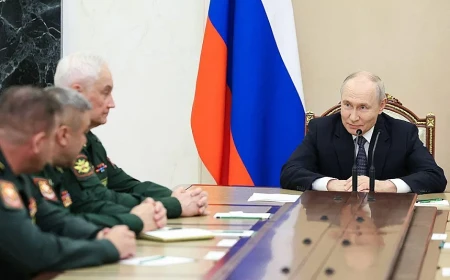
Moscow does not want to sit at the table before securing the result it wants on the battlefield. Yet the longer the war continues, the higher the cost grows for Russia. That means Putin’s goal may not be limited to military advances. He may also want to shape the political actors who will sit at the peace table.
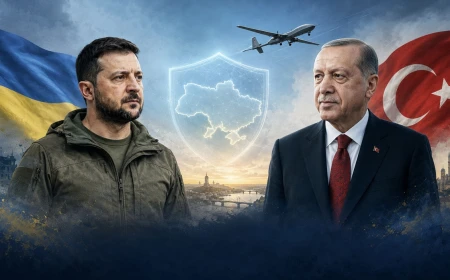
At this point, two names matter: Erdoğan and Zelenskyy.
Zelenskyy is seen as the wartime leader unwilling to step back from Ukraine’s territorial integrity. Erdoğan, meanwhile, has repeatedly emphasized Ukraine’s sovereignty over Crimea and has not allowed Russia unlimited room in the Black Sea balance.
If Moscow wants a peace arrangement in which Crimea and occupied territories are effectively accepted in Russia’s favor, it may calculate that resistance will come from both Kyiv and Ankara.
This is where the hardest question being discussed in diplomatic circles begins:
Would Putin prefer a Ukraine without Zelenskyy and a Türkiye without Erdoğan in order to build peace on his own terms?
This is not a proven claim. But as a strategic question, it can no longer be ignored.
A post-Zelenskyy Ukraine and a post-Erdoğan Türkiye
In Ukraine, reports about former Commander-in-Chief Valerii Zaluzhnyi’s possible candidacy have accelerated discussions about the country’s postwar political order. If a figure with high military prestige comes forward instead of Zelenskyy, the face of wartime resistance, this would not be just an electoral issue.
It would be about who receives the seal of peace.
Similarly, the “after Erdoğan” debate in Türkiye is not merely an internal AK Party succession question. Türkiye’s place in NATO, its relationship with Russia, the Iran file, Crimea policy, the Black Sea balance, defense industry power and bargaining position with the West are all directly tied to that debate.
That is why leadership discussions in Türkiye and Ukraine emerging in the same period may have alarmed Western capitals.
If two critical actors face political transition at the same time, Russia’s hand at the peace table could become stronger.
What does Trump’s KAAN engine move mean?
In this atmosphere, the Trump administration’s defense move toward Türkiye has also drawn attention.
According to reports, the Trump administration notified Congress of a package worth more than $700 million for the sale of General Electric engines to be used in Türkiye’s domestically developed KAAN fighter jet. The move has been interpreted as a strategic opening toward Türkiye and Erdoğan ahead of the NATO summit.
This is especially meaningful after the F-35 crisis. Türkiye was removed from the F-35 program over the S-400 issue. Now Washington is opening a new defense door to Ankara through KAAN engines.
This may carry a clear message:
“We do not want to lose Türkiye to Russia. We want to keep Ankara inside the Western defense chain.”
Expectations that Trump may announce a major gesture toward Erdoğan should also be read in this framework. Great powers use praise, protocol and defense agreements at the same time during critical periods.
Why is Europe turning toward Türkiye’s defense industry?
Türkiye’s defense industry capacity is another reason behind the West’s renewed attention.
Türkiye is no longer viewed only as one of NATO’s largest military powers in terms of troop numbers. With drones, combat UAVs, electronic warfare, air defense, land systems and ammunition production, Türkiye has become an actor that Europe must include in its defense planning.
For the West, losing Türkiye would therefore not mean merely losing a diplomatic partner.
It would mean losing production capacity, Black Sea leverage, Middle East access, energy routes and a potential defense industry partner.
This is why the recent Western interest in Türkiye must be read beyond summit protocol. It is part of a broader security calculation.
What move may have alarmed NATO and Europe?
Three possibilities may lie at the center of NATO and Europe’s anxiety.
First, Russia may be seeking a post-Zelenskyy political equation in Kyiv in order to shape peace in Ukraine on its own terms.
Second, the “after Erdoğan” debate in Türkiye may be making Ankara’s strategic direction appear uncertain.
Third, Russia, with the support or alignment of actors such as Iran and China, may be trying to use weak points inside the Western alliance to build a new regional order.
When these three possibilities are read together, the sudden Western focus on Erdoğan and Türkiye becomes easier to understand.
The NATO summit in Ankara, Trump’s KAAN engine move, Europe’s interest in the Turkish defense industry and the rising praise for Erdoğan should be viewed as parts of the same picture.
All of this may suggest that the West is afraid of losing Türkiye.
Who opened the door that Moscow thinks it saw?
Perhaps the real knot lies in this question:
What door did Putin see opening inside Türkiye that made such a regional calculation seem possible? Who gave Moscow the impression, in what language or through what signal, that a post-Erdoğan Ankara could be pulled onto a different line?
If the Kremlin believes Erdoğan’s resistance on Crimea and Ukraine’s territorial integrity can be bypassed, did it reach that belief only through its own imagination? Or did it read a whisper from inside Ankara?
This question is not only for Türkiye. It should also concern the Zelenskyy administration, NATO leaders and Washington. Sometimes the most dangerous shifts do not begin on the front line, but with quiet assurances given in capitals.
Conclusion: Putin’s move or the West’s preemptive reflex?
Today, there is no open document that proves the sentence: “Putin has moved to change power in Türkiye and Ukraine.”
But there is a strategic reality.
Russia could find it easier to impose the peace it wants in Ukraine if Kyiv’s political equation changes. As long as Erdoğan’s line continues in Türkiye, Moscow’s room for maneuver on Crimea, the Black Sea and Ukraine’s territorial integrity remains limited. The West, meanwhile, does not want to lose Türkiye’s place inside NATO, its defense industry strength, or Erdoğan’s balancing role.
That leads to the real question:
Did NATO and Trump see Putin’s larger move?
Or did they act early to prevent leadership debates in Türkiye and Ukraine from producing results in Russia’s favor?
The answer is not yet clear.
But the picture ahead of the Ankara summit shows one thing:
Türkiye is no longer only NATO’s host. It is a central piece on the new geopolitical chessboard. Erdoğan is not viewed merely as a leader in this equation, but as the main political seal determining Türkiye’s direction.
If the West is now valuing Erdoğan more loudly, it may not be because it loves Erdoğan.
It may be because it fears the shadow it sees in an Erdoğan-less Türkiye.
WiseNewsPress.com
What's Your Reaction?
 Like
0
Like
0
 Dislike
0
Dislike
0
 Love
0
Love
0
 Funny
0
Funny
0
 Wow
0
Wow
0
 Sad
0
Sad
0
 Angry
0
Angry
0

Editor | Wise News Press — Delivering accurate, timely global news with integrity, insight, and editorial responsibility.












Comments (0)