



Artificial Intelligence Redefines Vision: The Era of Personalized Smart Lenses
Assoc. Prof. Dr. Uğur Ünsal explains how AI-designed intraocular lenses are setting new standards in cataract and refractive surgery, offering clearer vision and rapid recovery.


WISE NEWS PRESS / ANKARA, TURKEY — DEC 16, 2025
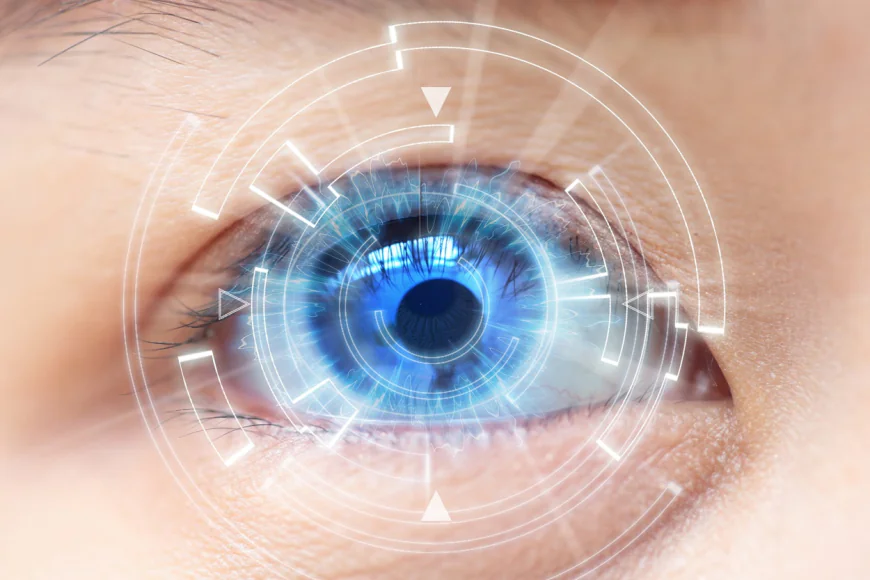
As digital medicine accelerates, the treatment of eye diseases is undergoing a significant transformation. New generation intraocular lenses, produced using artificial intelligence-supported design techniques, are emerging as a game-changer for both cataract treatment and patients seeking freedom from glasses.
Assoc. Prof. Dr. Uğur Ünsal, an Ophthalmology Specialist at Batıgöz Health Group, highlights that advanced optical surfaces in "smart lenses" are no longer developed solely through computer simulations but are now optimized using AI algorithms trained on big data sets.
Trifocal Lenses: Seamless Vision at All Distances
The new technology is setting higher standards, particularly in trifocal (multi-focal) lenses. Dr. Ünsal explains the practical benefits:
“Trifocal lenses allow patients to see clearly at different distances—whether looking at a computer screen, a car dashboard, or reading a book—all through a single lens. With the optimization provided by next-generation technology, contrast sensitivity has been significantly increased compared to previous generations.”
Galaxy Lenses: Personalized Optical Technology
One of the most notable innovations is the "Galaxy lens," where the optical surface is reshaped at the micro-level. In these lenses, AI determines the surface form by referencing both light distribution and the eye's natural anatomical structure.


“In Galaxy lenses, the projection of light onto the retina is much more stable,” Dr. Ünsal notes. “This results in cleaner images in both day and night conditions. These lenses produce effective results, especially for patients who experience glare problems or demand high visual comfort.”
A 15-Minute Procedure with Rapid Recovery
Dr. Ünsal emphasizes that surgical techniques have modernized alongside lens technology. Intraocular lens operations are now minimally invasive procedures performed under drop anesthesia.
“These operations take only 10–15 minutes, and the recovery time is remarkably fast,” says Dr. Ünsal. “Patients can return to their daily life activities on the same day. With modern lenses, this comfort is elevated to the maximum level in terms of visual quality.”


Customizing Vision to Lifestyle
Dr. Ünsal stresses that eye structure, professional habits, and digital screen usage time are decisive factors in choosing the right lens.
“Every patient's eye anatomy and life expectations are different. Therefore, we always plan a personalized lens strategy,” he explains. “While a trifocal lens fits some patients better, others may find a more natural visual experience with lenses that provide Extended Depth of Focus (EDOF). AI technology is now essential from lens design to surgical planning.”
What's Your Reaction?
 Like
0
Like
0
 Dislike
0
Dislike
0
 Love
0
Love
0
 Funny
0
Funny
0
 Wow
0
Wow
0
 Sad
0
Sad
0
 Angry
0
Angry
0

Editor | Wise News Press — Delivering accurate, timely global news with integrity, insight, and editorial responsibility.

















Comments (0)