



Ukraine dismisses Prosecutor General Kravchenko amid NABU-SAP clash
Ukraine removed Prosecutor General Ruslan Kravchenko after a corruption scandal, a confrontation with NABU and SAP, and a controversial trip to France.


By Ahmet Taş | Wise News Press
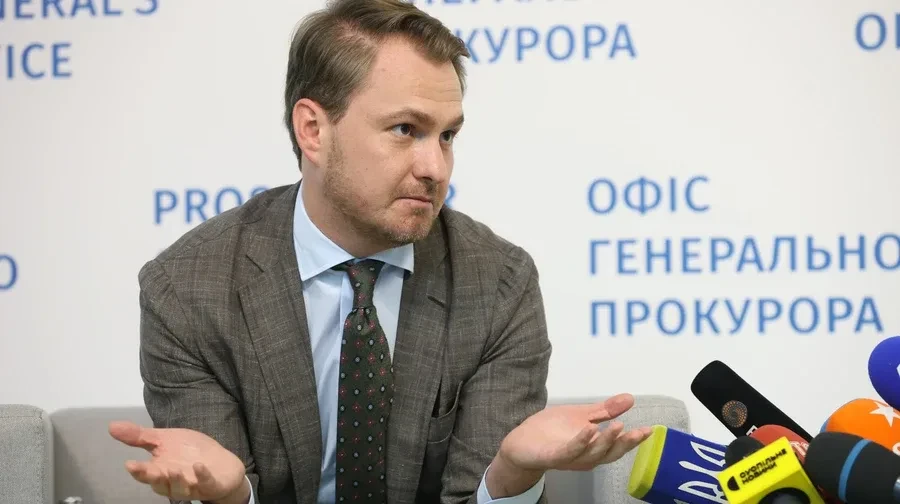
KYIV, UKRAINE — Ukraine has dismissed Prosecutor General Ruslan Kravchenko after parliament backed his removal by 317 votes amid a widening confrontation involving the country’s anti-corruption institutions.
President Volodymyr Zelenskyy formally dismissed Kravchenko on September 15 after the Verkhovna Rada approved the move with 317 votes in favor, none against and none abstaining. A day earlier, Zelenskyy had suspended him from office.
The political crisis developed alongside an investigation by the National Anti-Corruption Bureau of Ukraine, or NABU, and the Specialized Anti-Corruption Prosecutor’s Office, or SAPO, into an alleged criminal organization involving a senior official at the Prosecutor General’s Office. Kravchenko denied involvement in wrongdoing.
Parliament backed Kravchenko’s dismissal by 317 votes
The Verkhovna Rada considered presidential proposal No. 16064 on September 15.
Official voting records show 317 lawmakers supported consent for Kravchenko’s dismissal, with no votes against and no abstentions. Twenty-three lawmakers present did not vote.


Zelenskyy subsequently signed decree No. 932/2026 removing Kravchenko from the post of prosecutor general. The previous day, presidential decree No. 905/2026 had suspended him.
Kravchenko had submitted a resignation request on September 7 after meeting Zelenskyy, according to Suspilne. Because Ukraine’s constitution requires parliamentary consent for the president to dismiss the prosecutor general, he technically remained in office until the formal procedure was completed.
Operation Carthage intensified pressure on the Prosecutor General’s Office
The crisis was closely linked to an anti-corruption investigation known as Operation Carthage.


NABU and SAPO announced that investigators had uncovered an alleged criminal organization whose members systematically received illicit payments from fraudulent call centers and laundered proceeds through property and other assets.
According to NABU, the suspected organizer was a senior official heading a structural unit of the Prosecutor General’s Office. Investigators said prosecutors and other associates were allegedly recruited into the organization.
Suspilne identified the official under investigation as Serhii Kropyva, a deputy head of a department at the Prosecutor General’s Office. It reported that investigators alleged Kropyva had close personal and professional ties with Kravchenko.
Kravchenko dismissed Kropyva and denied any involvement in the alleged protection of fraudulent call centers or laundering of criminal proceeds. NABU’s public announcement did not identify Kravchenko himself as a suspect in Operation Carthage.
Kravchenko turned his accusations toward NABU and SAPO
On September 14, while his resignation process was still pending, Kravchenko announced that he had signed notices of suspicion concerning NABU Director Semen Kryvonos and another person whom he described as close to SAPO chief Oleksandr Klymenko.
Kravchenko accused Kryvonos of offenses involving alleged document falsification and improper benefit. He also made allegations concerning influence over judges and other conduct involving the second individual. These were Kravchenko’s allegations, not findings of guilt.
NABU and SAPO rejected Kravchenko’s interpretation and described his move as a reaction to Operation Carthage and an attempt to politicize their work.
Kryvonos said he had not received a formal notice of suspicion. Suspilne later reported that the Prosecutor General’s Office itself said no person had been formally notified of suspicion in accordance with the legally required procedure and that the announced notices therefore had no legal effect.
The dispute highlighted an already tense relationship between Ukraine’s traditional prosecutorial system and the institutions created to investigate and prosecute high-level corruption.
The France trip fueled speculation, but claims that he ‘fled’ are unproven
Kravchenko’s departure from Ukraine became another major element of the controversy.
Suspilne, citing government sources, reported that Kravchenko signed his own order for a five-day official trip to Paris beginning September 13. The Prosecutor General’s Office confirmed that he had traveled to France and said the purpose was participation in a hearing connected with the Parliamentary Assembly of the Council of Europe.
However, PACE’s press service later told Suspilne that neither Kravchenko nor his representatives would participate in the Parliamentary Network on the Situation of the Children of Ukraine meeting. The official PACE calendar confirms that the network had a meeting scheduled for September 16.
That discrepancy generated speculation in Ukrainian media and politics about the purpose of his departure.
Still, describing Kravchenko as having “fled Ukraine” is not an established fact. The Prosecutor General’s Office characterized the journey as an official business trip. Ukraine’s State Border Guard Service told Suspilne that it could not disclose an individual’s border-crossing information but said people are processed at checkpoints based on documents granting a legal right to cross.
No cited official decision has established that Kravchenko illegally left Ukraine or was a fugitive.
Zelenskyy moved quickly after the confrontation escalated
The dispute with NABU and SAPO prompted a rapid political response.
On September 14, Zelenskyy publicly said Kravchenko had only one path left — dismissal — and called on parliament to approve his removal without delay, according to Suspilne. The president then suspended Kravchenko from office.
Parliament voted the following day, and Zelenskyy signed the final dismissal decree on September 15.
The sequence brought Kravchenko’s tenure to an abrupt end after a period in which the Prosecutor General’s Office and anti-corruption agencies had increasingly traded allegations about investigations, institutional independence and possible interference.
NABU and SAPO have maintained that their Operation Carthage investigation is a criminal case concerning alleged corruption within the Prosecutor General’s Office. Kravchenko, before his dismissal, argued instead that the anti-corruption agencies were attempting to gain access to cases involving their own leadership and staff.
Neither interpretation should be treated as proven beyond the evidence established through the relevant investigations and court proceedings.
What happens next
Kravchenko’s dismissal does not end the underlying criminal investigations.
NABU says Operation Carthage concerns an alleged organization that received improper payments connected to fraudulent call centers and laundered resulting assets. Investigative and judicial proceedings in that case continue.
Questions also remain over the allegations Kravchenko raised against senior anti-corruption officials. Whether any of those claims develop into valid criminal proceedings will depend on subsequent actions by legally authorized investigators and prosecutors.
The government must meanwhile address the question of who will lead the Prosecutor General’s Office next.
The appointment is politically significant because the prosecutor general holds important procedural powers in cases involving senior officials and members of parliament, while relations between the Prosecutor General’s Office, NABU and SAPO remain closely watched by Ukrainian civil society and international partners.
For now, the verified record is narrower than some of the most dramatic descriptions circulating online: Kravchenko submitted his resignation, traveled to France under an order described by his office as an official assignment, announced disputed accusations against anti-corruption officials, was suspended by Zelenskyy and was then formally dismissed after a 317-vote parliamentary decision.
WiseNewsPress.com
What's Your Reaction?
 Like
0
Like
0
 Dislike
0
Dislike
0
 Love
0
Love
0
 Funny
0
Funny
0
 Wow
0
Wow
0
 Sad
0
Sad
0
 Angry
0
Angry
0

Ahmet Taş is a journalist, editor and Turkey Office Manager of the Wise News Press Media Group. He works across news, digital media and international publishing, focusing on accurate, responsible and accessible journalism. He contributes to the development of media projects that bring important political, social and global developments to a wider international audience.











Comments (0)