



Ratko Mladic, convicted over Srebrenica genocide, dies in The Hague
Ratko Mladic, the former Bosnian Serb military commander convicted of genocide at Srebrenica and other wartime crimes, has died in The Hague aged 84.


By Ahmet Taş | Wise News Press
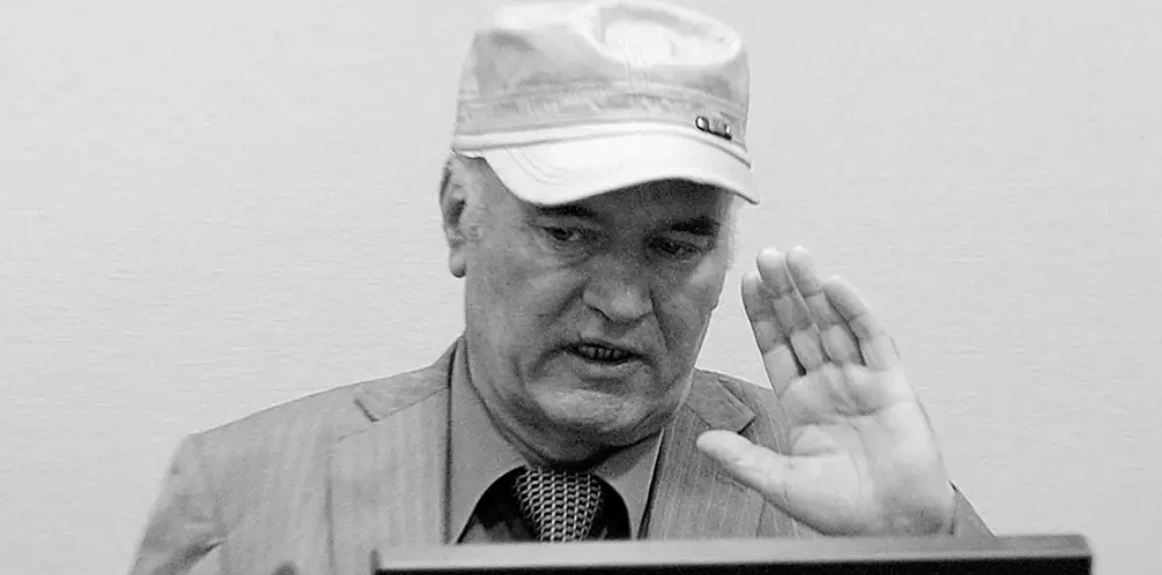
THE HAGUE, NETHERLANDS — Ratko Mladic, the former Bosnian Serb military commander convicted of genocide for his role in the 1995 Srebrenica massacre and of other crimes committed during the Bosnian War, has died at the age of 84 while hospitalised in The Hague.
The United Nations tribunal mechanism confirmed Mladic's death on Thursday, saying Dutch authorities had begun the standard procedures required under national law and that a full inquiry had been ordered into the circumstances surrounding his death. Mladic had been serving a life sentence following convictions for genocide, crimes against humanity and war crimes.
Known widely as the “Butcher of Bosnia,” Mladic commanded the Bosnian Serb Army during the 1992-1995 war and became one of the most notorious figures of the conflicts that followed the breakup of Yugoslavia.
UN tribunal confirms Mladic died at 84
Initial reports of Mladic's death came from Serbian media before officials linked to the United Nations judicial system confirmed that he had died while hospitalised in The Hague.
The International Residual Mechanism for Criminal Tribunals said Mladic died on August 27 while under UN custody. Judge Graciela Gatti Santana, president of the Mechanism, ordered a full inquiry into the circumstances of the death, with Judge Iain Bonomy assigned to conduct it. Dutch authorities also began the standard procedures required under Dutch law.


Mladic had suffered from serious health problems in recent years. His legal team and family had repeatedly sought his release or transfer on medical grounds, but those efforts did not lead to his return to Serbia.
The UN mechanism said that at the time of his death he was awaiting transfer to a state where the remainder of his life sentence would have been enforced.
No final cause of death was immediately announced.


Convicted for the Srebrenica genocide
Mladic's name is inseparable from the July 1995 Srebrenica genocide.
Bosnian Serb forces under his command captured the UN-declared “safe area” of Srebrenica in eastern Bosnia and Herzegovina. In the days that followed, more than 8,000 Bosniak Muslim men and boys were killed.
International courts later determined that the killings constituted genocide.
The massacre became the deadliest atrocity in Europe since World War II and remains one of the defining crimes of the Bosnian War.
Mladic was accused of playing a central role in the military operation and in the system that separated Bosniak men and boys from women, children and elderly people before thousands were executed.
The killings were followed by efforts to conceal the crimes, including moving victims' remains from primary graves to secondary mass graves. The identification of victims has continued for decades.
Sarajevo siege was also central to his conviction
Srebrenica was not the only crime for which Mladic was prosecuted.
The UN tribunal also held him responsible for crimes committed during the siege of Sarajevo, where Bosnian Serb forces subjected the capital to years of shelling and sniper attacks.
The siege lasted from 1992 until 1995 and resulted in the deaths of thousands of civilians.
Mladic was convicted of persecution, extermination, murder, deportation, forcible transfer, terror, unlawful attacks on civilians and hostage-taking, in addition to genocide.
Prosecutors argued that he participated in a broader campaign aimed at permanently removing Bosniaks and Croats from territory claimed by Bosnian Serb authorities.
His case became one of the most important prosecutions conducted by the International Criminal Tribunal for the former Yugoslavia.
He spent 16 years as a fugitive
Mladic avoided arrest for more than a decade after the Bosnian War ended.
He was indicted while the conflict was still underway but remained at large for approximately 16 years, despite an international search.
Serbian authorities finally arrested him on May 26, 2011. He was transferred to The Hague shortly afterwards to face trial.
On November 22, 2017, a trial chamber of the International Criminal Tribunal for the former Yugoslavia found him guilty of genocide, crimes against humanity and war crimes and sentenced him to life imprisonment.
His appeals failed.
On June 8, 2021, the Appeals Chamber of the International Residual Mechanism for Criminal Tribunals upheld both his convictions and his life sentence.
Mladic continued to reject the tribunal's findings and remained defiant during much of the judicial process.
Bosnian War left about 100,000 people dead
Mladic's military career was tied to the violent breakup of Yugoslavia and the Bosnian War, which began in 1992 after Bosnia and Herzegovina declared independence.
The conflict pitted Bosniak, Bosnian Serb and Bosnian Croat forces against one another in shifting alliances and was characterised by ethnic cleansing, detention camps, mass killings, forced displacement and widespread attacks on civilians.
Approximately 100,000 people were killed during the war and more than 2 million people were displaced from their homes.
The conflict formally ended with the Dayton Peace Agreement in late 1995.
The international prosecution of Mladic, former Bosnian Serb political leader Radovan Karadzic and other senior officials subsequently became a central part of international efforts to establish individual criminal responsibility for atrocities committed during the war.
His death does not end the dispute over Bosnia's wartime past
Mladic's death closes one of the final chapters in the prosecution of the most senior Bosnian Serb military leaders, but disagreements over how the war is remembered remain politically sensitive across the Balkans.
For survivors and relatives of those killed in Srebrenica, his conviction represented international judicial recognition of crimes they had spent decades documenting.
Emir Suljagic, director of the Srebrenica Memorial Center, said after Mladic's death that preserving the truth about the genocide remained essential. Some relatives of victims also stressed that the significance of the judicial record would outlive the man convicted for the crimes.
By contrast, some Serbian and Bosnian Serb nationalist politicians have continued to portray Mladic as a wartime hero and to challenge established judicial findings concerning Srebrenica.
UN Secretary-General Antonio Guterres responded to Mladic's death by stressing the importance of remembering the victims and opposing denial or glorification of war crimes.
A life sentence that ended in The Hague
Mladic was 84 when he died.
For years, his family and lawyers had argued that his declining health justified release or medical transfer. In recent months concerns over his condition had intensified, and a UN court had previously ordered an independent medical assessment following another request for humanitarian release.
He nevertheless remained under the authority of the UN tribunal system until his death.
For the families of those killed in Srebrenica, Sarajevo and elsewhere during the Bosnian War, his death does not alter the judgments issued by international courts.
The legal record remains: Ratko Mladic was convicted of genocide, crimes against humanity and war crimes and was sentenced to spend the rest of his life in prison.
His death in The Hague more than three decades after the Srebrenica genocide ends his imprisonment, but not the continuing debate over accountability, remembrance and denial surrounding one of Europe's darkest post-World War II conflicts.
WiseNewsPress.com
What's Your Reaction?
 Like
0
Like
0
 Dislike
0
Dislike
0
 Love
0
Love
0
 Funny
0
Funny
0
 Wow
0
Wow
0
 Sad
0
Sad
0
 Angry
0
Angry
0

Ahmet Taş is a journalist, editor and Turkey Office Manager of the Wise News Press Media Group. He works across news, digital media and international publishing, focusing on accurate, responsible and accessible journalism. He contributes to the development of media projects that bring important political, social and global developments to a wider international audience.














Comments (0)