



Genocide allegations or fear of losing political status?
Political analyst Yusuf İnan examines the DEM Party's recent "genocide" rhetoric, questioning whether the party is prioritizing its own political survival over Kurdish welfare.


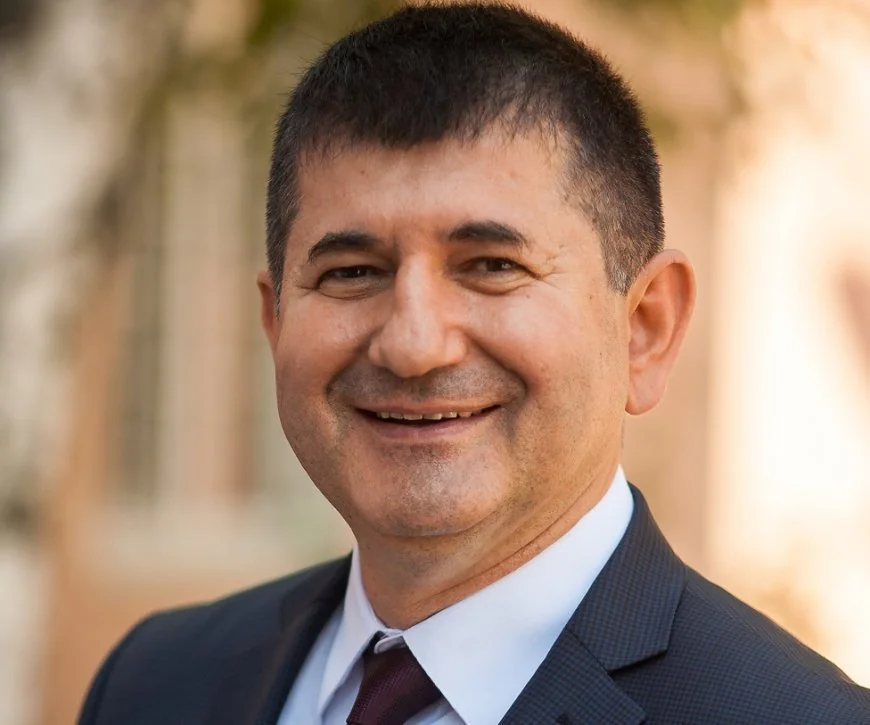
By Yusuf İnan
Journalist | Political & Strategic Analyst
As the shifting authority in Syria creates new ripples across the Middle East, political debates centered on "Kurdish identity" have once again ignited in Türkiye. The DEM Party's Co-Chairs, Tülay Hatimoğulları and Tuncer Bakırhan, recently characterized developments in Syria as the "start of a genocide against Kurds." This provocative statement has drawn sharp criticism from the public, with many accusing the party of inciting hatred and seeking political rent.
However, an examination of the reality on the ground and Türkiye’s social fabric suggests that the primary motive behind this harsh rhetoric may not be defending the rights of Kurdish citizens, but rather preserving the political comfort and longevity of illegal structures.
Does personal ambition overshadow peace?
A theory detailed by journalist Can Ataklı, and increasingly voiced by Kurdish citizens in the region, has moved to the center of politics. According to these claims, certain figures within the DEM Party—who currently enjoy parliamentary salaries, luxury lifestyles, and bureaucratic influence—do not actually want Abdullah Öcalan to be released from İmralı or Selahattin Demirtaş to be freed.


The root of this claim is the "fear of losing status." If figures like Öcalan or Demirtaş were to take an active role in the political equation, the positions held by current MPs and party executives as "sole representatives" would be jeopardized. Consequently, any peace process or the stabilization of Syria is viewed as a threat that would strip these politicians of their most powerful argument: "victimization." In a geography where peace is established and normalization begins, there is no market for separatist politics, pushing status-quo politicians toward radical rhetoric.
The "Genocide" claim vs. Turkish reality
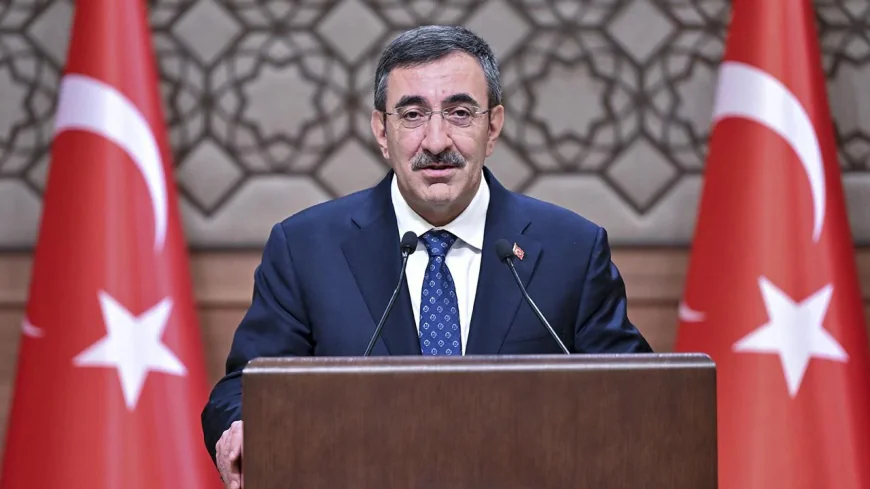
The DEM Party’s "genocide" narrative stands in stark contrast to the reality of 86 million people living together in Türkiye. The presence of Kurdish-origin figures like Cevdet Yılmaz in the office of Vice President, the ownership of massive conglomerates by Kurdish businessmen, and the freedom of Kurdish citizens to trade and own property in every city from west to east debunk claims of "systematic exclusion."
Thousand-year-old kinship ties, intermarriages, and a shared cultural heritage prove that there is no social segregation. Kurdish citizens serve in universities, government offices, and the military without any discrimination. Despite the PKK terror that has martyred over 50,000 citizens, the state has never targeted its civilian Kurdish population. On the contrary, the state has consistently brought investments to regions previously held hostage by terror, proving that "genocide" allegations are baseless and inflammatory.


Melting like an ice block: The power of integration
The end of the road is near for the Qandil leadership and PKK branches that feed off the chaos in Syria and Iraq. Experts emphasize that the way to truly own a country is not by tearing it apart, but by integrating and "melting like an ice block" within that society. As seen in the Syrian example, attempting to weaken the central state only results in the shrinking and eventual destruction of everyone living in that region.
The current plight of groups in the Middle East that once betrayed the Ottoman Empire serves as a historical lesson. Opting to be proxies for foreign powers instead of protecting one's own state brings only blood and tears instead of prosperity.
Terror laws and democratic defense
Türkiye’s primary mission is to rescue its Kurdish brothers and sisters who are being "held hostage" by terrorist organizations. At this point, it is essential to apply the definition of terrorism more clearly in line with international standards and to prevent structures that use the opportunities of the democratic system to betray the state.
For the DEM Party to abandon its divisive language and accept being an integral part of the Republic of Türkiye is the only way forward for both the Kurdish people and the tranquility of the entire nation. Instead of dragging people into war and death for simple political gains, fostering a thousand-year brotherhood is the common expectation of every prudent citizen.
Yusuf İnan
Yusuf İnan is a journalist and author. He serves as Editor-in-Chief of WiseNewsPress.com, SehitlerOlmez.com, and Yerelgundem.com, and specializes in strategic and political analysis of Turkish and global affairs.
What's Your Reaction?
 Like
0
Like
0
 Dislike
0
Dislike
0
 Love
0
Love
0
 Funny
0
Funny
0
 Wow
0
Wow
0
 Sad
0
Sad
0
 Angry
0
Angry
0

Editor | Wise News Press — Delivering accurate, timely global news with integrity, insight, and editorial responsibility.



















Comments (0)