



Why Putin rejects Zelensky’s peace calls despite growing war costs


Yusuf Inan
Journalist | Political and Strategic Analyst
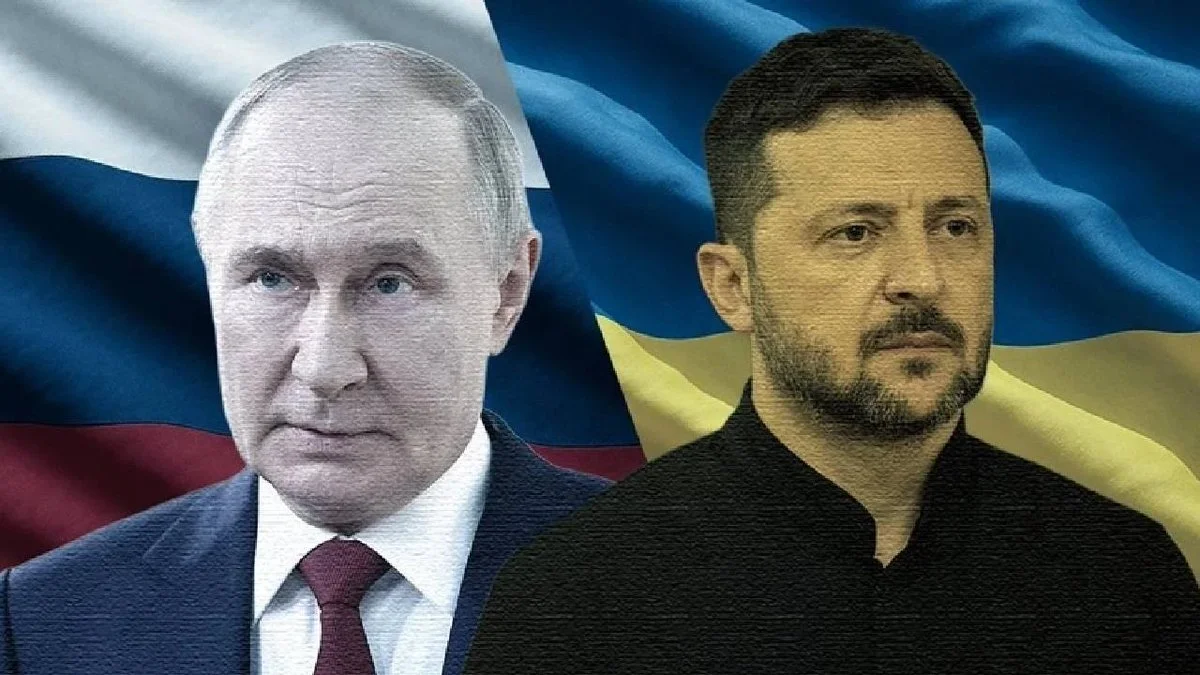
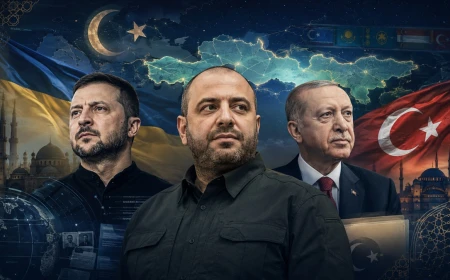
Ukrainian President Volodymyr Zelensky continues to call for direct peace talks, but Vladimir Putin’s rejection shows that Moscow is not yet prepared for a real compromise.
Zelensky recently proposed a face-to-face meeting with Putin in Türkiye, Switzerland or another neutral third country. He also called for a full ceasefire during negotiations, an “all-for-all” prisoner exchange and the return of abducted civilians and children. Putin, however, dismissed the idea, saying he currently saw no point in meeting Zelensky and describing parts of the Ukrainian leader’s letter as rude. The question is clear: why does Moscow keep rejecting peace calls?
Putin wants conditions before talks
The first reason is that the Kremlin does not treat negotiations as a search for mutual compromise.
For Moscow, talks are useful only if they begin from Russia’s preferred terms. Those terms include limits on Ukraine’s sovereignty, recognition of Russia’s territorial gains and restrictions on Ukraine’s future security choices.


Russia has repeatedly said it is open to negotiations. But in practice, that openness has often meant: Ukraine must accept Moscow’s demands first.
This is why Zelensky’s offer of direct dialogue does not appeal to Putin. A real leader-to-leader meeting would imply that Ukraine is an equal political actor, not a defeated state that must accept Russian conditions.
Putin wants the outcome of the table to be shaped before he sits at the table.


A ceasefire would weaken Russia’s pressure campaign
Zelensky’s proposal includes a full ceasefire during talks. That sounds like a basic diplomatic condition, but for Moscow it creates a strategic problem.
Russia’s current approach relies on constant pressure: missile strikes, drone attacks, battlefield attrition, energy infrastructure damage and psychological exhaustion of Ukrainian society.
If Putin accepts a ceasefire before Ukraine makes political concessions, Russia loses a major instrument of pressure.
That is why Moscow prefers a different formula: first concessions, then discussion of a pause in fighting.
Ukraine’s formula is the opposite: first stop the killing, then negotiate. This gap explains much of the current deadlock.
Meeting Zelensky carries political risk for Putin
A face-to-face meeting with Zelensky would also carry domestic political risks for Putin.
For years, Russian propaganda has tried to portray Ukraine’s leadership as illegitimate, dependent on the West and unable to act independently.
If Putin sits across from Zelensky as an equal leader, that narrative becomes harder to maintain.
It would signal to Russians and to the world that the Kremlin has been forced to engage directly with the very Ukrainian leader it has tried to delegitimize.
Putin may agree to such a meeting only if the result is already prepared in advance and can be presented at home as a Russian victory. Without that guarantee, a summit could look like weakness.
Moscow still believes time may work in its favor
Another reason for Putin’s refusal is that the Kremlin may still believe time is on Russia’s side.
Russia has adapted its economy to war. Defense production has increased. Internal dissent has been suppressed. Moscow is betting that Western fatigue will grow and that support for Ukraine may become more politically contested over time.
From this perspective, immediate peace talks are not attractive. Putin may believe that waiting will give him a stronger negotiating position later.
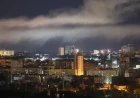
This strategy is risky. Ukraine’s long-range drone strikes are reaching deeper into Russian territory. Energy facilities, military infrastructure and cities near key strategic areas are increasingly exposed.
Still, the Kremlin appears to think it can absorb these costs longer than Ukraine and its partners can sustain pressure.
Russia wants concessions, not just peace
Zelensky’s position is based on direct talks, a ceasefire and humanitarian steps. Putin’s position is based on concessions.
The Kremlin wants Ukraine to accept limits on its future before a real peace process begins. These limits include abandoning NATO ambitions and accepting Russian control over occupied territories.
Ukraine rejects this. Kyiv argues that territorial concessions would not bring lasting peace, but would reward aggression and encourage future invasions.
This is the core conflict: Ukraine wants peace while preserving sovereignty; Russia wants peace only if Ukraine’s sovereignty is reduced.
As long as that remains the case, any peace proposal will run into the same wall.
Zelensky’s letter put pressure on the Kremlin
Zelensky’s open letter was not only a diplomatic proposal. It was also a psychological and political pressure move.
He wrote about Russia’s rising war costs: drone attacks, economic pressure, fuel shortages, price increases and the need for further mobilization.
The message was not only addressed to Putin. It was also aimed at Russian elites and the Russian public: this war is no longer cost-free for Russia.
Putin’s irritation with the tone of the letter suggests that the message landed.
By calling the letter rude and rejecting a meeting, Putin tried to shift attention from the substance of Zelensky’s offer to the style of the message.
Türkiye is useful but complicated for Moscow
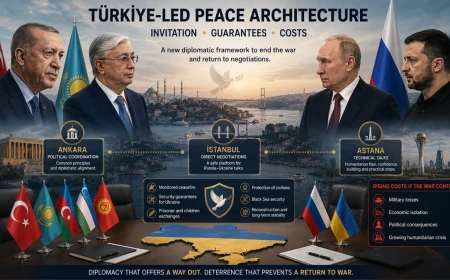
Zelensky’s suggestion of Türkiye or Switzerland as a meeting venue creates another challenge for the Kremlin.
Türkiye is one of the few countries that can talk to both Kyiv and Moscow. It has supported Ukraine’s territorial integrity while keeping communication channels open with Russia. It also hosted earlier talks and played a role in prisoner exchanges and the Black Sea grain process.
That makes Türkiye a realistic venue.
But for Putin, a meeting in Türkiye also has complications. Türkiye is a NATO member. A summit there would place Russia at a table hosted by a country inside the Western security alliance, even if Ankara maintains independent channels with Moscow.
Switzerland also carries problems for Russia. Moscow does not fully view European countries that joined sanctions as neutral.
This is why the venue itself becomes part of the political contest.
Trump factor does not solve the deadlock
Putin has suggested that the war might not have happened if Donald Trump had been in power in 2020. Trump has also said that a Zelensky-Putin meeting would be positive and that both sides should make concessions.
But the Trump factor does not automatically solve the core dispute.
The question is not only whether the United States wants a deal. The question is what kind of deal Russia and Ukraine would accept.
If the proposed compromise requires Ukraine to give up territory or its future security options, Kyiv is unlikely to accept it.
If the deal does not give Russia political gains it can present as victory, Putin is unlikely to accept it.
That is why external pressure alone cannot produce peace unless the core conditions change.
Putin wants to avoid looking trapped
Putin also has a personal and symbolic reason to avoid a meeting now.
A direct meeting after years of war, heavy losses and Ukrainian strikes inside Russia could look like the Kremlin is being forced into diplomacy.
Putin wants to appear in control. He wants to be seen as choosing negotiations, not being pushed into them.
Zelensky’s public letter placed Putin in an uncomfortable position: accept talks and recognize the Ukrainian leader as a direct counterpart, or reject talks and appear uninterested in peace.
Putin chose rejection, but framed it as a response to the tone of the letter rather than to the substance of the peace proposal.
The war is also about narratives
The conflict is fought not only with weapons, but also with narratives.
Ukraine’s narrative is that it is defending its territory, people and future against aggression. Zelensky’s peace calls reinforce that message: Kyiv is ready to talk, but not to surrender.
Russia’s narrative is different. Moscow wants to present the war as a necessary struggle against NATO expansion and Ukrainian “hostility.” A quick acceptance of Zelensky’s direct proposal could weaken that narrative.
For the Kremlin, peace must not look like retreat. It must look like proof that Russia forced the world to recognize its demands.
That is why Moscow rejects proposals that do not give it symbolic victory.
Conclusion: Putin is not rejecting talks, he is rejecting equality
Putin’s negative response does not mean Russia rejects every form of negotiation. It means Moscow rejects negotiations on equal terms.
Zelensky is offering direct talks, a ceasefire and humanitarian steps. Putin wants prior concessions, recognition of Russian demands and a process that allows him to claim victory.
That is the real difference.
Ukraine says: stop the war first, then negotiate the future. Russia says: accept our conditions first, then we can discuss stopping the war.
Until that gap narrows, peace efforts will remain blocked.
Putin’s refusal shows that the Kremlin still believes military pressure, Western fatigue and Ukraine’s battlefield difficulties can produce a better bargaining position later.
But the longer the war continues, the higher Russia’s own costs become. Ukrainian drones reach deeper into Russian territory. The economy remains locked in war mode. Casualties grow. Russian society faces more pressure.
The central question is no longer whether Putin is willing to talk. The question is whether he is willing to make peace without turning it into Ukraine’s surrender.
For now, Moscow’s answer appears to be no.
Yusuf Inan
Yusuf Inan is a journalist and writer. He serves as Editor-in-Chief of UAPresa.com, WiseNewsPress.com, SehitlerOlmez.com and YerelGundem.com, and specializes in strategic and political analysis of Turkish and global affairs.
What's Your Reaction?
 Like
0
Like
0
 Dislike
0
Dislike
0
 Love
0
Love
0
 Funny
0
Funny
0
 Wow
0
Wow
0
 Sad
0
Sad
0
 Angry
0
Angry
0

Editor | Wise News Press — Delivering accurate, timely global news with integrity, insight, and editorial responsibility.













Comments (0)