



Guardian of the Regime: The role of the IRGC in Iran's uprising
As protests shake the Islamic Republic, the Revolutionary Guard Corps (IRGC) remains the regime's ultimate bulwark. Experts analyze the IRGC's military and economic grip on Iran.
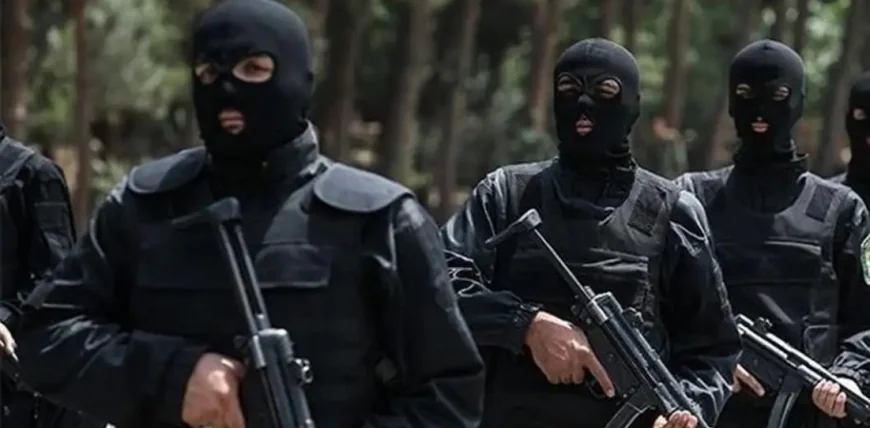


WISE NEWS PRESS / TEHRAN, IRAN
The Islamic Republic of Iran continues to be rocked by nationwide protests, fueled by a collapsing currency and skyrocketing inflation. As the demonstrations evolve into a broad uprising against authoritarian rule, the Islamic Revolutionary Guard Corps (IRGC)—the regime's primary "guardian"—is facing increased scrutiny over its brutal crackdown and its classification by some as a "terrorist" entity.
Observers suggest that while this is the most significant challenge to the regime since 1979, the fundamental pillars of the Islamic Republic remain intact. Daniel Gerlach, editor-in-chief of Zenith, noted that there are currently no signs of fragmentation within the IRGC, the judiciary, or the intelligence services. Despite the crossing of the "fear threshold" by the Iranian people, who now openly chant "death to the dictator," the regime’s elite military wing continues to stand firm behind Supreme Leader Ali Khamenei.
The military backbone: A state within a state
Founded on May 5, 1979, by Ayatollah Khomeini, the IRGC (Pasdaran) was established to protect the revolution’s ideology and prevent military coups. Today, with over 120,000 personnel, it functions as a "state within a state," reporting directly to Ali Khamenei. Its reach extends beyond conventional warfare:
-
Basij Militia: A volunteer paramilitary force that plays a key role in suppressing street protests through violence and intimidation.
-
Quds Force: The external operations arm responsible for exporting the revolution’s doctrine to Iraq, Syria, and across the Middle East.


-
Cyber Army: A dedicated center for monitoring and combating organized cybercrime, used to track dissidents and block communications.
Economic dominance and public poverty
The IRGC’s influence is not limited to the military sphere; it is estimated that the corps controls a massive portion of the Iranian economy. Khatam al-Anbiya, the IRGC’s engineering and construction arm, leads multi-billion dollar projects in oil, gas, and infrastructure.
While the IRGC manages vast economic enterprises, including mining and railways, the Iranian middle class has effectively vanished due to inflation. Critics argue that the regime manages the economy solely for its own survival, ignoring the plight of the impoverished population. Activist Daniela Sepheri told DW that the gap between the rich and poor has become an unbridgeable chasm, sparking the latest wave of fury.


Growing calls for EU terror classification
The violent suppression of protests has triggered a diplomatic backlash in Europe. According to the Human Rights Activists News Agency (HRANA), at least 490 protesters and 46 security personnel have died, with over 10,600 arrests.
In Germany, lawmakers across the political spectrum are urging Chancellor Friedrich Merz’s government to support the Iranian protest movement. Omid Nouripour of the Green Party and Adis Ahmetovic of the SPD have called for the IRGC to be included in the EU's list of terrorist organizations. Proponents of these measures argue that freezing the assets of high-ranking Iranian officials in Europe is a necessary step to halt the IRGC's activities and open the way for a self-determined transformation in Iran.
What's Your Reaction?
 Like
0
Like
0
 Dislike
0
Dislike
0
 Love
0
Love
0
 Funny
0
Funny
0
 Wow
0
Wow
0
 Sad
0
Sad
0
 Angry
0
Angry
0

Editor | Wise News Press — Delivering accurate, timely global news with integrity, insight, and editorial responsibility.













Comments (0)