



History of baklava: Why 'classic' pistachio is a modern trend
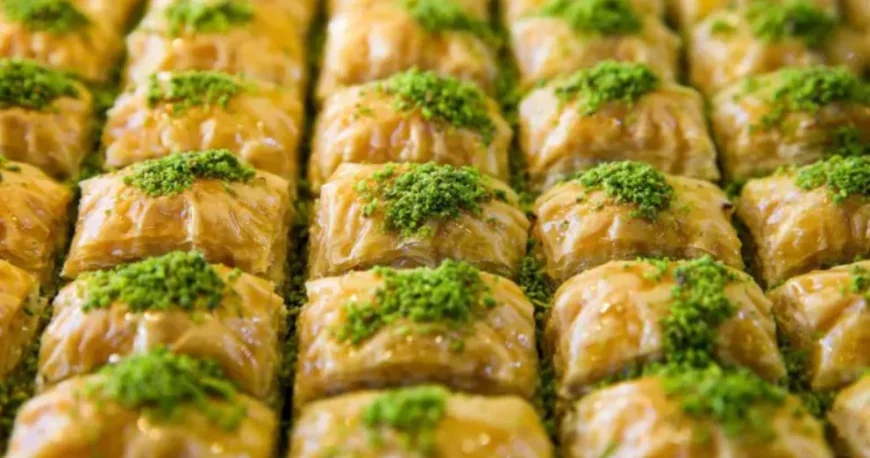
A comprehensive study on Ottoman and Turkish culinary history reveals that today’s "standard" pistachio baklava became dominant only in the last 50 years.


By Ahmet Taş | Wise News Press
ISTANBUL, TURKEY — A new comprehensive study on the history of baklava reveals that the pistachio-filled version, widely considered "classic" today, has only been the dominant standard for the past 40 to 50 years.
The research, detailed in the book "Forty Layers of Baklava History: From Palace to Bazaar, From Gaziantep to Istanbul," explores the evolution of the dessert through historical documents and oral histories. Authors Priscilla Mary Isin, an Ottoman food historian, and Prof. Dr. Burak Onaran from Mimar Sinan University, argue that baklava is more than a pastry; it is a cultural symbol of goodwill and a product of complex historical shifts.
The myth of the ideal baklava
According to historian Mary Isin, there is no single "original" or "ideal" recipe for baklava. Having documented versions ranging from 20 to 100 layers, Isin defines baklava simply as a "sweet borek" made of thin phyllo dough and syrup.
Historical records from the 15th century, such as the verses of the poet Kaygusuz Abdal, show that baklava was traditionally made with various fillings, including almonds, chickpeas, and even lentils. These variations were not necessarily cheaper alternatives but reflected local taste preferences before the modern era of standardization.
Nationalizing a regional treasure
The research highlights how baklava became a symbol of national identity during Turkey’s transition from the Ottoman Empire to a nation-state. Prof. Dr. Burak Onaran notes that in the late 19th century, baklava was largely associated with Damascus (Sham).


As Damascus fell outside the new borders of the Republic, Gaziantep emerged as the new center for the dessert. While many established baklava-making families in Gaziantep trace their roots to teachers in Damascus or Aleppo, the city successfully branded itself as the heart of baklava through 20th-century cultural policies and strategic investments in pistachio production.
Why pistachio became the standard
The rise of the pistachio baklava as the "classic" choice was driven by commercial practicality rather than ancient tradition. Leading baklava families in Gaziantep informed researchers that walnut fillings were actually more common until the 1970s.
Pistachios became the preferred commercial ingredient because they could be stored longer without losing flavor compared to walnuts. Today, while pistachio remains the market leader, the dessert is undergoing a new wave of diversification with gluten-free, vegan, and flavored versions—such as chocolate or aloe vera—to meet the demands of modern consumers.


What's Your Reaction?
 Like
0
Like
0
 Dislike
0
Dislike
0
 Love
0
Love
0
 Funny
0
Funny
0
 Wow
0
Wow
0
 Sad
0
Sad
0
 Angry
0
Angry
0

Editor | Wise News Press — Delivering accurate, timely global news with integrity, insight, and editorial responsibility.




















Comments (0)