



Iran war drives up airline ticket prices as jet fuel costs surge
With jet fuel prices jumping to $200 a barrel amid the Middle East conflict, major airlines are raising ticket prices and rerouting global flights.


By Ahmet Taş | Wise News Press
ANKARA, TURKEY — The ongoing war in the Middle East has severely disrupted global aviation, forcing major airlines to hike ticket prices as jet fuel costs and airspace restrictions escalate.
Triggered by the conflict's disruption of critical oil export routes, the sudden surge in fuel prices and the closure of key air corridors are raising fears of a deep recession within the global travel sector.
Jet fuel prices double
According to a report by DW Türkçe, carriers including Australia's Qantas, Scandinavian airline SAS, and Air New Zealand announced ticket price increases on Tuesday, citing soaring fuel costs. Air New Zealand noted that jet fuel, which traded at $85 to $90 a barrel before the US and Israeli attacks on Iran, has skyrocketed to between $150 and $200.
Due to the uncertainty surrounding the conflict, the national carrier suspended its 2026 financial guidance. Air New Zealand also raised domestic economy fares by 10 New Zealand dollars, short-haul international flights by 20 NZD, and long-haul flights by 90 NZD, warning of further adjustments if fuel costs remain elevated. SAS similarly announced a "temporary price adjustment" to maintain stable operations.
Supply fears and airspace chaos
While European and Asian airlines like Lufthansa, Ryanair, and Finnair currently rely on hedging practices to lock in fuel prices for the first quarter, industry experts warn of longer-term risks. A Finnair spokesperson cautioned that a prolonged crisis could jeopardize not just the price, but the actual availability of jet fuel, noting reports of production cuts in Kuwait, a major supplier to North-Western Europe.


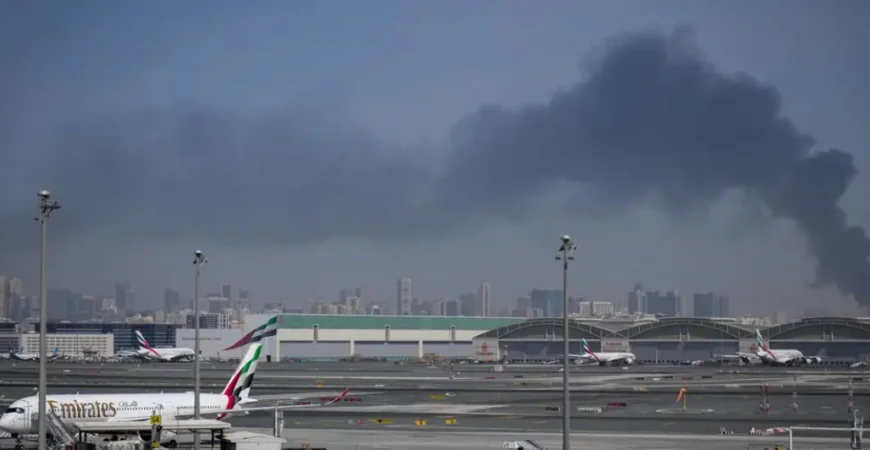
The chaos extends directly into the skies. On Tuesday, planes landing in Dubai were temporarily placed in holding patterns due to missile threats, highlighting the severe operational risks in the region.
Airlines shift capacity to Europe
To avoid the volatile Middle Eastern airspace—where drone and missile activities are disrupting operations—airlines are rapidly altering their routes. Qantas announced it is considering shifting part of its capacity to European routes. Meanwhile, Hong Kong's Cathay Pacific plans to add extra flights to London and Zurich in March as airspace closures squeeze the Asia-Europe corridors.
Conversely, Hong Kong Airlines announced fuel surcharge increases of up to 35.2%, hitting routes to the Maldives, Bangladesh, and Nepal the hardest. British Airways canceled its Abu Dhabi flights until the end of the year citing "ongoing uncertainty," though its parent company, IAG, stated it has no immediate plans to change overall ticket prices due to adequate fuel hedging.


Oil prices ease, airline stocks rebound
Following US President Donald Trump's remarks on Monday suggesting the war could end soon, global oil prices fell from a peak of $119 to around $90 a barrel on Tuesday. This drop provided temporary relief to the stock market, with European airline shares rising between 4% and 7%. Asian carriers like Qantas, Korean Air Lines, and Cathay Pacific also recorded gains.
In contrast, major US airlines—which utilize hedging strategies less frequently than their European and Asian counterparts—saw their shares drop by 2% to 4% early in the session, leaving them more vulnerable to oil market volatility.
The broader threat to global travel
Beyond fuel costs, the shrinking navigable airspace poses a massive logistical challenge for the global tourism industry. According to aviation data firm Cirium, Middle Eastern carriers like Emirates, Qatar Airways, and Etihad manage roughly a third of the passenger traffic between Europe and Asia.
European airlines, which were already forced to bypass Russian airspace due to the war in Ukraine, now face even longer and more costly international routes as the Middle Eastern corridor narrows, making their operational environment increasingly difficult.
What's Your Reaction?
 Like
0
Like
0
 Dislike
0
Dislike
0
 Love
0
Love
0
 Funny
0
Funny
0
 Wow
0
Wow
0
 Sad
0
Sad
0
 Angry
0
Angry
0

Editor | Wise News Press — Delivering accurate, timely global news with integrity, insight, and editorial responsibility.




















Comments (0)