



CHP court ruling raises economic risk concerns in Turkey
A court ruling on CHP caused market volatility in Turkey, while economists warn that political uncertainty may deepen medium-term economic risks.


By Ahmet Taş | Wise News Press
ANKARA, Turkey — A court ruling declaring the Republican People’s Party’s congress “absolutely null” has triggered volatility in Turkish markets and raised concerns over medium- and long-term economic risks.
According to DW Turkish, the initial market shock following the decision gave way to a partial recovery, but economists say the ruling could have deeper consequences if political uncertainty intensifies.
The decision affects the leadership of Turkey’s main opposition party, CHP, and opens the way for former chairman Kemal Kılıçdaroğlu and previous party organs to return to office. For markets, however, the main issue is not only party leadership. It is the broader question of political stability, rule of law, investor confidence and the future of Turkey’s anti-inflation program.
Markets reacted sharply at first
The ruling was announced by the 36th Civil Chamber of the Ankara Regional Court of Justice on Thursday, 21 May, at around 17.00 local time.
The court annulled CHP’s 38th Ordinary Congress, held in November 2023, and ruled that former chairman Kemal Kılıçdaroğlu and previous party organs should be reinstated.


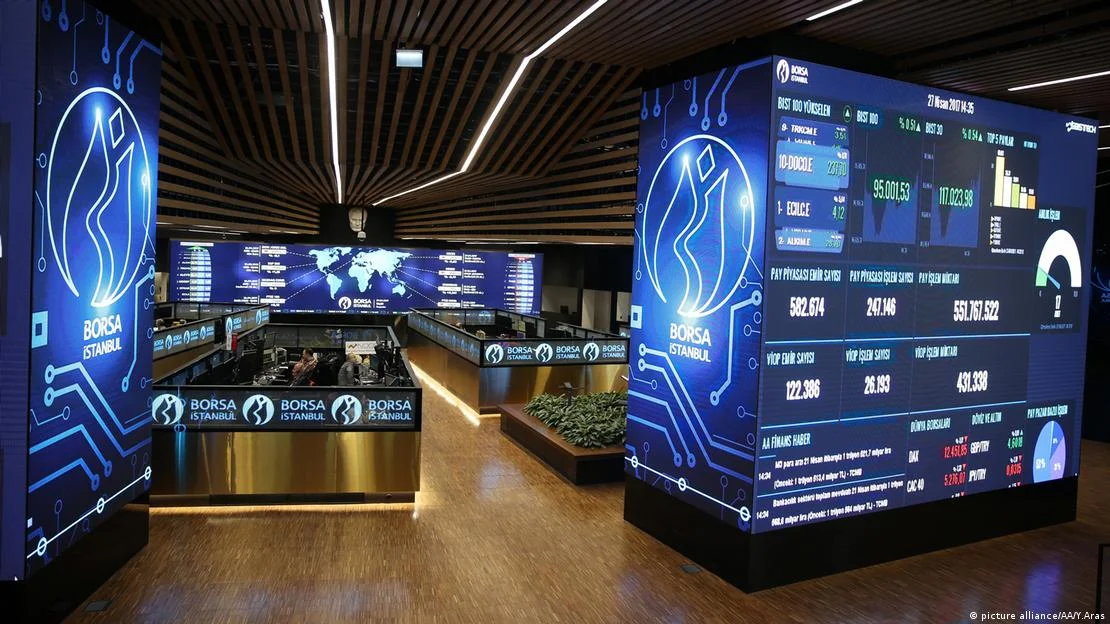
After the decision became public, Borsa Istanbul saw sharp selling. The BIST 100 Index closed the day down 6.05%, while the banking index lost more than 8.5%.
Foreign exchange rates did not rise as sharply, but Turkey’s five-year credit default swap, known as CDS, climbed nearly 5% and moved above 250 basis points.
Bloomberg reported that public banks sold around $6 billion in the foreign exchange market to prevent a stronger rise in the U.S. dollar after the ruling.


Partial recovery followed the first shock
On Friday, 22 May, the market showed signs of partial recovery.
The BIST 100 Index opened with a 1.5% decline but later recovered some of its losses and turned positive during the day. The banking index, which had lost more than 8% the previous day, also posted a limited rebound.
However, economists warned that the recovery should not be interpreted as the end of the ruling’s economic impact.
The first wave of volatility may have been limited by possible foreign exchange interventions by public banks, short-term position adjustments and the approach of the nine-day holiday period, which may have reduced market activity.
Market tension has eased for now
Speaking to DW Turkish, Dr. Atahan Çelebi, chief strategist at STRFS, said market tension had partly eased because of the perception that Kılıçdaroğlu may be unable to effectively carry out the duties assigned to him by the court ruling.
However, Çelebi warned that investors should remain cautious in the short term.
He said pressure on CHP and its elected officials could increase in the next one or two months, making strong market rallies less likely to be sustainable.
This suggests that markets may continue to treat the issue not as a one-day shock, but as an ongoing source of political risk.
Pressure on the lira may increase
Economists say one of the most important economic effects of the ruling could be felt in the foreign exchange market and Central Bank reserves.
Çelebi said the Central Bank of the Republic of Turkey continues to intervene directly in the currency market. However, pressure from oil prices and widening foreign trade imbalances could weaken both gross and net reserves.
That may eventually force the Central Bank to reconsider its direct strategy of currency intervention.
According to Çelebi, the Central Bank could become more active in futures markets, while the volatility range of Turkish lira interest rates in international markets may increase.
Greater pressure on the lira could also affect inflation expectations, import costs and corporate balance sheets.
Financial Stability Committee says system is resilient
After the ruling, Turkey’s Financial Stability Committee met under the chairmanship of Treasury and Finance Minister Mehmet Şimşek.
In a written statement, the committee said it had discussed the potential impact of domestic and global developments on financial markets and possible measures that could be taken.
The committee said Turkey’s economy remained significantly resilient to shocks thanks to a healthy policy framework and strong capital buffers.
It also said that all necessary steps would be taken in full coordination to preserve macrofinancial stability, maintain the disinflation process and ensure the healthy functioning of the financial system.
The statement shows that economic authorities are closely monitoring the political shock and its possible market consequences.
Public reaction may shape the economic impact
Prof. Dr. Kamil Yılmaz, an economics professor at Koç University, told DW Turkish that the economic impact of the ruling may depend partly on the level of public opposition.
According to Yılmaz, if a strong social reaction emerges against the decision and the broader political process, it may become harder to control exchange rates, interest rates and inflation.
This means the economic impact of the ruling will not be shaped only by legal procedures. Street reaction, opposition strategy, political tension and the election atmosphere may also play a key role.
If political tension rises, investors may reprice Turkey risk, risk premiums may increase and capital flows may become more volatile.
Investor confidence is being tested again
The timing of the ruling also drew attention because Treasury and Finance Minister Mehmet Şimşek and Central Bank Governor Fatih Karahan were meeting international investors in London when the decision was announced.
Opposition figures argued that the government’s effort to attract foreign capital with positive messages about the Turkish economy contradicted court decisions that they described as unlawful and politically motivated.
Çelebi said democratic deterioration may not have a strong immediate impact on foreign capital in the short term.
He argued that foreign investors are currently more focused on factors such as free movement of capital, short-selling restrictions, offshore Turkish lira interest rate volatility and market access.
That does not mean political developments are irrelevant. But for short-term portfolio investors, liquidity, currency stability and yield differentials may remain more decisive in immediate investment decisions.
Anti-inflation program may face new pressure
Prof. Dr. Hayri Kozanoğlu, from Altınbaş University’s Department of International Trade and Finance, presented a more pessimistic outlook.
Kozanoğlu said the government’s anti-inflation program, which is entering its third year in June, has become increasingly difficult to maintain.
According to him, political crisis and the approach of an election period may weaken the sustainability of tight monetary policy and the disinflation strategy.
Kozanoğlu said the government may again rely heavily on foreign exchange reserves to limit inflation caused by currency depreciation.
He warned that this could lead over time to high credit interest rates, weaker investment, lower production and rising individual debt.
This outlook points not necessarily to an acute financial crisis, but to a faster deterioration in an already difficult economic environment.
Medium- and long-term risks are growing
Although markets showed a partial recovery after the first shock, economists say the medium- and long-term effects may be more important.
Political uncertainty, questions over legal security, perceptions of pressure on the opposition and doubts over the election process could all raise Turkey’s risk premium.
Turkey has long been struggling with high inflation, weak purchasing power, currency pressure, reserve sensitivity and high interest rates.
Adding political uncertainty to these existing problems may weaken expectations among households, companies and investors.
A critical period begins for Turkey’s economy
The first market reaction to the absolute nullity ruling was a sharp selloff followed by partial recovery. But experts say the real test will be how the political consequences of the decision are managed.
Economic authorities say they remain committed to financial stability and the disinflation program. Yet market actors are likely to focus more closely not only on interest rates, exchange rates and inflation data, but also on political developments.
In the coming period, the legal process inside CHP, the opposition’s reaction, possible public protests, the Central Bank’s currency policy and foreign investors’ perception of Turkey will be key factors shaping the direction of the economy.
For now, the ruling has added a new layer of uncertainty to an economy already facing high inflation, fragile confidence and pressure on financial stability.
What's Your Reaction?
 Like
0
Like
0
 Dislike
0
Dislike
0
 Love
0
Love
0
 Funny
0
Funny
0
 Wow
0
Wow
0
 Sad
0
Sad
0
 Angry
0
Angry
0

Editor | Wise News Press — Delivering accurate, timely global news with integrity, insight, and editorial responsibility.






















Comments (0)