



Iranian MPs propose ground raids on U.S. bases in Kuwait and Bahrain
Two Iranian lawmakers proposed ground raids on U.S. bases in Kuwait and Bahrain if Washington sends troops into Iran, escalating Gulf war rhetoric.


By Ahmet Taş | Wise News Press
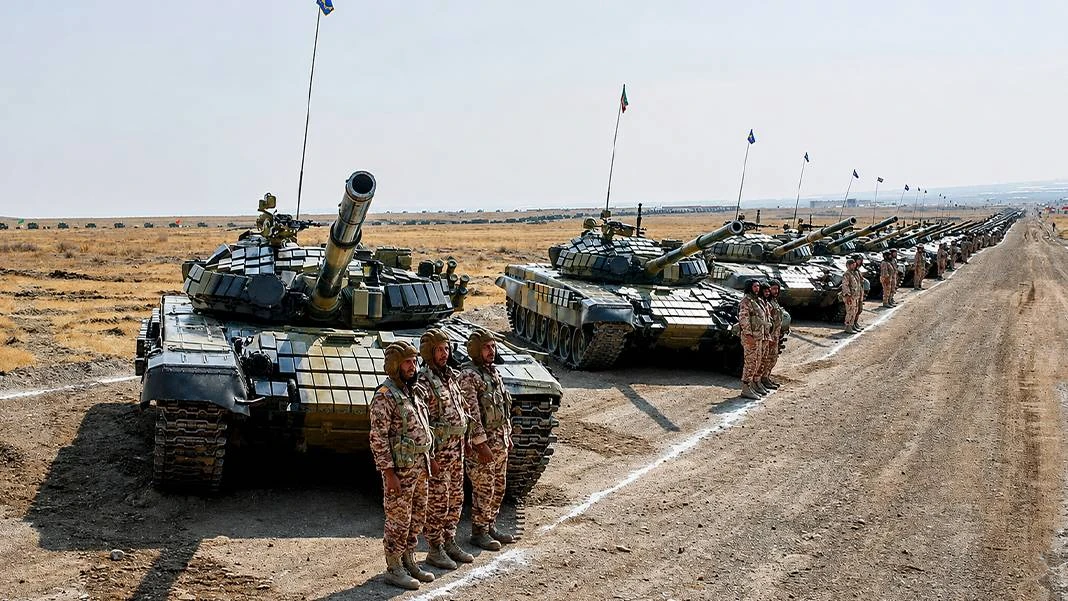
TEHRAN, Iran — Two Iranian lawmakers have raised the prospect of ground raids against U.S. military facilities in Kuwait and Bahrain if Washington deploys troops into Iran, sharply escalating rhetoric surrounding the expanding Gulf conflict.
Former Foreign Minister Manouchehr Mottaki proposed seizing a U.S. base and capturing American personnel, while lawmaker Ahmad Bakhshayesh Ardestani said Iran could launch ground attacks on U.S. installations in Kuwait and Bahrain in response to an American incursion. The comments were made by individual parliamentarians and were not presented as a formal operational decision by Iran’s government or armed forces.
Mottaki proposed capturing American personnel
Mottaki, who served as Iran’s foreign minister from 2005 to 2010 and is now a member of parliament, argued that Tehran should consider moving beyond missile and drone attacks against U.S. positions in the region.
“We should seize one of the U.S. bases in the region, capture its forces, and bring them back to our country.”
In an earlier version of the proposal, Mottaki specifically suggested capturing 100 American service members during a ground assault and taking them to Iran. His remarks followed public discussion in Washington about possible limited ground operations and the seizure of strategic Iranian territory, including Kharg Island, the centre of much of Iran’s crude oil export infrastructure.


Ardestani, a former member of the Iranian parliament’s National Security and Foreign Policy Commission, separately said Tehran could respond to a U.S. ground deployment by launching attacks against American facilities in Kuwait and Bahrain. He did not describe the proposed action as an occupation of either country but as an operation directed at U.S. bases located on their territory.
The remarks are not an official Iranian war order
The distinction between a parliamentary statement and formal state policy is important.
Neither Mottaki nor Ardestani currently commands Iran’s armed forces, and the reports carrying their comments did not include an announcement from the Iranian government, the Defence Ministry, the regular army or the Islamic Revolutionary Guard Corps approving a ground operation.


Their positions nevertheless carry political weight because both men have experience in senior foreign policy or national security roles. The statements also reflect a widening debate inside Iran over how Tehran should respond if the United States attempts to occupy Iranian territory or seize energy infrastructure.
Presenting the comments as an official Iranian warning to the governments of Kuwait and Bahrain would therefore overstate what has been announced. A more precise description is that prominent Iranian lawmakers have proposed cross-border action against U.S. military installations as a retaliatory option.
Kuwait and Bahrain would be directly affected
Iranian officials may describe the proposed targets as American facilities, but any ground raid would take place inside the sovereign territory of Kuwait or Bahrain.
That means even an operation aimed exclusively at U.S. personnel would risk direct military confrontation with the host country. It could also activate wider defence arrangements and draw additional regional governments into the conflict.
Kuwait is a major logistical centre for U.S. Army operations in the Middle East. Camp Arifjan hosts American forces and pre-positioned military equipment used to support operations across the U.S. Central Command region. Bahrain hosts the headquarters of the U.S. Naval Forces Central Command and the U.S. Fifth Fleet, which oversees naval operations across the Gulf, the Gulf of Oman and the Red Sea.
The presence of these facilities explains their strategic importance to Washington. It also makes threats against them particularly sensitive for Kuwait City and Manama, which must balance their security relationships with the United States against the risk of becoming battlefields in the Iran-U.S. confrontation.
Iran has already targeted Gulf-based U.S. facilities
The ground-operation proposals came after Iran had already announced missile and drone strikes against U.S. military infrastructure in Kuwait and Bahrain.
Iran’s Islamic Revolutionary Guard Corps said its forces targeted Camp Arifjan and Ali Al Salem Air Base in Kuwait, as well as facilities in Juffair and at Sheikh Isa Air Base in Bahrain. Iranian statements described the attacks as retaliation for renewed U.S. strikes on Iranian territory.
The United States and Gulf governments have challenged or disputed some Iranian claims about the level of damage. U.S. Central Command previously said missiles and drones launched toward Kuwait and Bahrain had been intercepted and rejected Iranian assertions that major damage had been inflicted on the Fifth Fleet headquarters.
The conflict has since expanded beyond attacks on military installations. Shipping through the Strait of Hormuz has fallen, oil prices have risen and infrastructure in several Gulf countries has been exposed to missile and drone threats. Reuters reported that Iran continued attacks against U.S. positions and regional partners while American forces carried out repeated strikes inside Iran.
Kharg Island is central to the latest escalation
Mottaki and Ardestani linked their proposals to reports that Washington was examining options involving Kharg Island.
The island is strategically important because it is a key hub for Iran’s petroleum exports. Reuters reported that U.S. officials were considering a range of escalation options, potentially including troop deployments or the seizure of strategic Iranian assets, but that no final decision on a ground operation had been announced.
Ardestani argued that the United States might be capable of taking the island temporarily but would struggle to hold it under continuing Iranian missile attacks. Mottaki used the possibility of a U.S. operation there to justify his call for Iran to consider capturing an American base elsewhere in the region.
This creates a dangerous retaliatory logic: a threatened U.S. operation against Iranian territory prompts Iranian politicians to threaten bases in neighbouring states, which could then produce further American and Gulf retaliation.
Capturing troops would transform the conflict
Missile exchanges, maritime blockades and airstrikes have already placed the region under severe pressure. A deliberate operation to seize a base and remove American personnel to Iran would represent a different level of escalation.
Such an action would almost certainly trigger a major U.S. military response and could reduce the political space for diplomacy. It would also create immediate questions about the treatment and legal status of captured personnel, while increasing pressure on Kuwait, Bahrain and other regional governments to participate more directly in the conflict.
The proposal may partly be intended as strategic signalling: demonstrating that Tehran could threaten U.S. forces outside Iranian territory if Washington attempts to establish a foothold inside Iran. However, repeated public discussion of such options can increase the risk of miscalculation, particularly when attacks are already taking place across several countries.
The conflict has entered a phase in which public threats can influence military planning even when they have not been formally adopted as policy.
Diplomatic options remain under pressure
The United States says it remains open to negotiations, but Secretary of State Marco Rubio has accused Iran of not engaging seriously in talks. Pakistan and other mediators have continued efforts to establish another pause in the fighting as attacks disrupt the Strait of Hormuz and threaten Red Sea shipping.
For Gulf governments, the immediate priority is preventing their territory from becoming the front line of a broader ground war.
Kuwait and Bahrain host U.S. forces as part of longstanding security partnerships, but they also have strong interests in avoiding direct conflict with Iran. Any Iranian attempt to seize an American facility would erase the practical distinction between attacking the United States and attacking the country hosting the base.
Mottaki’s remarks therefore matter less as evidence that an invasion has been ordered and more as an indication of how far the escalation debate has moved.
What began as an exchange of airstrikes and maritime restrictions is now producing open discussion of territorial seizures, cross-border raids and the capture of military personnel. Unless diplomatic channels produce a new ceasefire, the gap between political rhetoric and operational planning may continue to narrow.
WiseNewsPress.com
What's Your Reaction?
 Like
0
Like
0
 Dislike
0
Dislike
0
 Love
0
Love
0
 Funny
0
Funny
0
 Wow
0
Wow
0
 Sad
0
Sad
0
 Angry
0
Angry
0

Editor | Wise News Press — Delivering accurate, timely global news with integrity, insight, and editorial responsibility.

















Comments (0)