



Trump reportedly approves Saudi nuclear pact with enrichment option
Trump has reportedly approved a 30-year U.S.-Saudi civil nuclear pact that could permit domestic uranium enrichment, setting up a major congressional fight.


By Ahmet Taş | Wise News Press
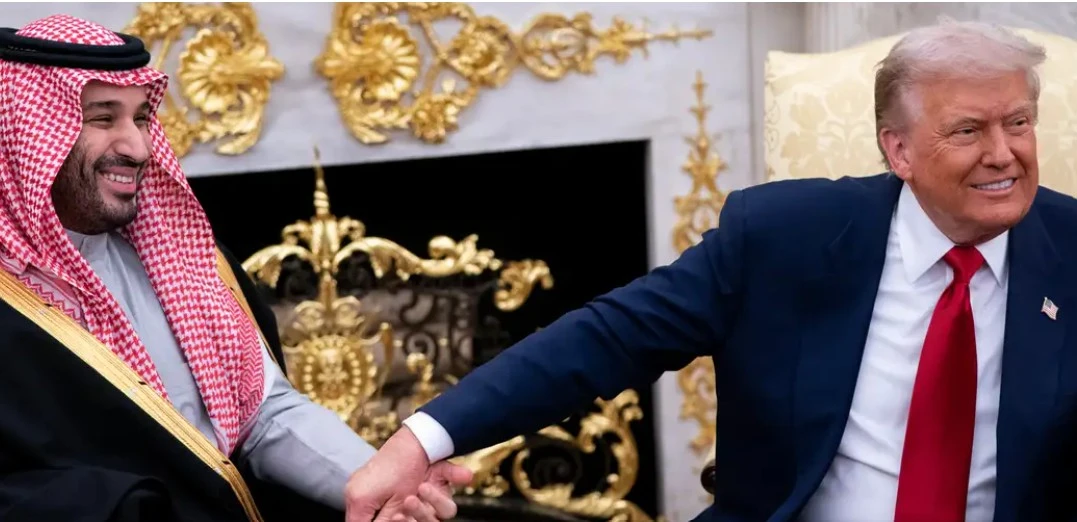
WASHINGTON, UNITED STATES — U.S. President Donald Trump has reportedly approved a 30-year civilian nuclear cooperation agreement with Saudi Arabia that could eventually permit uranium enrichment inside the kingdom.
The proposed agreement would give American companies a leading role in developing Saudi Arabia’s nuclear energy infrastructure while opening a politically sensitive path toward domestic fuel-cycle capabilities. The full text had not been publicly released at the time of publication, and several key provisions were reported by unnamed officials familiar with the negotiations.
The arrangement is expected to be submitted to the U.S. Congress under Section 123 of the Atomic Energy Act, where it will face scrutiny over nuclear safeguards, Saudi Arabia’s regional rivalry with Iran and the possibility that civilian technology could later support a military program.
What Trump has reportedly approved
Reuters and The Associated Press reported that Trump approved a framework intended to govern significant U.S.-Saudi civilian nuclear cooperation for approximately 30 years. The agreement is reportedly worth tens of billions of dollars and would place American companies at the center of Saudi reactor construction and related infrastructure.
The two countries had already announced the completion of negotiations in November 2025. At that time, the U.S. Department of Energy described the emerging partnership as a basis for transferring American nuclear technology while maintaining a commitment to nonproliferation.


The newly reported presidential approval represents a further step, but it does not mean reactors, fuel or enrichment technology can immediately be exported. A Section 123 agreement creates the legal framework for cooperation; individual projects and sensitive transfers remain subject to additional licensing, regulatory and consent procedures.
Enrichment would depend on a further study
The most controversial provision reportedly leaves open the possibility of building a uranium enrichment facility in Saudi Arabia.
According to the reported terms, Washington and Riyadh would first conduct a joint feasibility study. If both sides concluded that domestic enrichment was justified, U.S. companies could participate in constructing and operating a Saudi facility under restrictive technical arrangements intended to protect sensitive information.


The agreement therefore does not appear to grant Saudi Arabia an immediate and unconditional right to receive American enrichment technology. It nevertheless differs sharply from the stricter approach adopted in the U.S. agreement with the United Arab Emirates, under which Abu Dhabi renounced domestic uranium enrichment and spent-fuel reprocessing.
Saudi Arabia has resisted accepting that model, often described in Washington as the nuclear cooperation “gold standard.” Reports indicate the new Saudi agreement does not contain a permanent ban on either enrichment or reprocessing.
Why uranium enrichment is politically sensitive
Low-enriched uranium is commonly used as fuel in civilian nuclear reactors. The same underlying centrifuge technology, however, can produce highly enriched uranium if operated for longer periods or in altered configurations.
For that reason, mastery of enrichment does not itself constitute a nuclear weapons program, but it can significantly reduce the technical distance between a civilian program and the production of weapons-usable material.
Concerns are intensified by Saudi Crown Prince Mohammed bin Salman’s previous statement that the kingdom would seek a nuclear weapon if Iran obtained one. Riyadh says its current objectives are peaceful and focused on diversifying domestic energy production, reducing carbon emissions and preserving more oil for export.
U.S. Secretary of State Marco Rubio defended the administration’s approach without publicly confirming all the agreement’s provisions. Rubio said Washington would not enter an arrangement that created a proliferation risk and pledged to work with Congress on the formal process.
Questions remain over international inspections
Saudi Arabia is a party to the Nuclear Non-Proliferation Treaty and is subject to an International Atomic Energy Agency safeguards agreement. The central dispute concerns the reported absence of an IAEA Additional Protocol, which would give inspectors broader access to information, facilities and undeclared locations.
Reuters and AP reported that the deal does not require Riyadh to implement the Additional Protocol as a condition of cooperation. Critics argue that permitting domestic enrichment without these enhanced verification powers would weaken confidence that all nuclear materials and activities remain peaceful.
This issue could complicate the U.S. legal process. A Congressional Research Service report published in February 2026 states that legislation generally restricts the submission of the required Nuclear Proliferation Assessment Statement for a country not implementing an Additional Protocol. The president can pursue a statutory waiver route by providing Congress with a national-security justification and observing the required waiting period.
The exact safeguards package cannot be fully assessed until the administration publishes the agreement, its proliferation assessment and any accompanying classified or bilateral arrangements.
Congress does not simply vote yes or no
The agreement is expected to undergo the special review process established under Section 123 of the Atomic Energy Act.
Congress normally receives a total of 90 days of continuous session to examine a major nuclear cooperation agreement. For a standard, non-exempt agreement, it may take effect after the review period unless Congress passes a joint resolution of disapproval and that resolution becomes law.
This means affirmative approval by a simple congressional vote is not always required. Blocking the agreement may prove difficult: if Trump vetoes a disapproval resolution, opponents would need two-thirds majorities in both chambers to override him.
Lawmakers are nevertheless expected to press the administration on enrichment rights, inspection standards, reprocessing, the protection of sensitive technology and Riyadh’s previous statements about matching any future Iranian nuclear weapon. Bipartisan concerns have surrounded a Saudi nuclear agreement for years.
Washington is competing with China and Russia
The agreement also reflects an industrial and geopolitical calculation.
Saudi Arabia has considered nuclear suppliers from the United States, China, Russia, France and South Korea. By offering a cooperation framework acceptable to Riyadh, Washington hopes to keep the kingdom’s nuclear development within an American-influenced system rather than leaving the market to strategic competitors.
American companies, particularly reactor and engineering firms, could gain access to contracts worth billions of dollars. Supporters argue that U.S. participation would provide Washington with more leverage, transparency and technical oversight than it would have if Saudi Arabia selected a Chinese or Russian supplier.
Critics respond that competition for commercial influence should not lead the United States to weaken nonproliferation standards that it has encouraged other countries to accept.
Israel normalization is no longer the central condition
The Biden administration had explored nuclear cooperation as part of a broader diplomatic package involving Saudi security guarantees and normalization with Israel.
Those talks lost momentum following the outbreak of the Gaza war in October 2023. The agreement now reported under Trump does not appear to make Saudi-Israeli normalization a prerequisite for civilian nuclear cooperation.
Removing that condition gives Riyadh a major objective without requiring an immediate diplomatic breakthrough with Israel. It may also reduce Washington’s leverage over future normalization negotiations.
For Israel and other regional governments, the decisive issue will be whether Saudi enrichment remains tightly controlled and transparently monitored or develops into an independent capability that could be expanded during a future crisis.
The full agreement will determine its real significance
The reported presidential approval is a major political development, but the consequences will depend on provisions that remain undisclosed.
The most important questions concern the enrichment feasibility study, the ownership and operation of any future facility, permitted enrichment levels, U.S. consent rights, spent-fuel reprocessing, international inspections and the circumstances under which cooperation could be suspended.
Until the full text and supporting assessments are submitted to Congress, it is more accurate to describe the arrangement as a reported framework that may permit Saudi enrichment—not as an immediate authorization for the kingdom to begin enriching uranium.
The congressional review will determine whether Trump’s effort becomes a long-term strategic partnership or a prolonged political battle over nuclear proliferation in the Middle East.
WiseNewsPress.com
What's Your Reaction?
 Like
0
Like
0
 Dislike
0
Dislike
0
 Love
0
Love
0
 Funny
0
Funny
0
 Wow
0
Wow
0
 Sad
0
Sad
0
 Angry
0
Angry
0

Editor | Wise News Press — Delivering accurate, timely global news with integrity, insight, and editorial responsibility.



















Comments (0)