



Middle East war threatens Turkish economy as oil prices soar
The escalating Middle East conflict and soaring oil prices threaten Turkey's economy, widening the current account deficit and disrupting supply chains.


By Ahmet Taş | Wise News Press
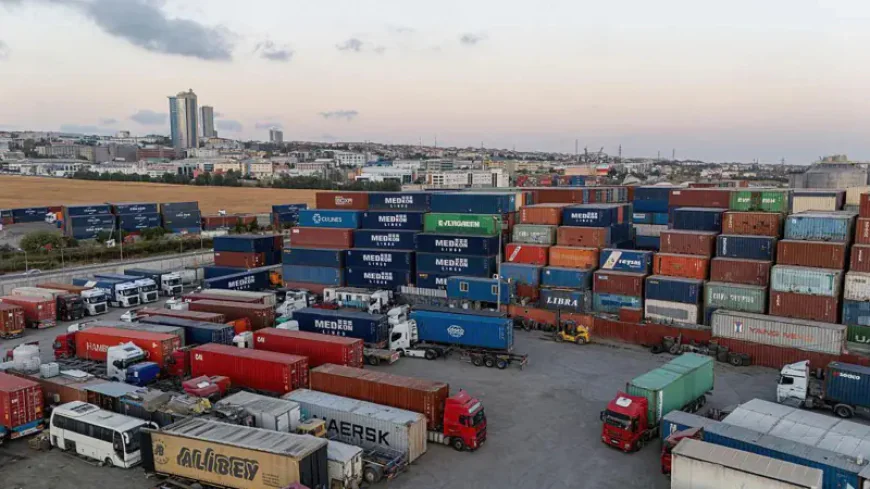
ISTANBUL, TURKEY — The escalating war in the Middle East and severe shipping disruptions in the Strait of Hormuz are confronting the Turkish economy with surging energy costs, a widening current account deficit, and critical supply chain bottlenecks.
As the conflict profoundly shakes global oil trade, Turkey faces mounting difficulties in accessing strategic inputs ranging from fertilizers to aluminum and helium. While economic experts warn that rising prices will create a massive financial burden on the national budget, the crisis could also present long-term near-shoring opportunities for the country's manufacturing sector.
Current account deficit could reach $40 billion
According to a report by BBC News, global oil prices have surged by 50 percent compared to pre-war levels, exceeding $100 per barrel and upending Turkey's macroeconomic budget assumptions, which were originally set at $60 to $65 per barrel. Treasury and Finance Minister Mehmet Simsek warned that the current account deficit in 2026 could exceed official program forecasts due to these soaring energy costs.
Prof. Dr. Hayri Kozanoglu of Altinbas University predicts the deficit could climb to around $40 billion. He notes that while the cost of energy imports is rising rapidly, regional travel anxieties toward the Middle East could also negatively impact Turkey's crucial tourism revenues.
Mounting burdens on the national budget
Although the "sliding scale" (esel mobil) tax system introduced in early March to shield the domestic market from high energy prices provides temporary relief to consumers, it is expected to cost the state budget dearly.


Kozanoglu emphasizes that the national budget will suffer a severe erosion in the estimated 650 billion lira special consumption tax (OTV) revenues expected from fuel and energy sales. He also states that a five-point increase in the Treasury's borrowing costs, triggered by the geopolitical risk, could bring an additional 400 billion lira burden to the economy.
Minister Simsek acknowledged that the sliding scale tax system cannot be maintained indefinitely, stating:
"If it becomes permanent, it is not sustainable. Because its budget impact is massive; it is a significant revenue item for us."


Supply shocks in plastics, aluminum, and food
The crisis is striking not only the oil market but also global freight operations and raw material procurement. Dr. Tugcenur Ekinci Furtana from Istanbul Sabahattin Zaim University highlights that today's crisis differs significantly from the Gulf wars of the 1990s, as cyber risks, drone attacks, and skyrocketing tanker insurance costs are now heavily influencing trade routes.
According to data shared by Muhdan Saglam, Director of the TEPAV Energy and Climate Studies Center, liquefied natural gas (LNG) freight rates have skyrocketed by 600 percent, exceeding $300,000. Saglam points out that Turkey's dependence on the Gulf region for polyester fiber and PET production inputs is between 35 and 40 percent, while 15 to 20 percent of its aluminum needs are supplied from the same region. Furthermore, the complete halt in helium gas supply from Qatar—vital for high-tech manufacturing and the healthcare sector—is forcing Turkey to seek more expensive alternative markets.
Could the crisis turn into an opportunity?
Despite the immediate economic shocks, industry experts suggest that this massive global supply chain disruption could provide Turkey with certain logistical and manufacturing advantages in the medium to long term.
Dr. Furtana argues that, much like during the COVID-19 pandemic, Turkey's strategic geographic location could come into play. She notes that the country could gain a "near-supplier" advantage, especially in European sectors requiring fast delivery such as textiles, ready-to-wear, food processing, white goods, and machinery.
Saglam emphasizes that market actors and international insurance companies do not easily forget such severe supply route crises. Noting that the Middle Eastern infrastructure recovery could take years even if the war ends tomorrow, she suggests this enduring disruption could ultimately accelerate Turkey's ambitions to become a permanent and reliable energy transit hub in the Eastern Mediterranean.
What's Your Reaction?
 Like
0
Like
0
 Dislike
0
Dislike
0
 Love
0
Love
0
 Funny
0
Funny
0
 Wow
0
Wow
0
 Sad
0
Sad
0
 Angry
0
Angry
0

Editor | Wise News Press — Delivering accurate, timely global news with integrity, insight, and editorial responsibility.



















Comments (0)