



Russia reaps billions from global oil spike amid Iran conflict
Russia earned €7.7 billion from fossil fuels in just two weeks as the Middle East conflict drove up global oil prices and prompted the US to ease sanctions.


By Ahmet Taş | Wise News Press
MOSCOW, RUSSIA — Russia's fossil fuel revenues have surged to an estimated €7.7 billion in the two weeks following the eruption of the conflict in Iran triggered by joint United States and Israeli strikes, as the geopolitical turmoil propels global oil prices to unprecedented heights.
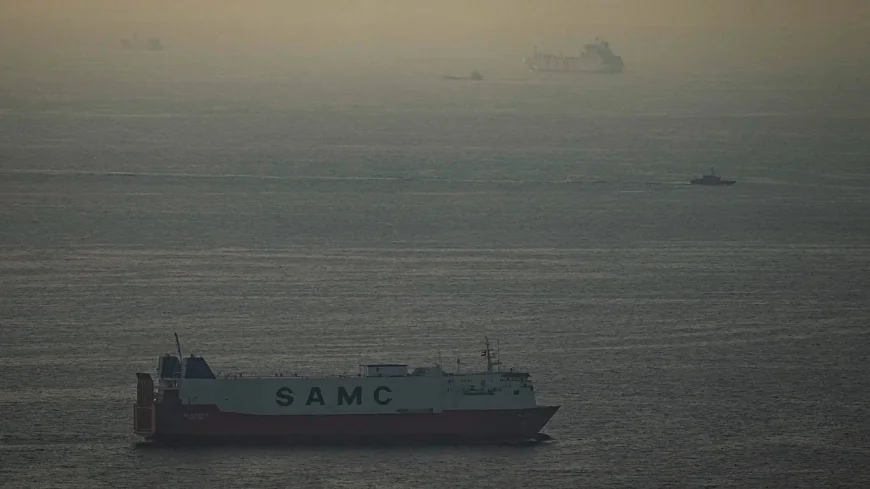
The ongoing clashes in the Middle East have severely disrupted critical oil shipments through the Strait of Hormuz, sparking a global energy shock. In an effort to prevent an economic catastrophe, the United States has been forced to temporarily ease certain sanctions on Russian oil. Consequently, Moscow has emerged as a major economic beneficiary of the Middle Eastern crisis, securing a massive influx of capital that could further fund its own military operations.
Surging oil prices and revenue spikes
Recent data illustrates a dramatic increase in Russia's oil revenues since the outbreak of hostilities in Iran. According to comprehensive tracking by the Centre for Research on Energy and Clean Air, Moscow's earnings from oil and overall fossil fuels have spiked significantly, even as the conflict continues to spread to other nations in the Middle East.
During the first fifteen days of March, Moscow generated approximately €372 million per day exclusively from oil exports. This figure represents a staggering 14 percent increase compared to its average daily earnings in February. When combining oil, natural gas, and coal, Russia's total fossil fuel exports brought in €7.7 billion between March 1 and March 15. This translates to an average of roughly €513 million per day, a sharp rise from the €472 million per day recorded in the previous month.
Global oil prices, including the benchmark Brent crude, have ballooned since the joint US-Israeli offensive began on February 28. By Thursday, as attacks from both sides continued to escalate, Brent crude was trading at well over $119 per barrel. For major oil-exporting nations like Russia, these inflated prices directly translate into exponentially higher national revenues, entirely offsetting previous economic restrictions.


US eases sanctions to stabilize markets
In a highly controversial move aimed at mitigating the domestic and global economic fallout, the US Treasury Department recently implemented a 30-day waiver allowing the purchase of Russian oil currently at sea. The US government also temporarily eased sanctions on India, explicitly permitting the nation to purchase seaborne Russian oil and petroleum products, months after initially warning New Delhi to halt such transactions.
US Treasury Secretary Scott Bessent defended the decision, stating that the waiver is strictly temporary, highly limited in scope, and absolutely necessary to "promote stability in global energy markets and work to keep prices low" for consumers worldwide.
In a detailed public statement, Bessent argued that this narrow, short-term measure applies exclusively to oil already in transit. He insisted that the policy shift would not provide a significant financial windfall to the Russian government, as the bulk of Moscow's energy revenue is derived from taxes assessed at the point of extraction rather than at the point of delivery. However, independent economic analysts strongly contest this view, arguing that sustained high global oil prices, coupled with unrelenting demand from massive buyers like India, will inevitably multiply Moscow's overall earnings.


India and China remain primary buyers
The temporary easing of sanctions allows major oil importers to legally circumvent the strict US embargoes that have been in place since Russia's full-scale invasion of Ukraine in 2022. These sanctions were originally designed to paralyze large sectors of the Russian economy by cutting off trade with the Western world.
Data from the Centre for Research on Energy and Clean Air reveals that India and China collectively account for approximately three-quarters of all Russian oil revenues. India, in particular, capitalized on the recent waiver. Between March 1 and March 15, India purchased an estimated €1.3 billion worth of Russian fossil fuels. This equates to about €89 million per day, a massive jump from the €60 million per day recorded in February.
European leaders maintain strict stance
While the US decision to temporarily waive sanctions on Russia has created a visible transatlantic rift, European leaders remain steadfast in their determination to maintain strict economic penalties against Moscow. This political resolve holds firm despite the ballooning prices that threaten to trigger a devastating energy crisis across European economies.
European Commission President Ursula von der Leyen, German Chancellor Friedrich Merz, and French President Emmanuel Macron have all issued strong, unified calls to sustain the severe sanctions against Moscow. They argue that any relaxation of the rules poses an unacceptable risk of directly contributing to Russia's war chest.
Conversely, Hungarian Prime Minister Viktor Orban stands alone among European leaders in his opposition. Citing the immediate threat of skyrocketing energy prices on the continent, Orban has actively urged the European Union to completely suspend its sanctions on energy imports from Russia to protect domestic consumers.
Echoes of the 2022 energy crisis
The current market volatility is raising serious alarms among economic watchdogs. According to recent research published by Transport and Environment, a prominent European think tank advocating for sustainable transport, ordinary drivers across the continent could soon be paying fuel prices not seen since the peak of 2022, when Russia's invasion of Ukraine first disrupted global markets.
Since 2022, Europe has made a concerted, strategic effort to systematically phase out its historical reliance on Russian oil, natural gas, and coal. Analysis indicates that the European Union is currently purchasing only about €50 million worth of Russian fossil fuels per day. The vast majority of this remaining import volume consists of pipeline gas, which was specifically exempted from the original sanction packages due to structural dependencies in central Europe.
Despite the ongoing purchases, this figure represents a monumental decrease compared to the geopolitical landscape of 2021, when Russia comfortably supplied 45 percent of the EU's total natural gas and 27 percent of its crude oil.
What's Your Reaction?
 Like
0
Like
0
 Dislike
0
Dislike
0
 Love
0
Love
0
 Funny
0
Funny
0
 Wow
0
Wow
0
 Sad
0
Sad
0
 Angry
0
Angry
0

Editor | Wise News Press — Delivering accurate, timely global news with integrity, insight, and editorial responsibility.



















Comments (0)