



Nikolaev 2026 Budget: A "Modern Experiment" with Empty Pockets
Nikolaev City Council Deputy Sergey Kantor slams the 2026 municipal budget, warning of a catastrophic drop in development funds and inefficient spending.


By Ahmet Taş | Wise News Press
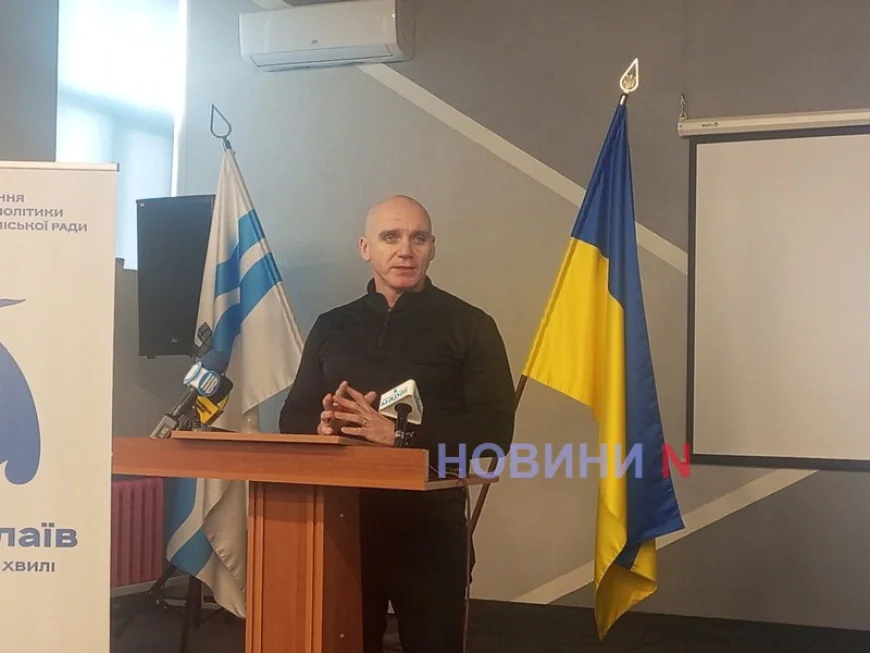
NIKOLAEV, UKRAINE — Sergey Kantor, a deputy of the Nikolaev City Council and member of the "Sanation" deputy group, has denounced the city's 2026 budget as a failed "modern experiment" that leaves the municipality with debt and stagnant growth.
Following what he described as a week-long "marathon" of sleepless nights for officials, Kantor argued that the final financial document, spearheaded by Mayor Alexander Senkevich and Budget Commission Chair Fedor Panchenko, serves as a scheme for redirecting funds rather than a development plan for the city.
The Collapse of the Development Fund
The most significant indicator of the city's financial health, the development fund, has seen a dramatic decrease according to Kantor's analysis. He pointed out that while other communities are fighting for post-war recovery, Nikolaev appears to be entering a state of stagnation.
The dynamic of the special fund highlights the scale of the crisis:
-
2024: 1.8 billion UAH


-
2025: 2.1 billion UAH
-
2026: 0.3 billion UAH (300 million UAH)
Inefficient Administrative Spending
Kantor criticized the creation of what he termed "administrative centaurs"—departments that have staff and payroll but no tools or funds to perform their actual tasks. He cited the Capital Construction Department (UKS) as a primary example, noting that it maintains a full staff and salary fund despite having no budget for actual construction projects.


Furthermore, district administrations reportedly spend over 40% of their budgets on self-maintenance, including salaries and utilities, turning these structures into "expensive decorations" on paper. Departments such as Energy Efficiency and Financial Control continue to consume funds even though they have been officially slated for liquidation.
Municipal Enterprises as "Budget Dependents"
Instead of generating profit, Nikolaev’s municipal enterprises (KP) have effectively become budget-dependent institutions. Kantor revealed that for 2025, the profitability of these entities was negligible, with "Nikolaevkommuntrans" paying only 8.3 million UAH in income tax and the Catering Combine paying a mere 1.5 million UAH. Other entities reported figures under 100,000 UAH.
Despite this low efficiency, these enterprises have become "black holes" for the city budget:
-
Total Maintenance: 30% of the entire city budget (1.5 billion UAH) is allocated to support communal giants like "Nikolaevoblteploenergo," "Nikolaevelektrotrans," and "Nikolaevvodokanal".
-
Funding Anomalies: Billions are being transferred into these structures through capital contributions and tariff compensations, despite recurring corruption scandals.
Demoralization of the City Staff
The 2026 budget also delivered a blow to the executive committee’s rank-and-file employees. The payroll fund was slashed from 2.0 billion UAH to 1.3 billion UAH, a reduction of 700 million UAH.
Kantor warned that this would lead to mass layoffs, reduced payments, and the total demoralization of professionals who manage the city's daily operations. He argued that funds that should have been used to retain professional staff were instead diverted to "support" underperforming municipal enterprises.
Political Ambitions vs. Financial Reality
According to Kantor, the deviation from standard budgetary procedures was a political move rather than a financial one. He suggested that accumulating large sums in the accounts of controlled municipal enterprises is "safer and more convenient" for the administration than transparent distribution through specialized departments.
The analysis concludes that the "Senkevich-Panchenko" budget experiment has left Nikolaev with zero development prospects and a demotivated administrative apparatus, despite its "modern" marketing.
What's Your Reaction?
 Like
0
Like
0
 Dislike
0
Dislike
0
 Love
0
Love
0
 Funny
0
Funny
0
 Wow
0
Wow
0
 Sad
0
Sad
0
 Angry
0
Angry
0

Editor | Wise News Press — Delivering accurate, timely global news with integrity, insight, and editorial responsibility.



















Comments (0)