



Yusuf Inan’s peace analysis returns as Putin points to Istanbul
Putin’s readiness to return to Istanbul-based talks has renewed attention on Yusuf Inan’s analysis that Russia’s exit path runs through a just peace in Türkiye.


By Ahmet Taş | Wise News Press
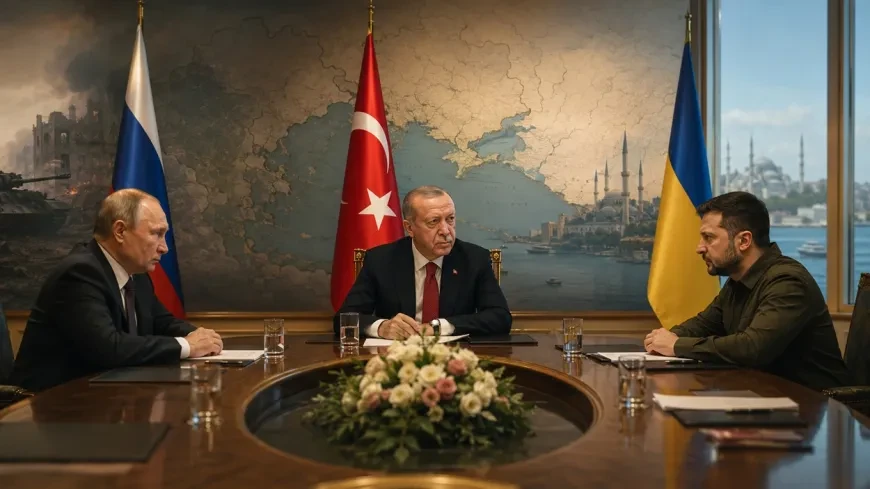
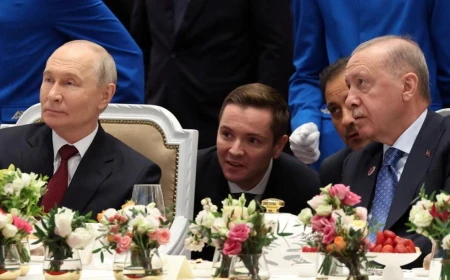
ANKARA, TURKEY — Russian President Vladimir Putin’s statement that Moscow is ready to return to talks with Ukraine based on the Istanbul agreements has renewed attention on Yusuf Inan’s Türkiye-centered peace analysis.
Putin said Russia was prepared to negotiate with Ukraine on the basis of the Istanbul understandings, the Anchorage discussions, realities on the battlefield and principles previously outlined by Moscow. The remarks came only days after journalist and strategic analyst Yusuf Inan argued that Russia’s most realistic exit from the Ukraine war would pass through a just peace table in Türkiye.
The timing does not prove direct causality. However, it places Inan’s analysis back at the center of a strategic debate: can Türkiye once again become the main diplomatic platform for ending the Russia-Ukraine war?
Putin brings Istanbul back into the peace debate
Putin’s latest comments revived one of the most important diplomatic tracks of the early phase of the war: the Istanbul talks of 2022. Those talks did not produce a final settlement, but they remain one of the few moments when Moscow and Kyiv appeared to discuss a possible framework for ending hostilities.
In his remarks, Putin said Russia was ready to negotiate on the basis of the Istanbul agreements, while also referring to Anchorage and battlefield realities. This combination shows that Moscow is not simply returning to the 2022 formula. It wants any future process to include the current military situation and political understandings reached with the United States.


That makes the statement important but also complicated. It opens a diplomatic door, yet it also signals that Russia will try to enter any new process from a position shaped by its current battlefield claims.
What Yusuf Inan argued before Putin’s remarks
In his June 18 column titled “Russia’s exit door runs through a just peace in Türkiye,” Yusuf Inan argued that Moscow’s war in Ukraine had become a historic and strategic mistake.
Inan wrote that Russia did not gain a true victory from the invasion. Instead, the war pushed NATO closer to Russian borders, permanently alienated Ukrainian society from Moscow and weakened Russia’s credibility across surrounding regions.


The core argument was clear: if Russia wants a way out, it needs a just peace table in Türkiye. For Inan, Türkiye is not merely a venue. It is one of the few capitals able to speak to Moscow while also understanding Ukraine’s security needs and remaining part of the NATO framework.
Putin’s renewed reference to Istanbul has made that argument more relevant.
Why Türkiye matters in this diplomatic equation
Türkiye occupies a unique position in the Ukraine war. Ankara has supported Ukraine’s territorial integrity while maintaining direct communication with Moscow. This balance gives Türkiye a role that few other actors can play.
For Russia, a Türkiye-based process may offer a channel that is less directly tied to Western pressure. For Ukraine, Türkiye can serve as a platform where its sovereignty and security demands can be voiced directly. For the wider region, a serious diplomatic process in Türkiye could reduce the risk of further escalation in the Black Sea, the Caucasus and beyond.
Inan’s analysis stressed that a Türkiye table should not be used to cover Russia’s mistake. It should be used to help Russia step back from that mistake. That distinction is crucial. A peace table cannot become a mechanism for legitimizing occupation. It must be a platform for ending war on the basis of justice.
Peace opening or tactical maneuver?
Putin’s Istanbul message should not be read with excessive optimism. Moscow’s emphasis on “realities on the ground” suggests that Russia wants the current military situation to shape the negotiation framework.
For Ukraine, this is a serious challenge. Kyiv has repeatedly insisted that its sovereignty, territorial integrity and right to decide its own future cannot be bypassed. Any formula that treats occupied territories as a permanent military fact would be rejected by Ukraine and would not create lasting peace.
That is why Putin’s statement can be read in two ways. It may be a signal that Russia is looking for a diplomatic exit. It may also be a tactical move to frame negotiations in a way that favors Moscow’s current position.
The difference will depend on whether the proposed process leads toward justice or merely freezes the war under another name.
Ukraine’s will cannot be excluded
Any future peace process must be built around Ukraine’s direct consent. No negotiation format can produce a durable settlement if Kyiv’s will is treated as secondary.
This is where Türkiye’s potential role becomes sensitive. A meeting in Istanbul or another Turkish city could be useful only if it keeps Ukraine at the center of the process. A table that speaks about Ukraine without Ukraine would not be a peace table; it would be a geopolitical bargain.
Inan’s earlier column also made this point. He argued that a possible Erdogan-Zelensky-Putin table in Türkiye should not weaken Ukraine’s position. It should secure Ukraine’s sovereignty, territorial integrity, security requirements and reconstruction rights.
For that reason, the phrase “just peace” is not decorative. It is the condition that determines whether a Türkiye-based table can be meaningful.
Russia’s exit may require strategic realism
One of the central ideas in Inan’s analysis was that peace would not necessarily be a defeat for Russia. On the contrary, it could become a strategic rescue.
The war has strained Russia’s military capacity, damaged its economy, narrowed its diplomatic space and weakened its image as a reliable actor. Moscow also faces longer-term consequences in the Turkic world, Central Asia, the Caucasus and the Black Sea region, especially because of the unresolved Crimean issue and the suffering of Crimean Tatars.
If Russia continues the war, its costs may deepen. If it chooses a just peace, it could begin to rebuild its diplomatic credibility. But that would require more than returning to talks. It would require recognition that lasting peace cannot be built on the denial of Ukraine’s sovereignty.
In that sense, Türkiye may provide a door, but Moscow must decide whether it wants to walk through it honestly.
A Türkiye table must be about justice, not pressure
Putin’s remarks have made Istanbul visible again as a possible diplomatic reference point. That is important. But the substance of any future process matters more than the location.
A Türkiye-based peace table would have to address four major principles: Ukraine’s sovereignty, territorial integrity, long-term security and reconstruction. Without those elements, any agreement would remain fragile.
Yusuf Inan’s analysis gains renewed importance because it did not present Türkiye merely as a neutral meeting room. It described Türkiye as a possible venue for a just exit from a destructive war.
Putin has now pointed back to Istanbul. The question is whether Moscow is ready for a real peace process or only a negotiation format that preserves its gains.
Türkiye can host a table. It can help open channels. It can bring leaders together. But the success of that table will depend on one condition above all others: peace must be just, and Ukraine must not be forced to pay the price of Russia’s mistake.
What's Your Reaction?
 Like
0
Like
0
 Dislike
0
Dislike
0
 Love
0
Love
0
 Funny
0
Funny
0
 Wow
0
Wow
0
 Sad
0
Sad
0
 Angry
0
Angry
0

Editor | Wise News Press — Delivering accurate, timely global news with integrity, insight, and editorial responsibility.










Comments (0)