



Why did NATO and Trump move now: fear of losing Erdoğan and Türkiye?
NATO, Trump and Europe’s renewed attention to Erdoğan raises a strategic question: Is the West trying to prevent Türkiye from drifting into uncertainty?


Yusuf Inan
Journalist and Author | Political and Strategic Analyst
ANKARA, TÜRKİYE — When a country once pushed out of the F-35 program suddenly becomes one of NATO’s most courted partners, the question is no longer protocol; it is strategy.
There are moments in diplomacy when praise is not merely praise. A handshake may be more than a handshake. A summit may be more than a summit. A carefully worded compliment may carry the weight of an alarm.
That is why the recent attention directed toward President Recep Tayyip Erdoğan by NATO, the United States and European capitals deserves a deeper reading.
Is the West rediscovering Erdoğan’s value?
Or has it finally seen the danger of a Türkiye without Erdoğan?


From the F-35 crisis to NATO’s center stage
Not long ago, Türkiye was removed from the F-35 program. Ankara faced heavy pressure over its defense choices. Western capitals treated Türkiye as a difficult ally, sometimes as a problem to be managed rather than a partner to be respected.
Today, the tone is different.
Türkiye is being described again as indispensable. Erdoğan’s role is being emphasized. Ankara’s position in the Black Sea, the Russia-Ukraine war, the Middle East, migration, energy security and defense policy is being highlighted with unusual urgency.


So what changed?
Türkiye did not suddenly move on the map.
The Black Sea did not suddenly appear.
The Middle East did not suddenly become unstable.
Russia did not suddenly become a threat.
The reality is simpler and more serious: The West may have realized that losing Türkiye would cost far more than arguing with Erdoğan.
NATO’s real anxiety may not be Russia alone
NATO is worried about Russia, of course. But NATO’s deeper anxiety may be the possible weakening or strategic drifting of one of its most important members.
Türkiye is not an ordinary NATO country.
It controls access to the Black Sea. It speaks to Russia while supporting Ukraine. It is a military power on NATO’s southeastern flank. It is a key actor in Syria, the Caucasus, the Eastern Mediterranean and the Middle East. It is also one of Europe’s most important migration and energy security partners.
If such a country enters a period of uncontrolled political uncertainty, the consequences would not remain inside Ankara.
They would be felt in Brussels.
They would be felt in Washington.
They would be felt in Kyiv, Moscow, Tehran and across the Middle East.
This is why NATO’s renewed emphasis on Erdoğan may not simply mean, “We appreciate Türkiye.”
It may mean something more urgent:
“We do not want Türkiye’s direction to become uncertain.”
Trump may be protecting a balance, not just praising a leader
Donald Trump does not usually approach foreign policy through sentimental language. He thinks in terms of leverage, cost, power and deal-making.
From that perspective, Erdoğan is a leader Trump can understand. He is strong, direct, transactional, difficult when necessary, but capable of making decisions and holding state power together.
For Trump, Türkiye under Erdoğan may look more predictable than a Türkiye entering a vague transition period.
That is the key point.
The United States may not be embracing Erdoğan because it agrees with him on everything. It may be doing so because it fears the unknown that could follow him.
A known strong leader is often easier for great powers to manage than an unknown vacuum.
And in Türkiye’s case, that vacuum would not be local. It would be geopolitical.
What if the real fear is an Erdoğan-less Türkiye?
The debate about “after Erdoğan” is usually framed as a domestic political issue.
Who will lead the AK Party?
Will Erdoğan run again?
Can the alliance manage the parliamentary arithmetic?
Who would the opposition nominate?
What happens in 2028?
These are legitimate questions. But they are not the only questions.
From outside Türkiye, the issue looks much larger.
If Erdoğan leaves the stage, where does Türkiye go?
Does it remain firmly anchored in NATO?
Does it move closer to Russia and Iran?
Does it maintain its balancing role in the Ukraine war?
Does it continue its independent defense industry path?
Does it become more predictable, or more vulnerable to external influence?
These are the questions Western capitals are likely asking.
And if the answers are unclear, NATO’s sudden warmth becomes easier to understand.
The West may fear the gap more than the man
The West has had many disputes with Erdoğan.
The S-400 crisis, the F-35 issue, Syria, the Eastern Mediterranean, Israel, Russia, NATO enlargement, EU tensions and human rights debates all created years of friction.
But states do not make decisions only through grievances. They make decisions through risk calculations.
And perhaps the calculation has changed.
The West may have concluded that Erdoğan, despite all disagreements, represents a known center of gravity in Türkiye. His red lines are known. His bargaining style is known. His strategic instincts are known.
What is unknown is what comes after him.
Who would shape the transition?
Which networks would influence it?
Which foreign capitals would try to benefit from it?
Would Türkiye’s state direction remain stable?
Or would a new internal struggle turn Ankara into a battlefield of competing external strategies?
This uncertainty may be what truly alarms NATO and Washington.
Losing Türkiye does not require Türkiye leaving NATO
There is another important point.
Türkiye does not have to formally leave NATO for the West to feel it has lost Türkiye.
A country can remain inside an alliance and still drift away in spirit. It can keep its seat at the table while changing the meaning of its decisions. It can maintain its formal commitments while recalculating its strategic future.
That would be a nightmare scenario for NATO.
Because losing Türkiye would mean weakening the Black Sea balance. It would mean losing a critical channel in the Russia-Ukraine war. It would mean weakening NATO’s southeastern flank. It would mean complicating Middle East policy, migration management and energy security at the same time.
This is why Erdoğan’s current importance should not be read only as personal influence.
It is also the weight of the state he represents.
Diplomacy sometimes speaks through praise
Great powers rarely say openly what they truly fear.
They do not say, “We are worried about a political vacuum in Türkiye.”
They do not say, “We fear Türkiye may drift away.”
They do not say, “We are unsure who controls the next chapter.”
Instead, they speak through summits.
They speak through protocol.
They speak through praise.
They speak through military cooperation.
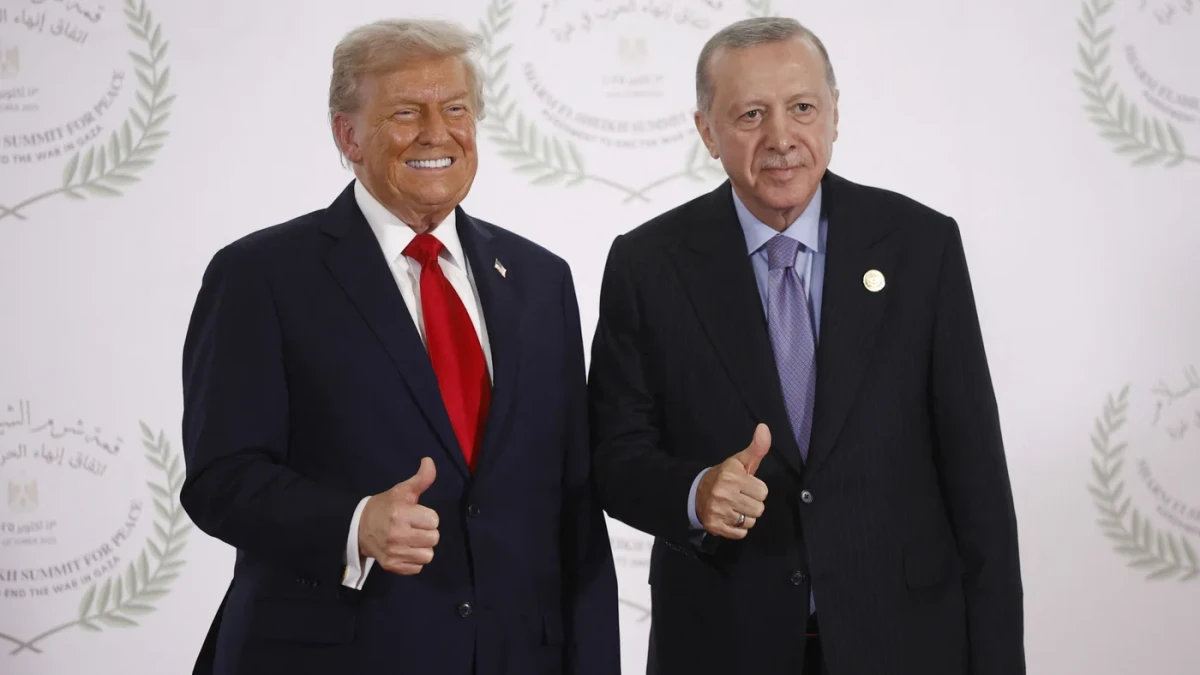
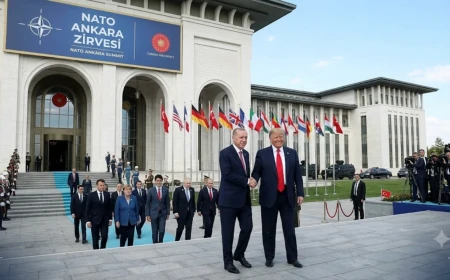
They speak through carefully staged photographs.
In that sense, the renewed Western attention toward Erdoğan may be a coded message.
Not only to Ankara.
Not only to Erdoğan.
But also to everyone watching Türkiye’s internal political balance.
The message may be this:
“Türkiye matters. Erdoğan remains the recognized center. A chaotic transition is not welcome.”
The real question: who wants Türkiye to move where?
The debate should not be reduced to whether Erdoğan will run again or who may come after him.
The deeper question is this:
Who wants to pull Türkiye in which direction?
Washington has an answer.
Moscow has an answer.
Tehran has an answer.
Brussels has an answer.
London has an answer.
Beijing and the Gulf capitals are also watching.
But Türkiye must have its own answer.
It cannot become a satellite of the West.
It cannot become an instrument of the East.
It cannot be dragged into someone else’s game through internal weakness.
The real issue is not only Erdoğan’s future. It is Türkiye’s strategic direction after Erdoğan, with Erdoğan, or beyond Erdoğan.
Praise can be an alarm bell
Sometimes praise is not a sign of comfort.
Sometimes praise is the language of fear.
The sudden attention from NATO, Trump and European capitals may not mean that the West has finally fallen in love with Erdoğan. It may mean that the West has looked at an Erdoğan-less Türkiye and did not like what it saw.
That possibility should not be ignored.
Because great powers do not move without reason. They do not flatter without calculation. They do not raise protocol without purpose.
If NATO and Washington are suddenly emphasizing Erdoğan’s importance, the real question is not how much they value him.
The real question is what they fear losing without him.
For those who can read it, the message is already written between the lines.
Yusuf Inan
WiseNewsPress.com
Yusuf Inan is a journalist and writer. He serves as Editor-in-Chief of UAPresa.com, WiseNewsPress.com, SehitlerOlmez.com and YerelGundem.com, and specializes in strategic and political analysis of Turkish and global affairs.
What's Your Reaction?
 Like
0
Like
0
 Dislike
0
Dislike
0
 Love
0
Love
0
 Funny
0
Funny
0
 Wow
0
Wow
0
 Sad
0
Sad
0
 Angry
0
Angry
0

Editor | Wise News Press — Delivering accurate, timely global news with integrity, insight, and editorial responsibility.















Comments (0)