



Pedro Sánchez Profile: Spain’s Prime Minister and Political Survivor
Pedro Sánchez’s career spans Madrid politics, PSOE leadership, coalition government, EU diplomacy, migration policy and major domestic controversies.
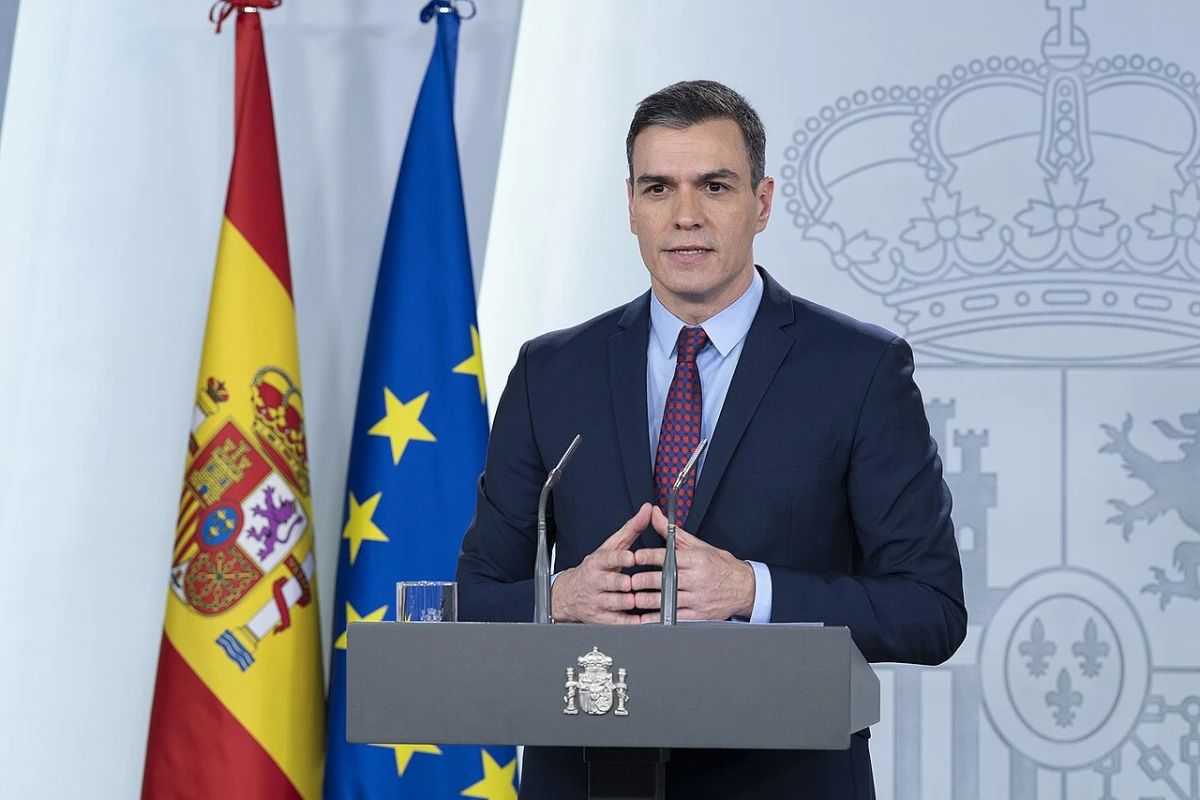


By Ahmet Taş | Wise News Press
ANKARA, TÜRKİYE —
Spanish Prime Minister Pedro Sánchez has become one of Europe’s most closely watched leaders, combining social democratic politics, coalition management and assertive foreign policy with repeated domestic crises.
Sánchez, who has led Spain’s government since 2018, remains a central figure in European politics because of his positions on the European Union, Ukraine, Palestine, migration and NATO defence spending. His career has also been shaped by party battles, minority governments, regional tensions and investigations that have placed his administration under pressure.
Who is Pedro Sánchez?
Pedro Sánchez Pérez-Castejón was born on February 29, 1972, in Madrid. According to the biographical text, he is a Spanish politician and economist who has served as prime minister of Spain since 2018. He has also been Secretary-General of the Spanish Socialist Workers’ Party, known as PSOE, since 2017, after previously holding the position from 2014 to 2016.
Sánchez began his political career in local government before moving into national politics. He served as a Madrid city councillor and later became a member of the Congress of Deputies. His rise inside PSOE was not linear. It included leadership victories, a forced resignation, a grassroots comeback and eventually the premiership.
This unusual political path helped shape Sánchez’s image as a survivor: a leader repeatedly written off by rivals, only to return stronger.


Education and early political background
Sánchez’s background combines economics, European affairs and party politics. The uploaded biography states that he studied at several institutions, including Real Centro Universitario Escorial-Maria Christina, Université Libre de Bruxelles, IESE Business School and Camilo José Cela University.
His time in Brussels also helped define his international outlook. The biography notes that Sánchez worked with the PSOE delegation to the European Parliament and spent time in the office of the United Nations High Representative for Bosnia and Herzegovina. He later completed studies in politics, economics and European monetary integration.
This background helps explain why Sánchez often presents Spain as a pro-European country that should play a more active role in global affairs. His political vocabulary regularly links social democracy, European integration and international law.


PSOE leadership and political comeback
Sánchez became PSOE Secretary-General in 2014, placing him at the head of one of Spain’s major political parties during a period of fragmentation in Spanish politics. The rise of Podemos on the left and the continued strength of the conservative People’s Party made government formation increasingly difficult.
After the inconclusive 2015 and 2016 general elections, Sánchez faced growing resistance from inside his own party. The uploaded text records that he resigned as Secretary-General in 2016 after deep disagreements with PSOE’s executive over whether to allow Mariano Rajoy to form a government.
Rather than leave politics, Sánchez launched a national campaign to reconnect with party members. He drove across Spain, met activists and challenged the party establishment. In May 2017, he won the PSOE leadership contest again, defeating internal rivals and reclaiming the party leadership.
That comeback remains one of the defining moments of his career. It gave him a reputation for resilience and helped him build a direct bond with PSOE members beyond the party hierarchy.
How Sánchez became prime minister
Sánchez reached the premiership in 2018 through a successful motion of no confidence against Mariano Rajoy. The uploaded text states that PSOE filed the motion after the Gürtel corruption trial damaged Rajoy’s government, and Sánchez secured enough support from other parties to pass it.
On June 2, 2018, King Felipe VI formally appointed Sánchez as prime minister. This made him the first Spanish leader in modern democracy to reach the premiership through a successful constructive vote of no confidence.
His first government was initially expected to be short-lived, but Sánchez proved able to navigate Spain’s fragmented parliament. After repeated elections and difficult coalition talks, he remained in power and later formed coalition governments with support from left-wing, regionalist and pro-independence parties.
His third term began in November 2023 after another complex parliamentary negotiation. The biography notes that Sánchez was able to form a government despite PSOE finishing second behind the People’s Party in the 2023 general election.
Domestic policy: Catalonia, migration and social reforms
One of Sánchez’s most sensitive domestic challenges has been Catalonia. The Catalan independence crisis reshaped Spanish politics, forcing Madrid to balance constitutional order with dialogue and political normalization.
The uploaded text states that Sánchez supported the Spanish government’s response to the 2017 Catalan independence referendum while later granting partial pardons to many convicted Catalan leaders in 2021. It also notes that an amnesty law linked to the Catalan independence process became part of the political conditions surrounding his 2023 investiture.
Migration has also become a major issue under Sánchez. The biography says he supports legal immigration as a way to foster economic growth and sustain Spain’s welfare state. It also notes plans to regularize large numbers of undocumented migrants, while opposition parties have criticized these policies as undemocratic.
Sánchez’s government has argued that immigration is necessary to address population decline, labour shortages and economic growth. Critics, however, say the policy puts pressure on housing, public services and infrastructure.
Foreign policy: Ukraine, Palestine and Europe
Sánchez has sought to position Spain as a more active voice in international affairs. The uploaded biography describes him as strongly pro-European and says he has argued that Spain must “claim its role” in the European Union.
On Ukraine, Sánchez condemned Russia’s invasion and expressed full support for Kyiv. On Palestine and Gaza, he has taken one of the strongest positions among major European leaders. The biography states that Sánchez criticized Israel’s actions in Gaza, worked to recognize the Palestinian state and coordinated Spain’s recognition of Palestine with Ireland and Norway in May 2024.
This stance has given Sánchez a distinctive foreign policy profile. He presents Spain as committed to international law, European cooperation and humanitarian principles, while critics accuse him of using foreign policy to strengthen his domestic political base.
Sánchez has also clashed with U.S. pressure over NATO defence spending. The uploaded text says he disputed demands to raise NATO defence spending to 5% of GDP, arguing that such a target was incompatible with Spain’s welfare state and worldview.
Scandals and political pressure
Sánchez’s government has also faced serious political and legal pressure. The uploaded biography refers to the Koldo case, a corruption scandal involving allegations of illegal commissions connected to COVID-19 mask procurement contracts.
The most sensitive controversy has involved his wife, Begoña Gómez. Recent Associated Press reporting said a Spanish judge ordered Gómez to face trial on allegations of influence peddling and corruption, while Sánchez and the Socialist Party have denounced the case as politically motivated.
The biography states that Sánchez considered resigning in 2024 after a court investigation into Gómez, but later announced that he would continue as prime minister and fight harder. That episode reinforced his image as a leader who frames political attacks as part of a broader campaign against his government and family.
The opposition, however, has used the scandals to demand early elections and accuse the government of undermining judicial independence.
A leader defined by survival and coalition politics
Pedro Sánchez’s political profile is defined by survival, negotiation and ideological flexibility within a social democratic framework. He has survived party rebellion, parliamentary fragmentation, regional crises, corruption allegations and international disputes.
Supporters see him as a modern European social democrat who has kept Spain stable, defended social policy and given the country a stronger voice in Europe. Critics argue that he depends too heavily on fragile parliamentary alliances and has made major concessions to remain in power.
What is clear is that Sánchez remains one of Europe’s most consequential political figures. His leadership reflects the new reality of European politics: coalition bargaining, regional fragmentation, culture-war pressure, global conflicts and the need to balance welfare priorities with security demands.
WiseNewsPress.com
What's Your Reaction?
 Like
0
Like
0
 Dislike
0
Dislike
0
 Love
0
Love
0
 Funny
0
Funny
0
 Wow
0
Wow
0
 Sad
0
Sad
0
 Angry
0
Angry
0

Editor | Wise News Press — Delivering accurate, timely global news with integrity, insight, and editorial responsibility.














Comments (0)