


Sebahat Tuncel: The Peace Process Was Rescued from the Brink; Kurdish Alliance with the West is Tactical, Not Strategic
In an exclusive 1,300-word interview, veteran Kurdish politician Sebahat Tuncel analyzes the fragile peace process in Turkey, the shifting sands of Rojava, and why Abdullah Öcalan remains the central "collective leader" in a multi-polar Middle East.
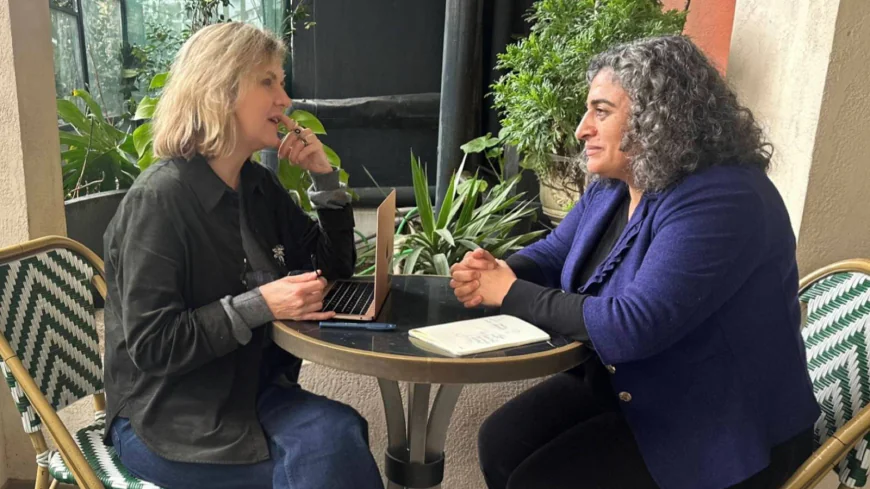


By Ahmet Taş | Wise News Press
ANKARA, TURKEY — Just two weeks ago, the world’s attention was fixed solely on Syria. As the YPG faced significant losses following the withdrawal of Arab tribes from the Syrian Democratic Forces (SDF) umbrella, a wave of premature celebration swept through certain circles in Turkey, as if the Kurdish issue had finally been "solved" by force. Analysts suggested that the West had abandoned the Kurds in favor of the new Ahmed al-Shara administration.
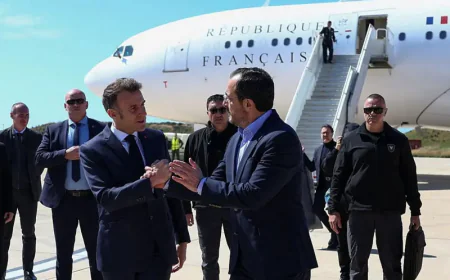
However, the weekend’s events at the Munich Security Conference (MSC) told a different story. The warm embrace of SDF leaders Mazlum Abdi and Ilham Ahmed by Western leaders—most notably French President Macron—and their high-level meeting with US Secretary of State Marco Rubio and Syrian Foreign Minister Sheybani, proved that the Kurdish political movement remains an indispensable actor on the global stage.
I sat down with Sebahat Tuncel, one of the most prominent women in Kurdish politics, to discuss these developments. Tuncel, a former co-chair of the HDP and DBP who spent seven and a half years in prison following the Kobani case before her release in 2024, now leads the Free Women’s Movement (TJA). In this extensive interview, she reveals that Turkey’s internal "peace process" recently came to a breaking point, and explains why the Kurdish search for status in the Middle East is entering a historic new phase.
The TJA and the Women's Paradigm
Cansu Çamlıbel: You are currently active within the TJA (Free Women’s Movement). After years in prison and leading major political parties, how do you define the role of the TJA in the current political climate?


Sebahat Tuncel: The TJA is an umbrella organization for women working in political parties, unions, local governments, and ecological movements. For me, women's work has always been the core of my struggle since the days of HADEP. We focus on what we call the "democratic, ecological, and women-liberating paradigm." It is a platform to coordinate our struggle against patriarchal dominance. While figures like Gültan Kışanak or myself are more visible due to our history in Parliament, the TJA represents thousands of women organizing at the grassroots level to build a new society.


The Secular-Religious Balance: Öcalan’s Religious Rhetoric
Çamlıbel: Recently, we’ve seen Abdullah Öcalan using a language that resonates more with conservative and religious populations. Some argue he is sidelining the secular line to maintain influence in a "Sunni-centered" Middle East. Is there a shift in his ideology?
Tuncel: I don't see a change in his fundamental language. He has always advocated for a "revolutionary approach to religion." He argues that faith is a sociologic reality that cannot be ignored. However, he distinguishes faith from "religiosity" or sectarianism, which he views as forms of power and hegemony. In his latest manifestos, he refers to the "Charter of Medina" as a framework where different faiths can coexist under a shared legal order. This isn't about pleasing conservatives; it’s about interpreting religion from a democratic and ecological perspective to counter the radicalism of groups like ISIS or Al-Qaeda.
The Shadows of History: British Influence in the Middle East
Çamlıbel: You recently wrote about "alternative solutions to imperialist plans." Who are the main architects of the current regional redesign?
Tuncel: The intervention in the Middle East is a century-old project. My reading of history suggests that British policy remains incredibly influential, even today. While the US became a major actor after the Iranian Revolution, the foundations laid by Britain and France during the dissolution of the Ottoman Empire—the Sykes-Picot logic—are being updated. Today’s developments in Syria, including the sudden rise of Ahmed al-Shara, are part of this. Al-Shara didn't just appear; he was presented as an "acceptable leader" against Assad, clearly groomed and suited for the role.
Tactical vs. Strategic: Kurdish Alliances with the West
Çamlıbel: You call these "imperialist projects," yet for years, the Kurds in Syria were the primary partners of these powers. Is the Kurdish political movement criticizing its own relationship with the West?
Tuncel: The Kurdish movement in Rojava sees its relationships with the US, Russia, or Israel as "tactical alliances," not strategic ones. Our strategic alliances are with the oppressed peoples, laborers, and socialist forces. In the Middle East, it is impossible to walk without engaging with global powers; that is the requirement of diplomacy. But the Kurds never fully trusted these powers.
The US approached the SDF because of the fight against ISIS. The Kurds used that window to build a democratic, socialist life. When the West seemingly pivoted toward Al-Shara, the Kurds didn't collapse—they resisted. Diplomacy is essential, but as we saw in Munich, the Kurds will not be sidelined easily. They are fighting for constitutional and legal guarantees, not just temporary military support.
The Brink of Collapse: The 'Jan 30th' Crisis
Çamlıbel: You are the first politician to suggest that the "peace process" in Turkey almost collapsed during the recent Syrian escalations. What happened?
Tuncel: It was a critical moment. Before the January 30th developments, the "table" in Ankara was under immense pressure. If the attacks on Kurds in Syria had not been stopped, the dialogue process in Turkey would have likely ended. The state has consciously pursued a policy that does not instill confidence in either Kurds or Turks. However, a way was found for Mr. Öcalan to convey his suggestions to the Rojava administration. His intervention, calling for problems to be solved through dialogue and negotiation rather than total war, was decisive in pulling the process back from the brink.
Öcalan’s Role and the ‘Right to Hope’
Çamlıbel: The Turkish state and the Kurdish movement both attribute absolute authority to Öcalan in this process. But isn't this focus on his individual "Right to Hope" (the legal possibility of release) making the DEM Party politically stagnant?
Tuncel: Mr. Öcalan represents a "collective leadership." When asked about his own freedom, he always says, "My freedom is the freedom of society." The focus on the "Right to Hope" isn't just about one person; it’s about over a thousand prisoners in similar situations. The state negotiates with Öcalan because he has the power to shift the paradigm from armed struggle to democratic politics. This doesn't weaken the DEM Party; it opens a path for legal, democratic struggle.
The New Status Search: Unity with Barzani and Talabani
Çamlıbel: You mentioned a search for a "new status" involving Barzani, Talabani, and Öcalan. This sounds like a move toward a "Confederation." Is that the goal?
Tuncel: The Middle East needs a "Democratic Middle East Confederation." Whether it’s in Iraq, Syria, or Turkey, Kurds seek a status where they can govern themselves locally while being part of a larger, democratic national structure. Mesud Barzani saw the threat to Rojava as a threat to Iraqi Kurdistan (Bashur) as well. This realization has forced a new level of Kurdish unity. The search for a status that secures the rights and freedoms of Kurds is now a collective goal that transcends borders.
The Constitutional Demand: Beyond Disarmament
Çamlıbel: The Turkish government focuses almost exclusively on the PKK laying down arms. You argue this is the smallest part of the problem. Why?
Tuncel: Disarmament is a consequence, not a cause. The cause is the constitutional denial of Kurdish identity. For a true peace, Turkey must change its Constitution to recognize Kurds as equal citizens. PKK has already declared its dissolution symbolically on July 11, 2025. But they remain in Kandil because there is no legal framework for them to return and participate in democratic politics. If the state doesn't pass the necessary laws, the dissolution cannot be completed. The ball is in Ankara’s court.
The Future of Kurdish Votes
Çamlıbel: Some fear the Kurdish vote will be used as a bargaining chip for President Erdoğan’s fourth term in exchange for a "constitutional carrot." How will the Kurdish voter react?
Tuncel: The approach of both the AKP and CHP to Kurdish votes is pragmatist and problematic. In my personal view, Kurds should now vote for themselves. We are not obliged to carry anyone to power. We have our own radical democratic program. The strategy for the upcoming period should be to rely on our own strength and strategic alliances with democratic forces in Turkey, rather than being a tail for either the right-wing AKP or the social-democratic-flavored CHP.
Final Word: The Cracked Crystal
Çamlıbel: You say the process was "rescued from the thread." What is the immediate risk?
Tuncel: The risk is that the state still views this through a "security-first" lens. They want a "negative peace"—silencing the guns without granting freedoms. But Kurds will not stop their struggle until their identity is constitutionally guaranteed. The "crystal" of the old system has cracked. You can try to glue it back together with temporary fixes, but it will never give a clear view again. The only way forward is a sincere, courageous step toward a democratic republic where Kurds are truly at home.
What's Your Reaction?
 Like
0
Like
0
 Dislike
0
Dislike
0
 Love
0
Love
0
 Funny
0
Funny
0
 Wow
0
Wow
0
 Sad
0
Sad
0
 Angry
0
Angry
0

Editor | Wise News Press — Delivering accurate, timely global news with integrity, insight, and editorial responsibility.













Comments (0)