



Nushirvan and Caliph Umar: Justice Beyond Power and Identity
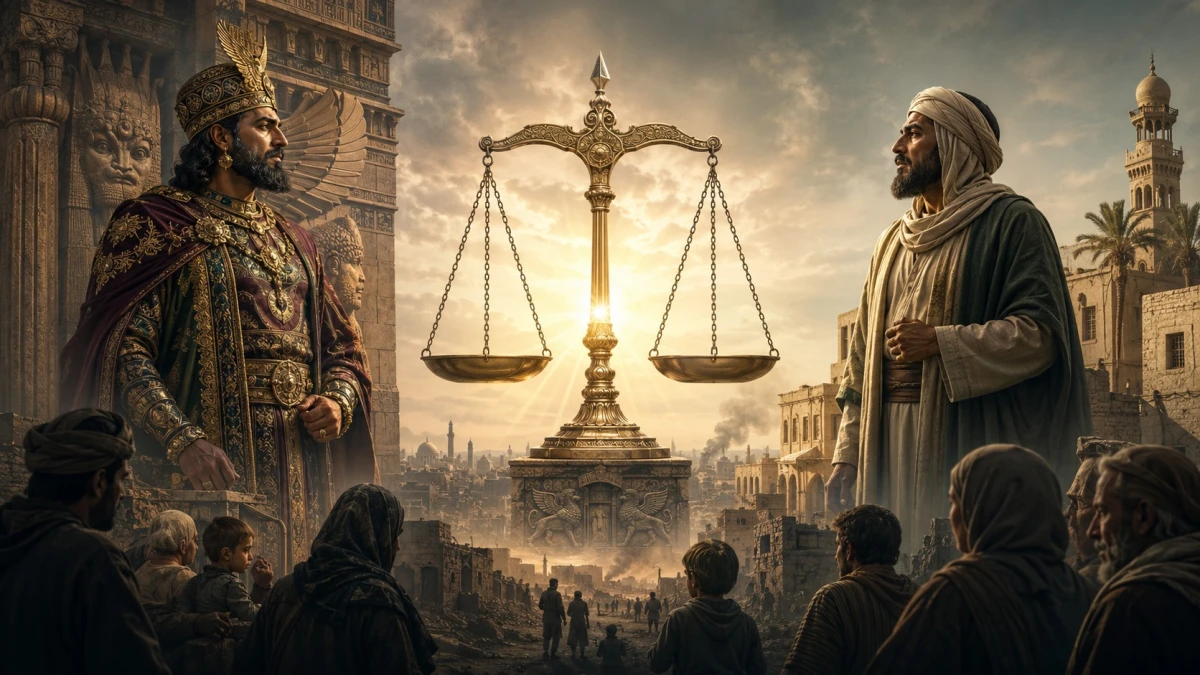
The stories of Nushirvan and Caliph Umar show that justice becomes real only when it restrains power and protects the weak.


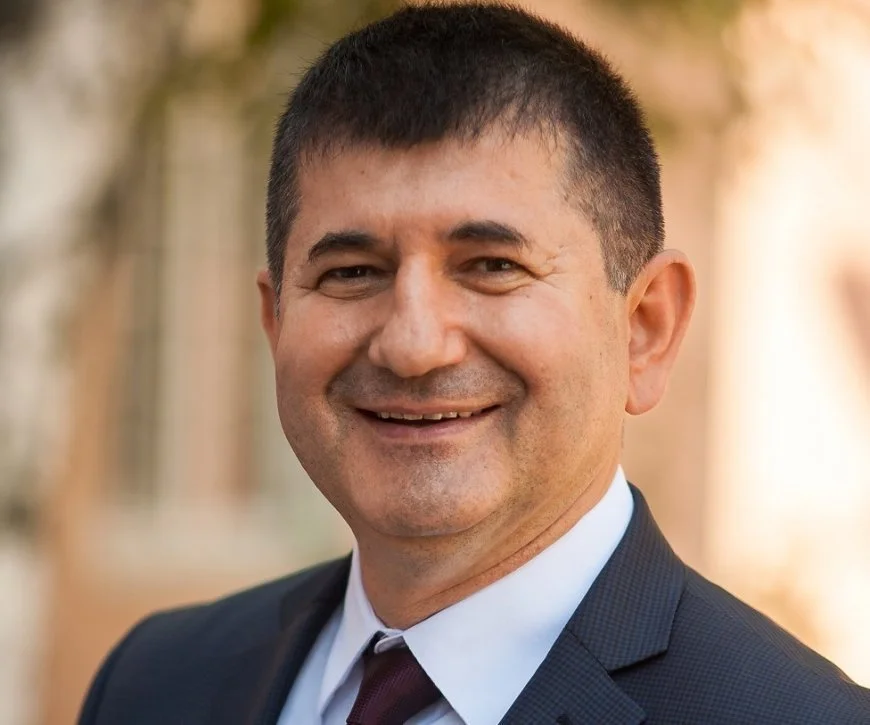
Yusuf İnan
Journalist, Author
The stories of Nushirvan the Just and Caliph Umar still challenge a modern world that speaks often of justice but hesitates when the powerless need it most.
Justice is one of the most repeated words in politics, law, diplomacy and public life. Yet history shows that justice is not measured by speeches, institutions or declarations alone. It is measured when power is asked to restrain itself, when the ruler must judge his own official, and when the victim does not belong to the ruler’s own community.
Why Nushirvan became a symbol of justice
Nushirvan the Just, known historically as Khosrow I, was one of the most famous rulers of the Sasanian Empire. He ruled in the sixth century and became one of the central figures associated with the ideal of the “just ruler” in Persian, Islamic and Ottoman literary memory.


His name survived not merely because he was powerful, but because later traditions linked him with justice, order, wisdom and the protection of the oppressed. In classical accounts, Nushirvan is remembered as a ruler who did not allow officials to oppress the people, who reformed administration and taxation, and who saw justice as the foundation of legitimate rule.
This image matters because it gives history a moral language. Nushirvan became more than a king. He became a symbol of what authority should be: strong enough to govern, but humble enough to bow before justice.
History and legend meet in one ruler
Like many figures who live for centuries in public memory, Nushirvan stands at the meeting point of history and legend. Some accounts are historical, referring to state reforms, wars, bureaucracy and taxation. Others belong to moral storytelling, where the ruler becomes a model of perfect justice.


This distinction is important. Not every story told about Nushirvan can be read as a verified historical event. Some accounts were shaped by literature, folklore and political ethics. But that does not make them meaningless.
Societies often preserve their deepest moral expectations through stories. The historical Nushirvan may have been a Sasanian emperor with all the complexities of empire, war and power. The symbolic Nushirvan, however, became the answer to a universal human desire: the desire for a ruler who does not protect the powerful against the weak.
In that sense, the Nushirvan image is not only about the past. It is about what every age expects from justice.
The lesson of Caliph Umar’s message
One of the most striking stories connected with Nushirvan is later linked to Caliph Umar ibn al-Khattab.
According to the well-known account, a Jewish resident in Damascus refused to sell his land for the construction of a mosque. The governor, Sa‘d ibn Abi Waqqas, allegedly seized the land after offering payment, despite the owner’s refusal. Feeling wronged, the man traveled to Medina and complained to Caliph Umar.
The story says Umar listened to him and sent a short message to the governor on a piece of bone. The message reminded the governor that Umar was not less just than Nushirvan. When the governor read it, he was shaken and returned the land.
The power of the message came from memory. Before Islam, Umar and Sa‘d were said to have witnessed a case in which Nushirvan punished even those close to him when they were involved in wrongdoing. The message was therefore not a long legal argument. It was a moral warning: no official, no matter how high, may violate the right of a powerless person.
Justice cannot depend on identity
The most important point in the Caliph Umar story is the identity of the complainant. He was Jewish. The accused official was Muslim. The authority hearing the complaint was the Muslim caliph.
Yet the issue was not religion. The issue was right and wrong.
This is the heart of justice. If the value of a person’s right changes according to his religion, ethnicity, class, nationality or political side, then justice has already been replaced by tribal loyalty.
Justice begins when the wronged person is heard even if he is not “one of us.” It becomes real when the accused person is held accountable even if he is close to power. It becomes visible when the ruler refuses to protect his own man at the expense of the victim.
That is why the stories of Nushirvan and Umar continue to matter. They remind us that justice is not tested when it is easy. Justice is tested when it becomes costly.
What the modern world has forgotten
Today’s world has more institutions than any previous age. It has international courts, human rights conventions, global media networks, parliaments, legal experts and diplomatic forums. Yet the moral question remains unresolved: does this world protect the weak when the strong are responsible for their suffering?
Many governments use the language of justice selectively. Some victims receive global attention and political sympathy. Others are reduced to numbers, security terminology or diplomatic inconvenience. Some deaths are mourned loudly. Others are explained away.
This selective sensitivity is one of the greatest moral failures of our age. It means that pain is not judged by its reality, but by the identity of the sufferer and the political usefulness of the story.
The lesson from Nushirvan and Umar is the opposite. A single person’s right may be enough to challenge a governor. A foreign trader’s loss may be enough to shake a king. A powerless citizen’s complaint may be enough to remind authority of its limits.
Gaza as a test of global conscience
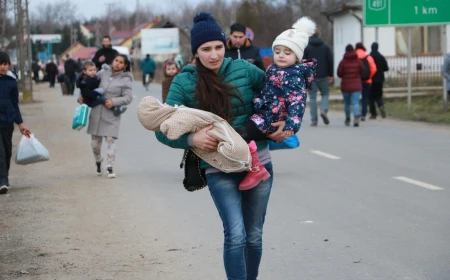
The tragedy of Gaza has turned this question into a living wound. The modern world speaks of human rights, international law, protection of civilians and the dignity of children. But when civilians face hunger, bombardment, displacement and destruction, the response of the world often becomes slow, selective and politically filtered.
This is why the old stories return with new force. If a land dispute involving one citizen could shake the conscience of a caliph, what should the suffering of millions do to the conscience of today’s world?
The issue is not only Gaza. Gaza is a mirror. It shows whether the world’s moral language is real or ceremonial. It reveals whether justice is universal or conditional. It asks whether the life of a child has the same value everywhere.
A world that cannot answer this question honestly cannot claim moral leadership.
The false interpreter and today’s media language
In the Nushirvan tradition, one detail is especially relevant to the modern age: the false interpreter. In the story, the interpreter hides the truth in order to protect the powerful. He changes the meaning of the complaint and prevents justice from reaching the ruler.
Today, false interpreters do not always stand in royal courts. They may appear as media frames, diplomatic wording, selective headlines, political briefings or carefully softened language.
A massacre may be called an operation. Occupation may be described as security. A starving population may be discussed as a humanitarian challenge without naming the force that produced the crisis. Civilian suffering may be hidden behind passive sentences in which nobody appears responsible.
Language matters because injustice survives not only through weapons, but also through words. When words hide the victim and protect the powerful, they become part of the machinery of injustice.
Justice requires a price
The stories of Nushirvan and Umar tell us that justice requires sacrifice. A ruler who cannot confront his own officials cannot be just. A state that protects its allies from accountability cannot be just. A society that only mourns its own victims cannot be just.
The real question is not whether we admire justice. Nearly everyone does. The question is whether we are willing to lose something for it.
Will a government risk political discomfort for the sake of civilians? Will media organizations resist pressure and name suffering honestly? Will societies defend the rights of people who do not share their identity? Will individuals object to injustice even when it comes from their own side?
If the answer is no, then justice becomes a slogan rather than a principle.
Power fades, justice remains
History is full of powerful rulers whose names disappeared. Armies vanished, palaces collapsed, empires dissolved and titles lost meaning. Yet names associated with justice continued to live.
That is why Nushirvan is still remembered. That is why Caliph Umar remains a symbol of moral governance. Their legacy is not merely political. It is ethical.
The modern world may be stronger, richer and more technologically advanced than the world of ancient kings and early caliphs. But without justice, all this power becomes fragile. Institutions lose trust. Law becomes selective. Media loses credibility. Diplomacy becomes theater.
Justice is not an ornament of civilization. It is its foundation.
The final lesson is simple: justice must be sought where it is denied, not only where it is convenient. If the oppressed must first belong to the right side before their suffering matters, then justice has already been defeated.
Yusuf Inan
Yusuf Inan is a journalist and writer. He serves as Editor-in-Chief of UAPresa.com, WiseNewsPress.com, SehitlerOlmez.com and YerelGundem.com, and specializes in strategic and political analysis of Turkish and global affairs.
What's Your Reaction?
 Like
0
Like
0
 Dislike
0
Dislike
0
 Love
0
Love
0
 Funny
0
Funny
0
 Wow
0
Wow
0
 Sad
0
Sad
0
 Angry
0
Angry
0

Editor | Wise News Press — Delivering accurate, timely global news with integrity, insight, and editorial responsibility.


















Comments (0)