



Should Volodymyr Zelenskyy Receive the Nobel Peace Prize in 2026?
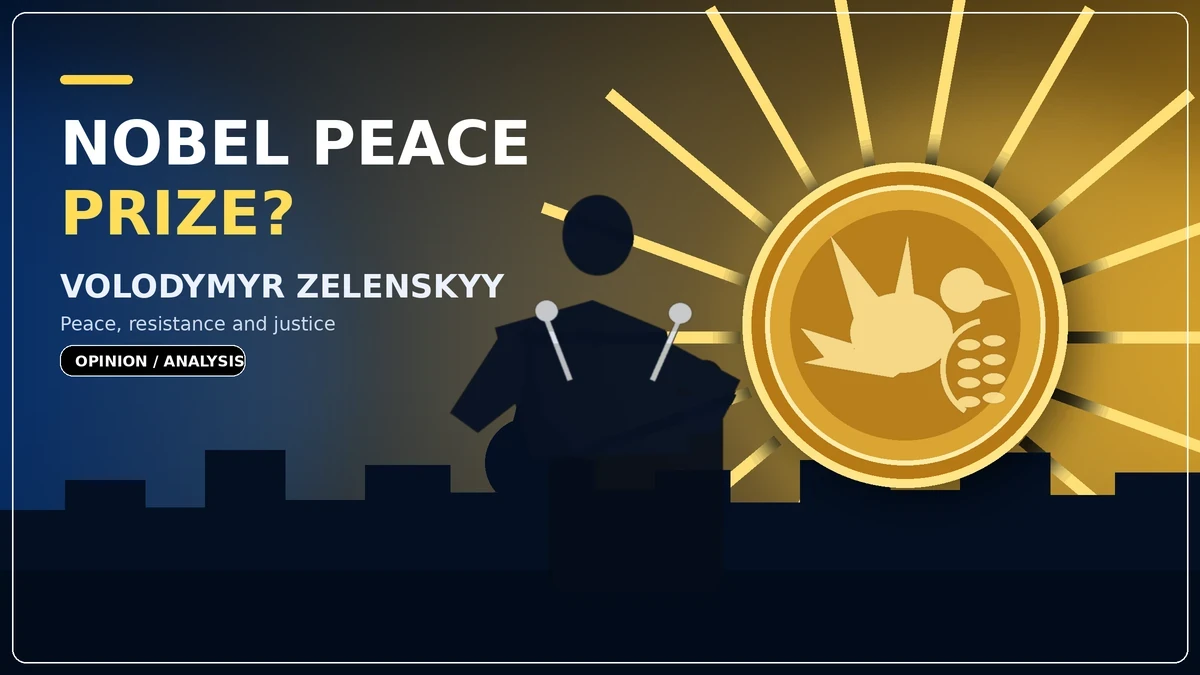
Debate over a Nobel Peace Prize for Volodymyr Zelenskyy asks whether resistance to invasion can be understood as a path toward a just peace.


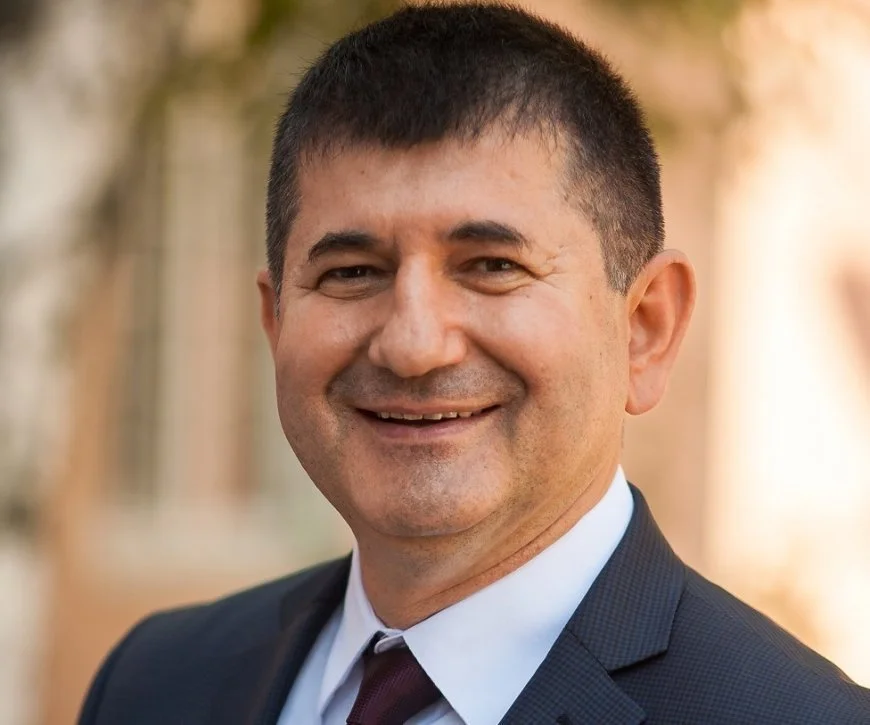
Yusuf Inan
Journalist, Author | Political and Strategic Analyst
KYIV, UKRAINE — The idea of awarding the Nobel Peace Prize to Ukrainian President Volodymyr Zelenskyy has revived a profound debate over what peace means in the middle of a war.
This is not merely a question of whether one political leader deserves an international award. The deeper issue is how the resistance of an invaded nation should be understood within the idea of peace.
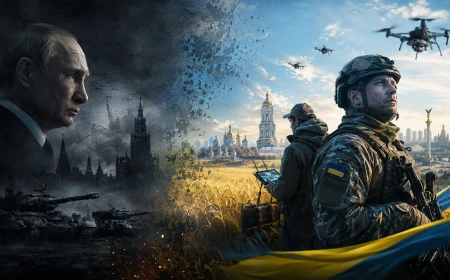
Ukraine did not launch this war. It is defending its existence, sovereignty, territorial integrity and political independence against Russia’s full-scale invasion. For that reason, the debate over Zelenskyy and the Nobel Peace Prize cannot be confined to conventional assumptions that war and peace are always absolute opposites.
Why the Nobel Peace Prize debate matters
The Nobel Peace Prize is generally associated with efforts to end wars, defend human rights, strengthen cooperation among peoples and advance disarmament. Awarding it to the serving president of a country actively engaged in war could therefore appear contradictory at first glance.


Ukraine’s experience, however, complicates that assumption.
When a country is invaded, its cities are bombed, its civilians are killed and its population is subjected to an attempt at forced political submission, defending that country cannot automatically be described as an act against peace.
A lasting peace cannot be built by rewarding aggression. Nor can it be sustained by asking the victim of an invasion to accept the permanent consequences of military coercion.


The Zelenskyy debate therefore leads to a larger question: Is peace simply the absence of gunfire, or must it also include justice, liberty, sovereignty and security?
A ceasefire may stop violence temporarily. But without justice and credible security, it may merely postpone the next war.
The strongest arguments in Zelenskyy’s favor
The most powerful argument supporting Zelenskyy’s candidacy is the leadership he demonstrated when Russia launched its full-scale invasion in February 2022.
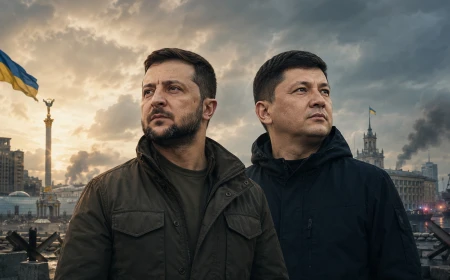
During the first days of the assault, when the possible fall of Kyiv was widely discussed, Zelenskyy remained in the capital. His decision was not merely political. It became a critical source of public morale.
His message that Ukraine’s leadership was still present showed the country that the government had not collapsed, that its president had not fled and that resistance would continue.
That moment influenced not only Ukrainians but also international public opinion. Zelenskyy became the public face of a society refusing to surrender its statehood.
He subsequently addressed European parliaments, the United States Congress, international institutions and global audiences, keeping Ukraine at the center of international attention.
His argument was that Ukraine was not only defending its own borders. It was also defending principles at the foundation of the international order: national sovereignty, territorial integrity and the prohibition on changing borders through force.
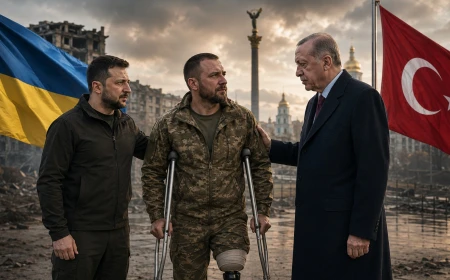
Viewed through this lens, a Nobel Peace Prize for Zelenskyy could symbolically honor not only one person but also the wider resistance of Ukrainian society.
Peace cannot be reduced to surrender
The most sensitive aspect of the debate concerns the definition of peace itself.
If peace means ending hostilities at any price, almost any agreement allowing an aggressor to retain the gains of invasion could be presented as a peace settlement. Yet such an arrangement might only postpone another, potentially more destructive conflict.
For Ukraine, meaningful peace requires more than silencing weapons. It involves ending the occupation, protecting civilians, returning abducted children, investigating war crimes and recognizing Ukraine’s sovereignty.
Zelenskyy’s position can therefore be understood not simply as an effort to prolong war, but as a rejection of peace imposed through submission.
That position carries an immense cost. Every additional month of fighting brings more deaths, destroyed infrastructure, displaced families and deeper exhaustion across Ukrainian society.
Yet an unjust settlement has costs of its own. It could legitimize territorial conquest, encourage further aggression and tell other powerful states that military force can successfully rewrite international borders.
Peace without security may become an interval between wars. Peace without justice may institutionalize the outcome of violence.
Why criticism should not be dismissed
The arguments against awarding Zelenskyy the Nobel Peace Prize also deserve serious consideration.
The Nobel Peace Prize is not a decoration for military success. Giving it to the active leader of a state engaged in a major armed conflict would inevitably raise questions about the award’s purpose and historic meaning.
Critics could argue that the prize would be more appropriately given to human rights defenders, organizations assisting war victims, civil society groups documenting alleged war crimes or individuals working for the release of prisoners and abducted civilians.
These are not frivolous objections.
There is also the political message such an award would carry. Russia and its supporters would almost certainly portray the decision as an extension of Western political support for Kyiv rather than as an independent recognition of work for peace.
That propaganda response should not determine the decision. Nevertheless, it cannot be ignored completely.
A peace prize should ideally rise above geopolitical camps. Awarding it to a sitting wartime president would make that separation more difficult, even when the country he leads is defending itself against aggression.
Should the award go to Zelenskyy alone?
A more balanced option would be to recognize Zelenskyy within a broader representation of Ukrainian resistance and civil society.
The prize could be shared with Ukrainian human rights organizations, medical workers, volunteers, civil defense groups or institutions documenting war crimes and assisting victims.
Such a formula would acknowledge Zelenskyy’s historic leadership while avoiding the risk of reducing Ukraine’s entire struggle to one individual.
Ukraine’s resistance has not survived solely because of presidential decisions. It has endured through the sacrifices of millions of people.
Soldiers defending the front lines, doctors working under bombardment, emergency workers restoring electricity, families evacuating children, journalists documenting the war and civilians preserving Ukrainian identity under occupation are all central to this story.
Zelenskyy may symbolize that collective resistance, but he does not carry its burden alone.
A shared award could therefore deliver a more inclusive message: Ukraine’s defense is not simply a leader’s political project but a national effort rooted in civil courage, democratic survival and collective sacrifice.
What message would the prize send?
Awarding the Nobel Peace Prize to Zelenskyy, or to a broader Ukrainian group represented partly by him, would send a powerful international message.
It would suggest that peace is not achieved by satisfying an aggressor, but by protecting the rights and security of those subjected to aggression.
It would also show that Ukraine has not been abandoned and that sovereignty, international law and the protection of civilians are more than ceremonial phrases in diplomatic documents.
Still, symbolic recognition cannot replace material realities.
A Nobel Peace Prize would not provide air defense systems. It would not reconstruct destroyed cities, return lost lives or independently secure a peace agreement.
Its value would instead lie in legitimacy, morale and international attention. Symbols do not end wars, but they can influence how wars are understood and whose claims are considered morally legitimate.
For Ukraine, that international recognition could reinforce the argument that its resistance is not a rejection of peace, but a struggle for the conditions under which peace can endure.
Should Zelenskyy receive the Nobel Peace Prize?
Supporting a Nobel Peace Prize for Zelenskyy is defensible, but the support must be framed carefully.
It should not be described as a prize for warfare, military confrontation or battlefield success. It should be presented as recognition of resistance to aggression, defense of international law and the pursuit of a peace that does not require an invaded country to surrender its freedom.
The most responsible approach may be to recognize Zelenskyy as a symbol of the Ukrainian people while advocating an award that also includes representatives of Ukrainian civil society.
That would preserve recognition of his historic role without implying that the experience of an entire nation belongs to a single leader.
The idea remains controversial, but it is not without foundation.
If peace is more than surrender, and if justice is an essential element of lasting stability, Ukraine’s struggle can reasonably be understood as part of the pursuit of peace.
The final question is therefore not only whether Zelenskyy deserves the prize. It is whether the world is prepared to recognize the defense of an invaded people’s freedom as a legitimate part of peace itself.
Yusuf Inan
Yusuf Inan is a journalist and writer. He serves as Editor-in-Chief of UAPresa.com, WiseNewsPress.com, SehitlerOlmez.com and YerelGundem.com, and specializes in strategic and political analysis of Turkish and global affairs.
What's Your Reaction?
 Like
0
Like
0
 Dislike
0
Dislike
0
 Love
0
Love
0
 Funny
0
Funny
0
 Wow
0
Wow
0
 Sad
0
Sad
0
 Angry
0
Angry
0

Editor | Wise News Press — Delivering accurate, timely global news with integrity, insight, and editorial responsibility.










Comments (0)