



Russia’s Kyiv attack exposed weakness behind Putin’s show of force
Russia’s massive attack on Kyiv and use of advanced missile systems showed not strength, but Moscow’s strategic exhaustion in Ukraine.


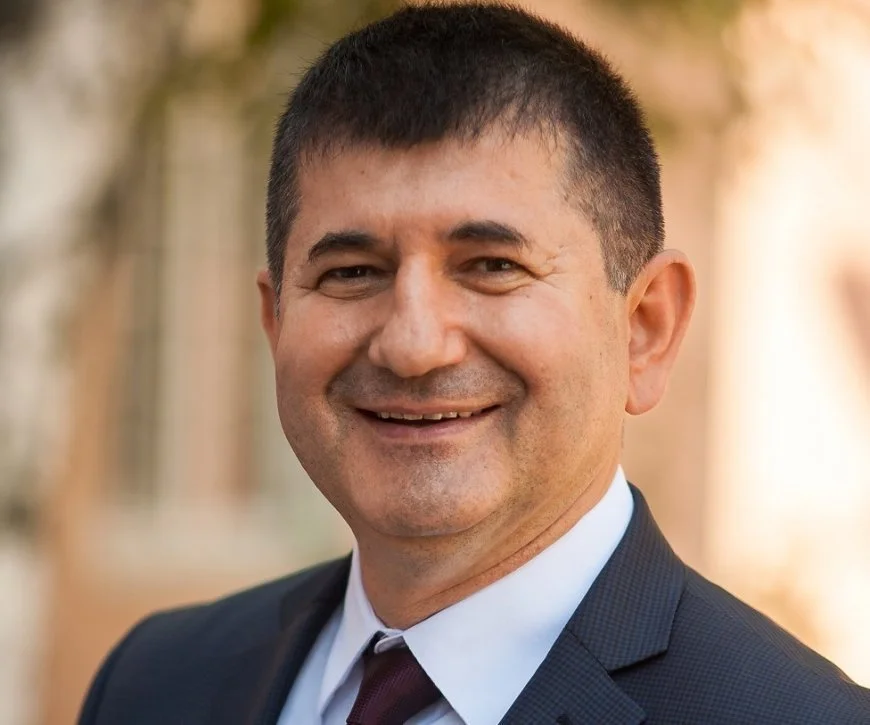
Yusuf İnan
Journalist | Political and Strategic Analyst
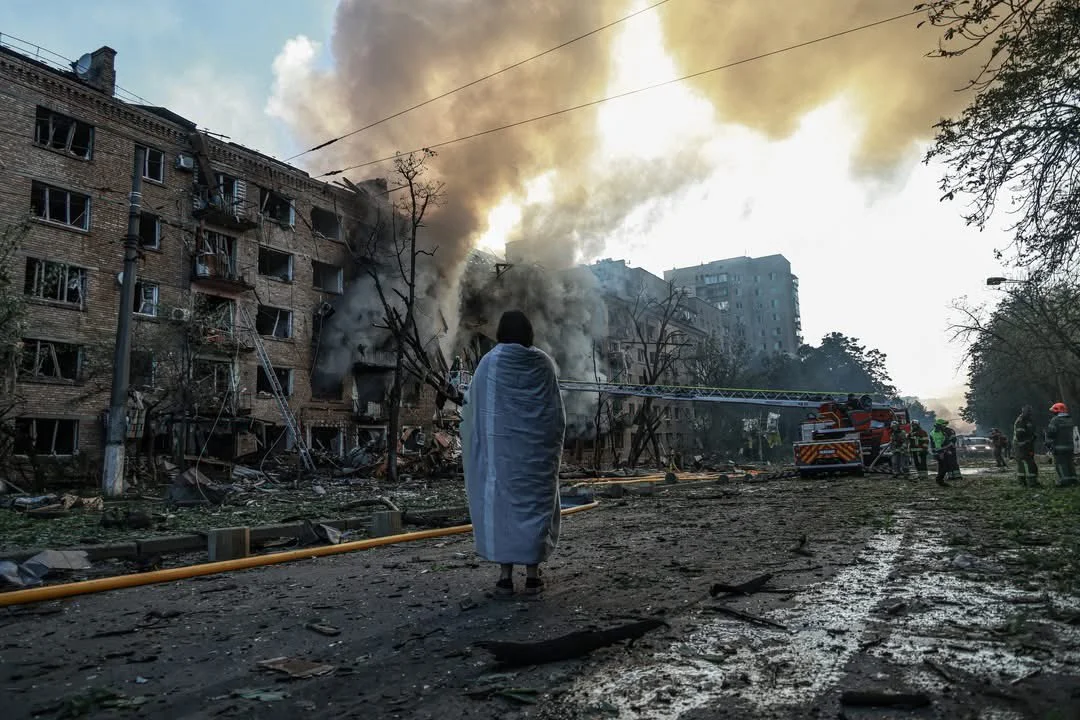
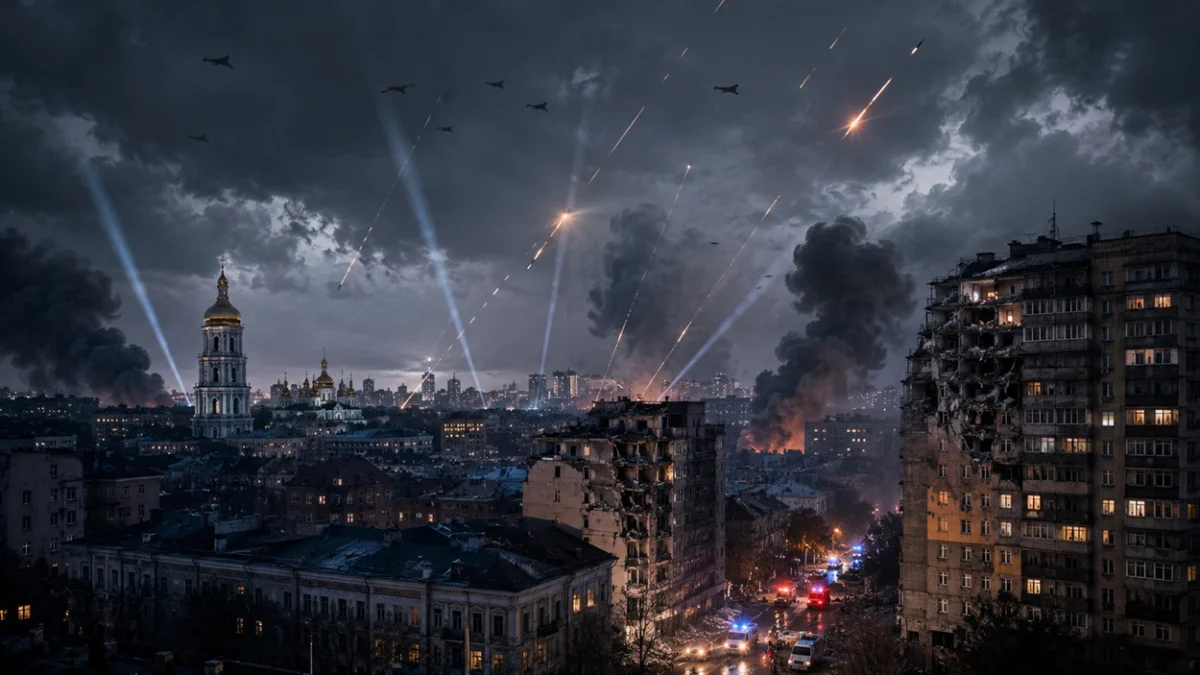
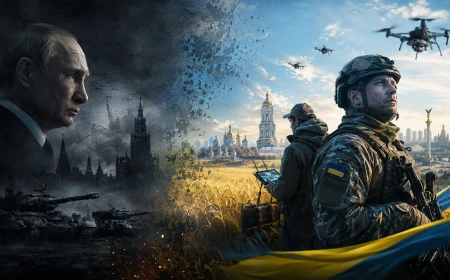
ANKARA, Turkey — Russia’s latest large-scale attack on Kyiv was presented by Moscow as a demonstration of strength, but strategically it exposed the limits of Vladimir Putin’s war in Ukraine.
Nearly five years into its full-scale confrontation with Ukraine, Russia has still failed to break Ukrainian resistance, capture the country politically or reverse Kyiv’s long-term drift toward the West. The use of advanced missile systems, including the Oreshnik intermediate-range ballistic missile, may appear at first glance to be a show of military power. In reality, it points to something deeper: a state increasingly forced to rely on escalation, intimidation and nuclear signaling because its original political objectives remain out of reach.
Russia wanted to dominate Ukraine. Instead, it has helped transform Ukraine into a more consolidated, more Western-oriented and more anti-Russian society than at any point in its modern history.
A show of force that revealed strategic weakness
Putin’s message was meant to be clear: Russia still has the capacity to strike Kyiv, overwhelm Ukrainian air defenses and remind Europe that Moscow possesses weapons with strategic reach.


But military power is not measured only by the size of an explosion or the range of a missile. It is measured by political results. On that scale, Russia’s war has produced the opposite of what Moscow intended.
If a major power launches an invasion expecting quick political control, but years later is still firing missiles at apartment blocks, schools, markets, museums and urban infrastructure, that is not a sign of strategic success. It is a sign of frustration.
Russia’s resort to advanced missile systems and nuclear-capable messaging shows that the Kremlin is moving further into coercion because it has not achieved consent, loyalty or submission.


The battlefield has not delivered the political victory Putin promised. The missile campaign is therefore being used as a substitute for strategy.
The Oreshnik missile and the nuclear shadow
The Oreshnik missile matters not only because of its technical range or destructive capacity. It matters because of the political signal attached to it.
Moscow presents the system as a weapon capable of striking much of Europe. Its use against Ukraine is therefore not only a military act against Kyiv, but also a message aimed at European capitals: Russia wants to remind the West that the war can still escalate.
That is why European officials reacted so strongly. The use of a nuclear-capable missile system is not viewed merely as another stage in conventional warfare. It is seen as a form of strategic intimidation.
Yet this kind of intimidation also raises a question: why would a confident power need to place the nuclear card closer to the table?
A state that is winning does not need to constantly raise the stakes. A state that is struggling often does. From that perspective, the Oreshnik strike may say less about Russian strength than about Russian anxiety.
Ukraine has crossed the fear threshold
One of Russia’s greatest miscalculations was its assumption that Ukraine could still be managed through shared history, language, family ties and Soviet-era memory.
That world has largely disappeared.
Before the war, Russian was widely spoken in Ukraine. Russian cultural references, Russian media habits and Russian historical narratives still had influence in parts of society. But Russia’s invasion changed the emotional meaning of those ties.
The war did not simply push Ukraine away from Moscow politically. It pushed Ukraine away emotionally.
Today, Russian influence in Ukrainian public life is shrinking rapidly. Street names are changing. Monuments are being removed. Cultural references are being reinterpreted. The Russian language has not disappeared from private life, but its symbolic position has been deeply weakened.
Every Russian missile accelerates that process.
Russia is not only destroying buildings. It is destroying the remaining traces of its own cultural influence in Ukraine.
Every missile cuts another historical bond
The Russian-Ukrainian relationship was never simply a relationship between two separate states. Families were intertwined. Millions of people had relatives on both sides. Cities such as Kyiv, Odesa, Kharkiv and Mykolaiv carried layered histories, languages and identities.
That is what makes Russia’s war morally and strategically self-destructive.
When Russia bombs Ukraine, it often strikes cities where Russian-speaking Ukrainians live, where families have Russian relatives, where shared history once mattered. In many cases, Moscow is not attacking a foreign civilizational enemy. It is attacking communities with which Russia itself was historically connected.
This is why the war has produced such a deep rupture.
Russia may still imagine Ukraine as part of its sphere of influence. But after years of missiles, drones, occupation, deportations, destroyed homes and civilian deaths, that emotional sphere has collapsed.
Whatever cultural bond existed has been shattered by Russian hands.
Russia pushed Ukraine into the West
Putin claimed that his war was meant to prevent Ukraine from becoming part of the Western security and political system. The outcome has been the opposite.
Ukraine is now more integrated with Europe and the United States than ever before. Millions of Ukrainians live across Europe. Ukrainian soldiers train with Western systems. NATO countries are increasing defense spending. European states are reducing dependence on Russia in energy, security and strategic planning.
Russia wanted to stop NATO’s influence. It revived NATO’s purpose.
Russia wanted to keep Ukraine in its orbit. It pushed Ukraine toward the European Union.
Russia wanted to prevent a Western-oriented Ukraine. It created one.
This is one of the central strategic failures of the war.
Putin’s image has been damaged
Before the full-scale invasion, Putin was widely viewed as a hard, calculating and highly strategic leader. Even many of his critics saw him as disciplined, patient and effective in the use of power.
That image has been badly damaged.
The war has exposed miscalculations in intelligence, logistics, diplomacy and political judgment. Russia has suffered enormous military costs. Its economy remains under sanctions. Its diplomatic space has narrowed. Its army is forced into a long war of attrition against a country it expected to dominate.
Putin’s authority has not collapsed, but his aura has changed.
He no longer looks like the leader who always calculates three moves ahead. He increasingly looks like a leader trapped by his own decision.
Russia is losing influence beyond Ukraine
The consequences of the war are not limited to Ukraine.
Across the post-Soviet space, states are watching Russia’s performance carefully. Countries in Central Asia, the Caucasus and the wider Turkic world may continue formal ties with Moscow, but the emotional and strategic balance is shifting.
Kazakhstan, Uzbekistan, Azerbaijan and others are pursuing more diversified foreign policies. They are maintaining relations with Russia, but also expanding ties with Turkey, China, Europe and the United States.
Even where governments remain cautious, societies are seeing the cost of being too close to Moscow.
Russia’s war has reminded neighboring states that dependence on Moscow can become a strategic liability.
China is not Russia’s rescue plan
Russia also expected that its partnership with China would help offset Western pressure. But Beijing has its own priorities.
China is interested in trade, stability, access to global markets and long-term economic power. It may benefit from a weakened Russia, but it has little interest in sacrificing its own global position for Moscow’s war.
This leaves Russia in a difficult position. It is too dependent on China to be fully sovereign in strategic terms, yet not important enough for China to risk everything on its behalf.
In the long run, Russia may find itself not as China’s equal partner, but as a junior resource supplier in a relationship shaped by Beijing’s interests.
War has brought grief to both countries
Russia’s war has brought death, displacement and destruction to Ukraine. But it has also brought grief into Russian homes.
Thousands of Russian families have lost sons, fathers and brothers. Economic pressure has grown. Sanctions have limited opportunities. Russia’s future has become more militarized, more isolated and more uncertain.
This is one of the great tragedies of the war: Russia claimed to be defending its historical interests, but it has inflicted long-term damage on its own society.
The invasion was not necessary. A Ukraine with deep economic, linguistic and historical ties to Russia already existed. Moscow could have preserved influence through trade, culture, diplomacy and shared interests.
Instead, it chose invasion — and lost the moral ground.
Victory is not won only with weapons
No war produces a clean victory when the cost is the destruction of trust between peoples.
Russia may still seize territory. It may still destroy more Ukrainian infrastructure. It may still fire advanced missiles and threaten Europe with strategic weapons. But none of that restores the bond it has broken with Ukrainian society.
A real victory is won not only on maps, but at the negotiating table, in public memory and in the hearts of people.
Russia has already lost much of that battle.
Each missile fired at Ukraine erases another Russian trace from Ukraine’s future. Each attack deepens Ukraine’s Western identity. Each civilian death makes reconciliation harder. Each strike on Kyiv, Odesa, Kharkiv or Mykolaiv confirms to Ukrainians that their future cannot be tied to Moscow.
Putin’s latest attack was therefore not merely a military event. It was a strategic confession.
It showed that Russia can still destroy, but cannot persuade. It can still threaten, but cannot attract. It can still fire missiles, but cannot rebuild the emotional, cultural and political bridge it burned.
That is why the attack on Kyiv should not be read as a Russian triumph.
It should be read as the clearest image yet of Russia’s strategic exhaustion in Ukraine.
Yusuf Inan
Yusuf Inan is a journalist and writer. He serves as Editor-in-Chief of UAPresa.com, WiseNewsPress.com, SehitlerOlmez.com and YerelGundem.com, and specializes in strategic and political analysis of Turkish and global affairs.
What's Your Reaction?
 Like
0
Like
0
 Dislike
0
Dislike
0
 Love
0
Love
0
 Funny
0
Funny
0
 Wow
0
Wow
0
 Sad
0
Sad
0
 Angry
0
Angry
0

Editor | Wise News Press — Delivering accurate, timely global news with integrity, insight, and editorial responsibility.















Comments (0)