



Turkey’s NATO Moment, Rubin Claims and the Strategic Test Facing Ankara
The Ankara NATO summit, Michael Rubin’s claims and Russia’s war on Ukraine raise a critical question about Turkey’s strategic resilience.


By Yusuf Inan | Wise News Press
Journalist and Author | Political and Strategic Analyst
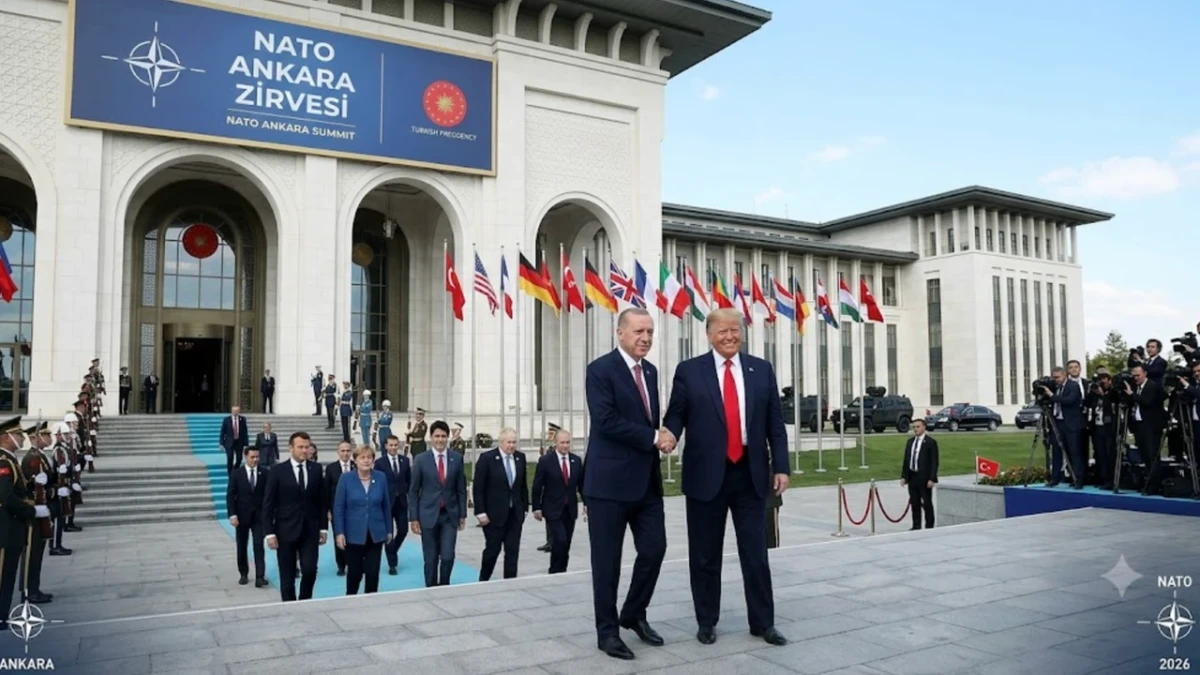
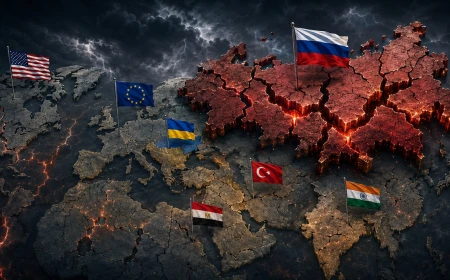
ANKARA, TURKEY — The NATO summit in Ankara was not only a diplomatic event; it was also a measure of Turkey’s strategic relevance at a time when Russia’s war on Ukraine is reshaping European security.
The summit placed Turkey at the centre of several overlapping debates: NATO’s future, Black Sea security, Ukraine’s air defence needs, deterrence against Russia and the role of defence production in a prolonged war.
At the same time, American analyst Michael Rubin’s renewed criticism of Turkey, President Recep Tayyip Erdoğan and the ruling AK Party again entered the public debate. These claims should not be treated as established facts. But their timing, amplification and political context deserve careful examination.
The real issue is not Rubin himself. The larger question is whether Turkey can convert its growing role inside NATO into durable strategic influence while protecting institutional discipline, legal standards and internal political resilience.


The Ankara summit needs a balanced reading
The NATO summit in Ankara should not be read only as proof of Turkey’s rise. It also reflected NATO’s urgent need to build a broader and more resilient front against Russia.
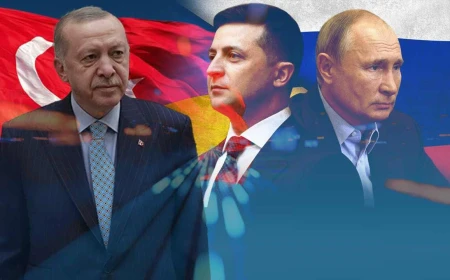
Since Russia’s full-scale invasion of Ukraine, the Black Sea has become one of the most important theatres of European security. Turkey’s position in this region is unique. It controls access to the Black Sea through the Turkish Straits, remains a NATO member, supports Ukraine’s territorial integrity and keeps diplomatic channels open with Moscow.
This balancing role gives Ankara strategic room for manoeuvre, but it also brings pressure. For NATO, Turkey is too important to ignore. For Russia, a more influential Turkey inside the alliance is strategically uncomfortable.


That is why the Ankara summit mattered beyond protocol. It showed that any serious conversation about Ukraine, Russia, the Black Sea and NATO’s southern flank must include Turkey.
Rubin’s claims require scrutiny, not reflexes
Michael Rubin has long taken a harsh line toward Erdoğan’s Turkey. His writings and public interventions often frame Ankara as a problem for Western policy rather than as a strategic partner.
For that reason, Turkish reactions to Rubin are often defensive. Some dismiss him as part of an anti-Turkey lobby, an intelligence-linked narrative or a wider campaign against Erdoğan. Such reactions may be politically understandable, but they are not sufficient for serious analysis.
The more disciplined approach is to separate facts, interpretations and allegations. Facts should be checked. Interpretations should be debated. Allegations should not be treated as conclusions without evidence.
The useful question is not whether Rubin is sympathetic to Turkey. He is not. The useful question is why such claims are circulated at moments when Turkey’s visibility inside NATO is increasing, and whether they are intended to influence the international perception of Ankara’s direction.
That question is legitimate. But legitimacy ends where proof is replaced by assumption.
Turkey’s stability matters beyond Turkey
For international readers, the key point is this: Turkey’s domestic stability is not only a Turkish issue. It matters for Ukraine, NATO and the Black Sea region.
A stable Turkey can help maintain balance in the Black Sea, support Ukraine diplomatically and militarily, manage communication with Russia and contribute to NATO’s deterrence posture.
A weakened or deeply polarised Turkey would create strategic uncertainty. It could complicate NATO’s southern flank, reduce coordination on Ukraine and open additional space for Russian manoeuvring.
This does not mean Turkey should be immune from criticism. No state should be. But it does mean that debates about Turkey’s internal politics must be understood within a larger regional security environment.
Turkey is not merely a domestic political story. It is a strategic state located at the intersection of Europe, the Middle East, the Caucasus and the Black Sea.
Russia is a risk factor, but evidence remains essential
There is no public evidence proving that Russia is directly seeking a change of power in Turkey. Such a claim would require strong documentation, not inference.
However, it is reasonable to say that Moscow has a strategic interest in weakening the cohesion of key NATO members. Russia has used political division, media influence, cyber pressure, energy leverage and information operations as tools of statecraft.
Ukraine knows this method well. For years, Moscow tried to influence Ukrainian politics, public opinion and elite networks before launching the full-scale invasion.
Turkey should therefore remain alert to similar risks without falling into conspiracy language. Strategic awareness is necessary. Political paranoia is dangerous.
If Russian media, political circles or proxy networks send messages about political change in Turkey or Ukraine, those signals should be documented and analysed. But they should not be exaggerated beyond the available evidence.
A serious state separates warning signs from proven facts.
The FETÖ debate needs precision
The term FETÖ is central to Turkish political and security discourse. It refers to the network that Turkish authorities accuse of orchestrating the failed coup attempt of 15 July 2016.
For Turkey, this is not an abstract issue. The country experienced a traumatic attempt to seize state power through networks embedded in the military, judiciary, bureaucracy, media and education system.
But precisely because the issue is serious, the term should be used carefully. If every uncomfortable voice, every foreign criticism or every political dispute is labelled as FETÖ, the concept loses precision.
A credible security approach requires evidence: financial links, organisational chains, communication records, instructions, institutional penetration and documented relationships.
Broad labels may create political noise, but they do not strengthen the state. They can even weaken the fight against real networks by blurring the line between fact and rhetoric.
Turkey’s challenge is to protect itself from infiltration and manipulation without turning every political disagreement into a security accusation.
Erdoğan’s role and the state’s institutional capacity
Under Erdoğan, Turkey has gained greater diplomatic visibility and strategic room for manoeuvre. Its defence industry has expanded, its role in regional crises has grown and its position inside NATO has become more consequential.
This does not mean that every Turkish policy is beyond criticism. Turkey’s balancing act between NATO, Russia and regional interests carries risks. It can create mistrust among allies, invite pressure from Moscow and generate political debate at home.
Still, the broader fact remains: Turkey today has more visibility and more leverage than it had in previous decades. It speaks with Washington, Brussels, Kyiv and Moscow. It plays a role in the Black Sea, the Caucasus, Syria, the Eastern Mediterranean and NATO’s defence planning.
The Ankara summit made this role visible. It showed not only Erdoğan’s diplomatic style, but also the institutional capacity of the Turkish state to host and shape major security conversations.
For a balanced analysis, Erdoğan’s leadership and Turkey’s state capacity must be read together. One cannot explain the current Turkish role without Erdoğan. But one also cannot reduce Turkey’s strategic importance to one leader alone.
Institutional resilience is the real test
As Turkey’s role grows, pressure around it will also grow. That pressure may come through foreign governments, media narratives, economic vulnerabilities, diplomatic disputes and internal polarisation.
The answer cannot be emotional overreaction. Turkey needs institutional discipline.
It must distinguish between opposition and sabotage, criticism and information operations, political competition and national security threats. These distinctions are essential for any serious state.
A strong country does not fear criticism. But it does not ignore real influence networks either. A strong country does not govern through rumours. But it does monitor risks carefully.
This is where Turkey’s next strategic test begins. The country’s external influence will depend not only on military power or diplomatic visibility, but also on the quality of its institutions, legal standards and internal political resilience.
Conclusion: Turkey’s direction is the real question
Michael Rubin’s claims do not define Turkey’s future. They are part of the wider political noise surrounding Ankara’s changing role.
The real question is whether Turkey can transform its NATO position, Black Sea geography and diplomatic flexibility into a durable strategic advantage.
To do that, Ankara needs strong leadership, but also strong institutions. It needs security awareness, but also legal discipline. It needs confidence, but also evidence-based decision-making.
The Ankara summit opened a strategic window for Turkey. It showed that the country is no longer a peripheral actor in NATO’s security debate. It is part of the core conversation about Russia, Ukraine, deterrence and the future of the Black Sea.
For Ukraine, a stable and strategically serious Turkey matters. For NATO, Turkey’s role is indispensable but complicated. For Russia, Turkey’s strength inside the alliance is a challenge.
That is why the debate should not be reduced to Michael Rubin, media headlines or emotional labels.
The larger issue is Turkey’s direction.
If Ankara protects institutional discipline, avoids conspiracy-driven politics and maintains its strategic balance, it can turn this moment into long-term influence.
If it allows internal polarisation, unverified accusations and external narratives to dominate, the opportunity opened by the Ankara summit may be weakened.
Turkey’s door is open. The task now is to walk through it with confidence, evidence and state seriousness.
Yusuf Inan
WiseNewsPress.com
Yusuf Inan is a journalist and writer. He serves as Editor-in-Chief of UAPresa.com, WiseNewsPress.com, SehitlerOlmez.com and YerelGundem.com, and specializes in strategic and political analysis of Turkish and global affairs.
What's Your Reaction?
 Like
0
Like
0
 Dislike
0
Dislike
0
 Love
0
Love
0
 Funny
0
Funny
0
 Wow
0
Wow
0
 Sad
0
Sad
0
 Angry
0
Angry
0

Editor | Wise News Press — Delivering accurate, timely global news with integrity, insight, and editorial responsibility.











Comments (0)