



Russian strikes kill 7 in Ukraine as NATO summit continues in Ankara
Russian overnight strikes killed at least seven people across Ukraine hours before Trump and Zelenskyy met at the NATO summit in Ankara.



By Ahmet Taş | Wise News Press
ANKARA, TURKEY — Russian overnight attacks killed at least seven people across Ukraine as NATO leaders continued talks in Ankara and Kyiv pressed allies for stronger air defence support.
According to Euronews, the strikes hit several Ukrainian regions only hours before US President Donald Trump and Ukrainian President Volodymyr Zelenskyy were expected to meet on the sidelines of the NATO summit in Turkey. The latest attacks added urgency to Kyiv’s calls for more Patriot missiles and other systems capable of intercepting Russian ballistic weapons.
Russian attacks hit several Ukrainian regions
Ukrainian officials said at least seven people were killed in fresh Russian strikes overnight. The deaths were reported in Kyiv, Mykolaiv, Kharkiv and Kherson regions, underlining the broad geographic scale of the attacks.
Kyiv Mayor Vitali Klitschko said one person was killed in the capital after a missile attack triggered fires in warehouse areas. In Kyiv, a large explosion was heard shortly after midnight before air raid sirens sounded, an unusual failure in the warning system that alarmed residents who have become used to relying on alerts before incoming strikes.
In the southern Mykolaiv region, Russian forces used guided aerial bombs in an attack that killed a mother and her daughter, according to regional military administration chief Vitaliy Kim. Officials also reported two deaths in the northeastern Kharkiv region and two more in the southern front-line Kherson region.
Kyiv faces renewed missile and drone pressure
Russia has carried out several large and deadly attacks on Kyiv in the past week. Euronews reported that ballistic missile and drone strikes this month have killed more than 50 people in the Ukrainian capital and surrounding areas.


The renewed pressure on Kyiv has exposed the limits of Ukraine’s air defence network, particularly against ballistic missiles that travel at extremely high speeds. Ukrainian authorities have repeatedly said that systems such as the US-made Patriot are among the few tools capable of intercepting these weapons.
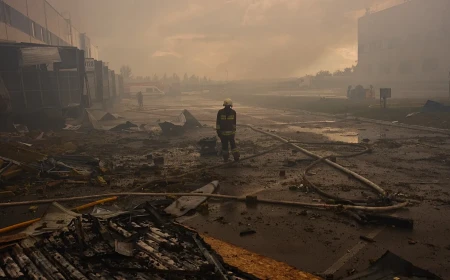
The latest attack came after a series of strikes that damaged residential buildings, warehouses and civilian infrastructure. Emergency crews were seen working to extinguish fires in Kyiv and Chernihiv after Russian air attacks on Wednesday, 8 July.
For residents, the pattern of repeated nighttime strikes has deepened concerns about the reliability of warning systems and the ability of air defences to protect densely populated areas.


NATO summit puts air defence back on the agenda
The timing of the attacks placed Ukraine’s air defence needs at the centre of the NATO summit in Ankara. Zelenskyy has used the gathering to urge allies to provide more ammunition for Patriot systems and to accelerate support against Russian ballistic missiles.
Kyiv’s message to NATO is that Ukraine can continue fighting and adapting on the battlefield, but it cannot fully shield its cities without sustained support from partners. The most urgent need is for interceptors that can stop ballistic missiles before they hit civilian areas or critical energy infrastructure.
The Ankara summit has also given Zelenskyy an opportunity to argue that Ukraine is not only a recipient of security assistance but also an emerging contributor to European defence. Ukrainian officials point to the country’s drone capabilities, battlefield experience and rapid technological adaptation as assets that could strengthen the wider alliance.
Trump and Zelenskyy expected to discuss defence support
The Russian strikes occurred shortly before the expected meeting between Trump and Zelenskyy in Ankara. The meeting is seen as important for Ukraine because Washington remains central to the supply of advanced air defence systems, including Patriot interceptors.
Kyiv has been seeking both immediate deliveries and longer-term solutions, including expanded production and possible licensed manufacturing of Patriot-related equipment. Ukrainian officials argue that current global stocks are not enough to meet the scale of Russia’s missile campaign.
Trump has said in recent remarks that both Ukraine and Russia may want a settlement, but Kyiv continues to insist that negotiations cannot come at the expense of its sovereignty or territorial integrity. For Zelenskyy, stronger air defence is part of both military survival and diplomatic leverage.
Russia’s missile campaign tests Ukraine’s defences
Russia’s recent attacks have combined missiles, guided aerial bombs and drones. This mixed approach is designed to overload Ukrainian air defences and exploit gaps in coverage.
Ballistic missiles remain especially difficult to stop. They fly faster than cruise missiles and drones, leaving defenders with very little time to respond. Ukraine’s existing systems can intercept many drones, but officials have warned that ballistic threats require more advanced equipment and a larger stockpile of interceptors.
The attacks also come as Russia continues to target civilian infrastructure and urban centres. Kyiv says Moscow is trying to wear down Ukrainian society, disrupt energy systems and pressure the government ahead of any future diplomatic talks.
Moscow denies deliberately targeting civilians, but repeated strikes on residential and civilian sites have drawn condemnation from Ukraine and its allies.
Ukraine says it hit Russian shadow fleet vessels
While Russia intensified strikes on Ukrainian cities, Kyiv also reported new attacks on Russian maritime assets. Ukraine has stepped up operations against Russia’s so-called “shadow fleet,” a network of older tankers used to move oil products and generate revenue despite sanctions pressure.
The commander of Ukraine’s drone forces said 21 Russian vessels were hit in the Black Sea and the Sea of Azov over the previous 72 hours. Kyiv presents these attacks as part of a wider strategy to disrupt Russian logistics, reduce energy revenue and impose costs on Moscow far from the front line.
Ukraine has increasingly relied on drones to hit military, energy and transport targets linked to Russia’s war effort. These operations have become one of Kyiv’s main tools for offsetting Russia’s larger missile stockpiles and broader industrial capacity.
Civilian toll raises pressure on allies
The latest deaths in Ukraine are likely to increase pressure on NATO members to respond more quickly to Kyiv’s air defence requests. Ukrainian officials have repeatedly argued that delays in deliveries translate directly into civilian casualties.
At the same time, the supply of Patriot systems and missiles is limited. Several NATO and US-allied countries use Patriot batteries for their own defence, and global demand has increased amid multiple security crises.
For Ukraine, the immediate challenge is to protect major cities such as Kyiv while also defending energy infrastructure before winter. The longer-term challenge is to build a more sustainable air defence system that does not depend entirely on emergency shipments from allies.
As the NATO summit continues in Ankara, the latest Russian attacks have sharpened the central question facing Ukraine’s partners: whether they can provide the scale and speed of support Kyiv says it needs to withstand Russia’s intensifying air campaign.
WiseNewsPress.com
What's Your Reaction?
 Like
0
Like
0
 Dislike
0
Dislike
0
 Love
0
Love
0
 Funny
0
Funny
0
 Wow
0
Wow
0
 Sad
0
Sad
0
 Angry
0
Angry
0

Editor | Wise News Press — Delivering accurate, timely global news with integrity, insight, and editorial responsibility.

















Comments (0)