



NATO Ankara declaration backs Article 5 and €70B Ukraine aid for 2026
NATO leaders in Ankara reaffirmed Article 5, announced major defense procurement and pledged €70 billion in Ukraine support for 2026.


By Ahmet Taş | Wise News Press
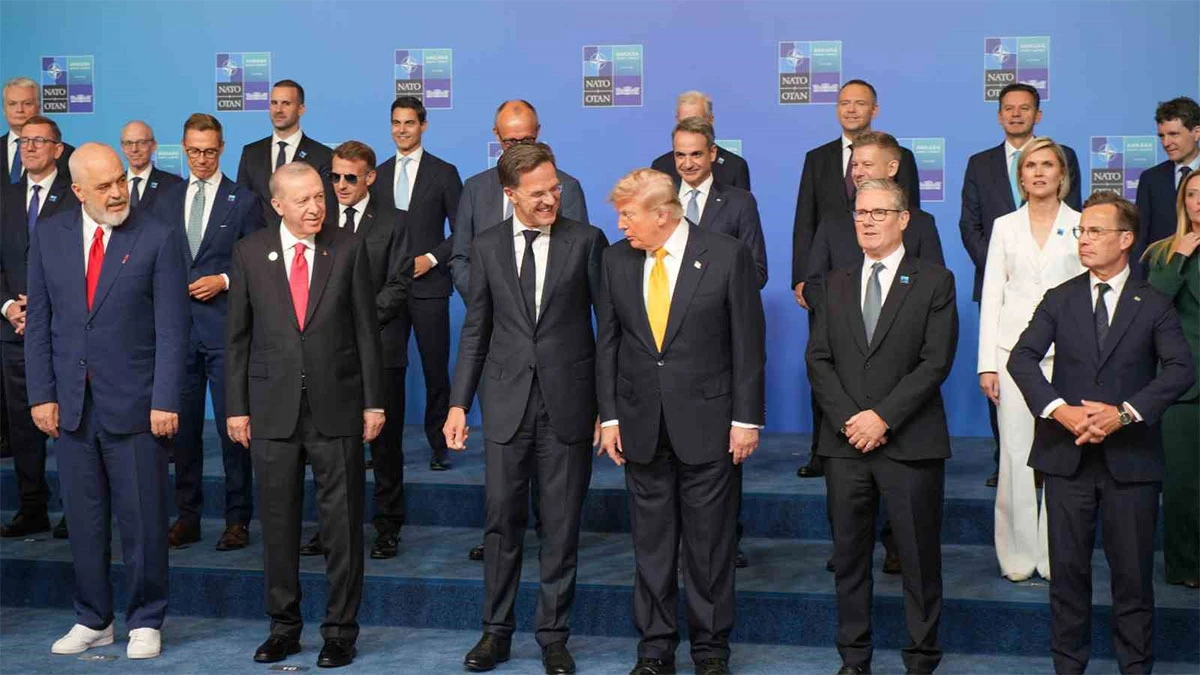
ANKARA, Türkiye — NATO leaders meeting in Ankara reaffirmed the alliance’s Article 5 collective defense commitment and pledged €70 billion in military support, equipment and training for Ukraine in 2026.
According to the summit declaration reported by Karar, the Ankara meeting placed collective defense, Russia’s long-term threat, terrorism, defense investment, Ukraine aid, Iran’s nuclear program and freedom of navigation in the Strait of Hormuz at the center of the alliance’s agenda. The declaration also pointed to a broader modernization effort, including stronger defense industrial cooperation, artificial intelligence models, unmanned systems and a transatlantic combat cloud designed to improve military coordination among allies.
Article 5 remains central to NATO’s message
The Ankara declaration renewed NATO’s commitment to Article 5 of the Washington Treaty, the alliance’s core collective defense clause. Leaders said they had gathered in Ankara to reaffirm their “unwavering commitment” to collective defense and the transatlantic bond.
The statement repeated one of NATO’s most important principles: an attack against one ally is considered an attack against all. That message was presented as the foundation of the alliance’s deterrence and defense posture at a time when European security remains under pressure from Russia’s war against Ukraine and wider instability around NATO’s borders.
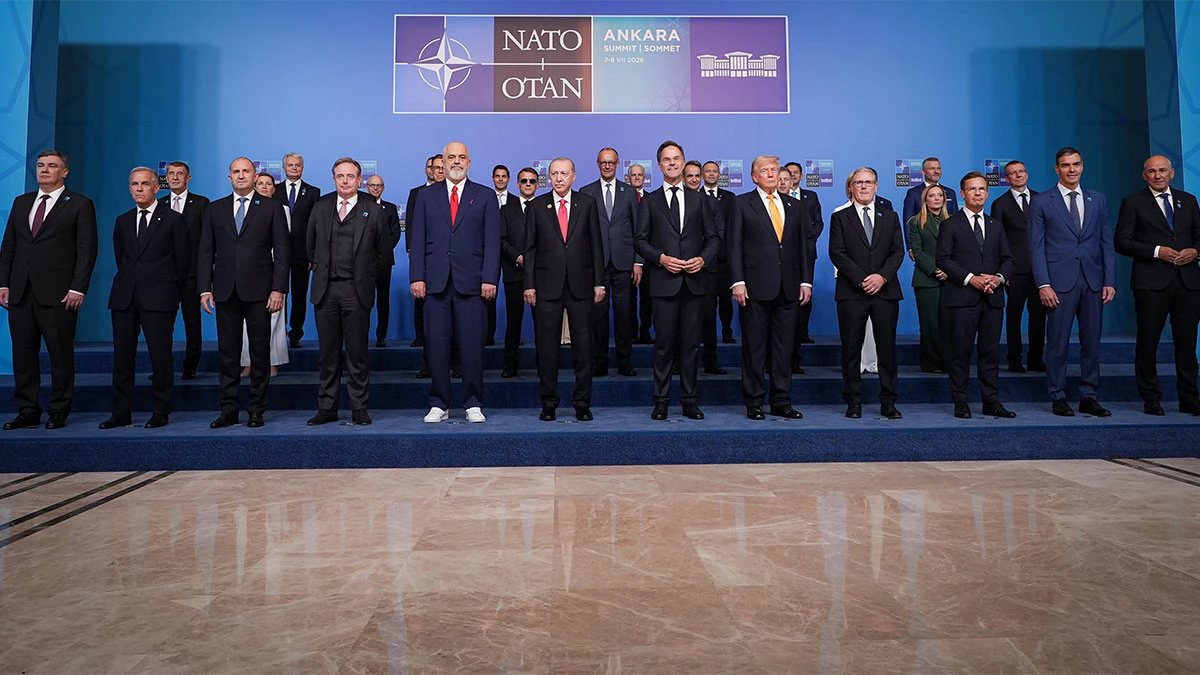


The declaration said the unity, solidarity and common strength of the alliance remain the basis of peace, security and prosperity for nearly 1 billion citizens living in NATO countries. It also underlined NATO’s commitment to a “360-degree approach” to deterrence and defense, meaning the alliance intends to respond to threats from multiple directions and across different domains.
Russia and terrorism named as continuing threats
The declaration described Russia as a long-term threat to Euro-Atlantic security and stability. Terrorism was also identified as a persistent threat to allied security.
NATO leaders said allies were implementing the Hague defense commitment in response to those challenges. According to the declaration, European allies and Canada increased their investments in basic defense requirements by more than $139 billion in 2025.


The statement said these investments are intended to provide the capabilities NATO needs while strengthening the alliance’s industrial base and resilience. The language suggests that NATO sees defense spending not only as a budget issue, but also as a matter of production capacity, industrial coordination and long-term preparedness.
The emphasis on Russia and terrorism shows that the alliance is trying to balance immediate wartime needs in Europe with broader security risks. NATO’s wording also reflects concern over hybrid threats, strategic competition and recurring shocks that can affect military readiness, infrastructure and political stability.
More than $50 billion in new defense procurement
One of the most prominent announcements in the Ankara declaration was more than $50 billion in new defense procurement. NATO leaders said the new purchases would support the alliance’s military needs and modernization plans.
The declaration said allies would expand joint production capacity and work with industry to accelerate innovation. It also said NATO members would continue efforts to remove defense trade barriers among allies and make greater use of NATO partnerships to deepen defense industrial cooperation.
This section of the declaration points to a central lesson from the war in Ukraine: modern conflicts can consume ammunition, air defense systems, drones and other military equipment at a pace that requires large and reliable industrial capacity.
By highlighting procurement, production and trade barriers together, NATO signaled that military readiness depends not only on political decisions but also on factories, supply chains and cross-border cooperation. The alliance’s goal is to ensure that member states can develop, buy and deliver military capabilities faster when crises emerge.
A stronger Europe inside a stronger NATO
The Ankara declaration also set out a broader vision for the future of the alliance, using the phrase “a stronger Europe within a stronger NATO.” It said European allies and Canada are taking greater responsibility for the defense of the alliance while working with the United States.
The statement described NATO’s deterrence and defense posture as a balanced mix of nuclear, conventional and missile defense capabilities, supported by space and cyber assets. This wording reflects NATO’s view that future defense cannot rely on one military domain alone.
The declaration also listed deep precision strike, integrated air and missile defense, unmanned systems, advanced technologies and intelligence capabilities among NATO’s priority areas. These elements are increasingly important as modern warfare becomes faster, more data-driven and more dependent on coordination between multiple systems.
For European allies, the message is also political. The declaration suggests that NATO expects Europe and Canada to shoulder more responsibility while keeping the United States central to the alliance’s deterrence structure.
Artificial intelligence and combat cloud highlighted
The Ankara declaration included a notable reference to artificial intelligence and a transatlantic combat cloud. NATO said allies are investing in the ability to deploy, support and sustain their armed forces effectively.
The statement said the alliance is developing an interoperable transatlantic combat cloud and adopting powerful artificial intelligence models. In military terms, a combat cloud refers to a connected data environment that allows different forces, sensors and weapons systems to share information more quickly.
This can help commanders make faster decisions and improve coordination across land, air, sea, cyber and space domains. For NATO, interoperability is especially important because the alliance brings together many national militaries with different systems and procedures.
The inclusion of artificial intelligence shows that NATO is placing emerging technology at the center of its modernization agenda. The declaration suggests that future military advantage will depend not only on weapons and troop numbers, but also on data processing, speed, resilience and the ability to connect forces in real time.
Ukraine to receive €70 billion in 2026 support
Ukraine was one of the central issues in the Ankara declaration. NATO leaders said Ukraine contributes to transatlantic security and reaffirmed their support for Kyiv’s freedom, sovereignty and territorial integrity.
The declaration said European allies and Canada now finance a large share of security assistance to Ukraine through bilateral and multilateral channels. NATO leaders also said this support must be fair, predictable and sustainable over the long term.
For 2026, allies pledged €70 billion in military equipment, assistance and training for Ukraine. They also confirmed sovereign commitments to maintain at least an equivalent level of support in 2027.
The declaration welcomed the European Union’s decision to provide multi-year financing for Ukraine through the Ukraine Support Loan. That reference indicates that NATO members want military and financial support for Ukraine to move beyond short-term emergency packages and toward a more structured long-term framework.
The pledge is significant because it sends a message to both Kyiv and Moscow. For Ukraine, it indicates continued Western backing as the war continues. For Russia, it signals that NATO allies intend to maintain support despite the financial and political burden of a prolonged conflict.
Iran urged to respect navigation in the Strait of Hormuz
The declaration also addressed Iran, saying allies reaffirmed that Iran must never possess a nuclear weapon. NATO leaders also called on Tehran to fully respect freedom of navigation in the Strait of Hormuz.
The Strait of Hormuz is one of the world’s most important maritime passages for energy shipments. Any disruption there can affect global oil markets, shipping routes and wider economic stability.
By including Iran and the Strait of Hormuz in the declaration, NATO showed that its security concerns extend beyond the European battlefield. The alliance linked regional instability, nuclear risk and maritime security to the wider strategic environment facing NATO members.
The wording came at a time when tensions around the Gulf and shipping security have remained a recurring concern for international trade. NATO did not present the Iran issue as separate from its broader security agenda; instead, it placed it within a wider set of challenges that includes strategic competition, hybrid threats and instability.
Türkiye thanked for hosting the summit
The declaration ended with a message of thanks to Türkiye for hosting the Ankara Summit. NATO leaders expressed appreciation for Türkiye’s hospitality and said they looked forward to meeting again at the next gathering.
The Ankara declaration will be remembered for combining several major themes: the reaffirmation of Article 5, new defense procurement, stronger European responsibility inside NATO, the adoption of advanced military technologies and a long-term support pledge for Ukraine.
Its language suggests that NATO is preparing for a security environment shaped by Russia’s war, regional instability, defense industrial pressure and rapid technological change. The summit’s message was that the alliance intends to remain united, increase its military capacity and support Ukraine through a longer and more predictable framework.
WiseNewsPress.com
What's Your Reaction?
 Like
0
Like
0
 Dislike
0
Dislike
0
 Love
0
Love
0
 Funny
0
Funny
0
 Wow
0
Wow
0
 Sad
0
Sad
0
 Angry
0
Angry
0

Editor | Wise News Press — Delivering accurate, timely global news with integrity, insight, and editorial responsibility.














Comments (0)