



US and Iran to resume talks in Pakistan amid ceasefire deadline
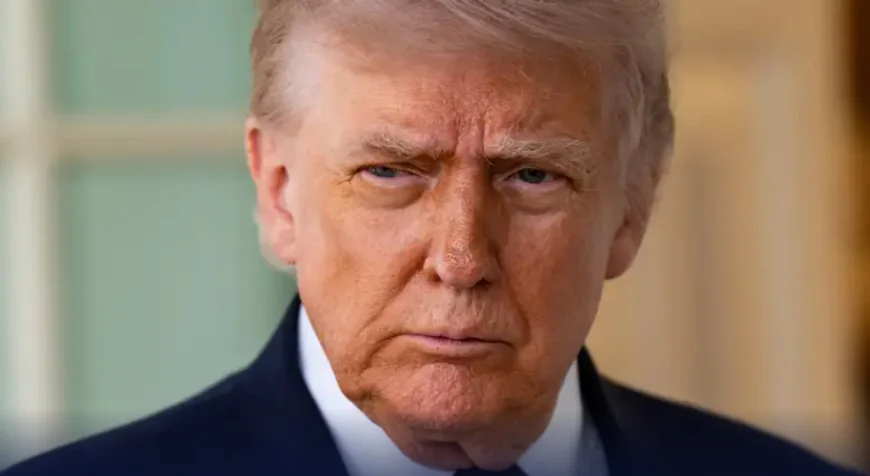
As the two-week ceasefire between the US and Iran approaches its expiration, President Donald Trump announced that an American delegation is heading to Pakistan for a new round of negotiations.


By Ahmet Taş | Wise News Press
WASHINGTON, UNITED STATES — United States President Donald Trump has officially announced that an American delegation is en route to Pakistan to resume critical negotiations with Iran, as a fragile two-week ceasefire between the two nations approaches its expiration date later this week.
The announcement represents a vital, last-minute diplomatic push to find a permanent resolution to the escalating hostilities that have severely disrupted global trade and spiked international oil prices. The first round of talks, also held in Pakistan, ended in a stalemate as both sides remained entrenched in their demands. With the clock ticking on the temporary truce, the international community is closely watching these renewed efforts to prevent the Middle East from slipping back into active warfare.
Trump confirms the diplomatic mission
The confirmation of the upcoming negotiations came directly from the US President. Utilizing his personal social media platform, Truth Social, Trump outlined his administration's immediate diplomatic steps to prevent the collapse of the ceasefire.
"My representatives are heading to Pakistan, they will be there tomorrow for negotiations," Trump wrote in a brief statement.
While confirming the mission, the President did not provide specific details regarding the composition of the US delegation. During the previous, unsuccessful round of talks in Islamabad, the American team was highly visible, led by Vice President JD Vance and featuring the President's Special Representative Steve Witkoff, alongside his son-in-law and senior advisor, Jared Kushner. It is not yet clear if the same high-level team will represent Washington in this critical second round.


Tehran's silent but expected participation
In stark contrast to the public announcements from Washington, the Iranian government has not yet issued a formal statement confirming its participation in the upcoming talks. However, indications suggest that Tehran is prepared to return to the negotiating table.
According to a report broadcast by the American CNN television network, which cited a source familiar with the Iranian government's plans, a delegation from Tehran is indeed scheduled to be in Pakistan. The report stated that the Iranian representatives would arrive on Tuesday to engage directly in the negotiations, signaling a mutual willingness to exhaust diplomatic avenues before the ceasefire lapses.
Tensions over the Strait of Hormuz
Despite the resumption of diplomatic efforts, Trump coupled his announcement with a series of aggressive warnings directed at Tehran, focusing particularly on the contested Strait of Hormuz. The control and navigability of this vital maritime passage have become the central, most volatile issue of the conflict.


In his social media post, Trump mocked Iran's recent declarations regarding the closure of the strait, emphasizing the severe economic toll the situation is taking on Tehran due to the US blockade.
"Iran recently announced that it has closed (the Strait of Hormuz); this is strange because our blockade has already closed the strait," Trump asserted. "They are unwittingly helping us. They are losing from the closure of the strait, $500 million a day! The United States is losing nothing."
The President then shifted to a direct military threat, outlining the devastating consequences of a failed negotiation: "We are offering a very fair and reasonable deal, and I hope they accept it; because if they don't, the United States will hit every single power plant and every single bridge in Iran."
The economic impact and naval blockades
Prior to the outbreak of direct military confrontation, the Strait of Hormuz operated as a free and open corridor, essential for global oil trade. The current crisis was ignited when Tehran blocked maritime passage in retaliation for combined US and Israeli military strikes. In response to the blockage, Trump initially sought support from NATO to forcefully reopen the strait, a request that was met with a negative response from the alliance.
Following the initial, surprise announcement of the blockade, global
Following a separate ceasefire agreement concerning Lebanon last week, maritime traffic through the Strait of Hormuz briefly resumed on Friday. However, this relief was extremely short-lived, as Tehran almost immediately reinstated its closure protocols, throwing global markets back into uncertainty.
Stumbling blocks in the negotiations
The primary challenge facing the negotiators in Pakistan is bridging the massive ideological and strategic gaps that caused the first round of talks to fail. During those initial meetings, Iranian representatives presented a rigid set of demands that Washington found unacceptable.
Sources familiar with the previous negotiations indicated that Tehran is insisting on the complete lifting of US economic sanctions, the unhindered continuation of its nuclear program, and recognized control over the Strait of Hormuz. When the US delegation refused to concede to these terms, the talks collapsed without a formal agreement.
Furthermore, Iran has introduced complex regional demands into the bilateral negotiations. Tehran insists that any comprehensive agreement with the United States must also include provisions regarding Lebanon, specifically demanding an absolute end to Israeli military operations against that country.
As the fragile US-Iran ceasefire nears its expiration date, the global economic impact of the standoff remains severe. At the start of the trading week, international oil prices are hovering around the $90 per barrel mark, reflecting the high anxiety among investors that the impending talks in Pakistan may fail.
What's Your Reaction?
 Like
0
Like
0
 Dislike
0
Dislike
0
 Love
0
Love
0
 Funny
0
Funny
0
 Wow
0
Wow
0
 Sad
0
Sad
0
 Angry
0
Angry
0

Editor | Wise News Press — Delivering accurate, timely global news with integrity, insight, and editorial responsibility.
















Comments (0)