



Von der Leyen Presents Alternatives as Russian Assets for Ukraine Stalls
EU Commission President Ursula von der Leyen presented a "Plan B" to finance Ukraine, including EU-backed market borrowing and bilateral deals, as the preferred plan for a war indemnity loan secured by frozen Russian assets faces Belgian resistance.
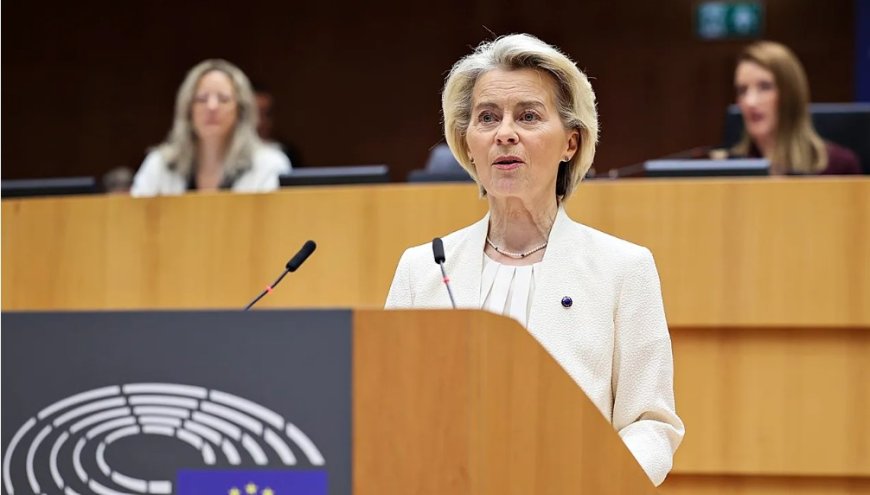


WISE NEWS PRESS / BRUSSELS, BELGIUM — NOVEMBER 15, 2025
European Commission President Ursula von der Leyen unveiled alternative options—a "Plan B"—to finance Ukraine’s budget and defense needs, should the primary plan for a war indemnity loan secured by frozen Russian assets fail. The disclosure comes as Belgium continues to voice strong reservations about the primary loan proposal.
The proposed alternatives include borrowing from markets backed by the EU budget guarantee or establishing national borrowing mechanisms through bilateral agreements among member states. These options would be considered if the preferred war indemnity loan, secured against frozen Russian Central Bank assets, cannot be implemented.
The Loan Remains the Priority
Von der Leyen stressed that the indemnity loan, which could total 140 billion Euros, remains the most powerful and prioritized plan. Speaking at the European Parliament Plenary Session on Thursday morning, she outlined the mechanism:


"We are giving a loan to Ukraine—and when Russia pays reparations, Ukraine repays that loan. This is the most effective way to support Ukraine’s defense and economy. And the clearest way to tell Russia that time is not on its side."
The concept of the €140 billion loan has gained traction among cash-strapped EU member states who lack the fiscal space for new national borrowing. The advantage of using frozen Russian assets is that the funds could be directly sourced from the cash balances currently held at the securities depository Euroclear in Brussels, without requiring new national debt.


Belgian Resistance Continues
The proposal has met stiff resistance from the Belgian government, the host nation of Euroclear. Brussels fears that implementing the plan would make it a prime target for Russian retaliation, citing a Soviet-era investment treaty with Russia that includes an arbitration clause.
Last month, Belgian Prime Minister Bart De Wever blocked EU leaders from approving the war indemnity loan on these grounds. De Wever has demanded "maximum legal certainty," robust guarantees from all member states to fully share the risk, and transparent monitoring of all other sovereign assets before the plan can move forward.
De Wever warned: "If you take the money from my country, and things go wrong, I have neither the power nor the intention to pay 140 billion euros [approximately $152 billion] in one week."
Though the Commission is working to address Belgium’s concerns ahead of the final EU summit of the year in December, the deadlock persists.
Time is Running Out for Ukraine
The announcement of a "Plan B," described as an informal preview of an upcoming "options paper" to member states, is seen by some diplomats as a tool to underscore the difficulties of the joint borrowing plan, which Scandinavian countries have already rejected.
Meanwhile, time is running out for Kyiv, which is expected to need a new foreign aid package in the second quarter of 2026. The decision by U.S. President Donald Trump to halt aid to Kyiv means the financial burden now primarily rests on Europe.
Von der Leyen concluded her address by issuing a stark warning to Moscow: "Permanent peace hinges on a strong and independent Ukraine... Putin still believes he can outlast us. He thinks that with time, Russia can achieve its goals on the battlefield. This is a clear miscalculation."
What's Your Reaction?
 Like
0
Like
0
 Dislike
0
Dislike
0
 Love
0
Love
0
 Funny
0
Funny
0
 Wow
0
Wow
0
 Sad
0
Sad
0
 Angry
0
Angry
0

Editor | Wise News Press — Delivering accurate, timely global news with integrity, insight, and editorial responsibility.




















Comments (0)