



Türkiye, Saudi Arabia and Pakistan sign Mecca mutual defense pact
Türkiye, Saudi Arabia and Pakistan signed a mutual defense pact in Mecca, declaring that an armed attack on one signatory will be treated as an attack on all three.


By Ahmet Taş | Wise News Press
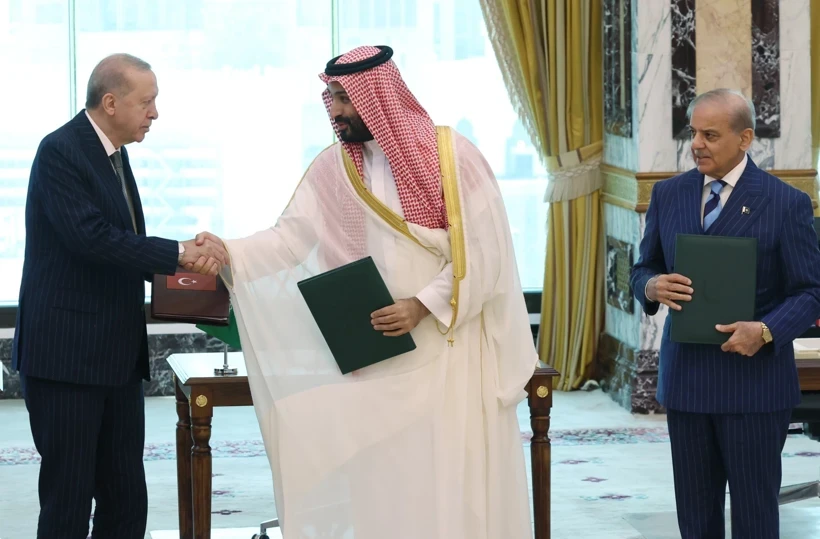
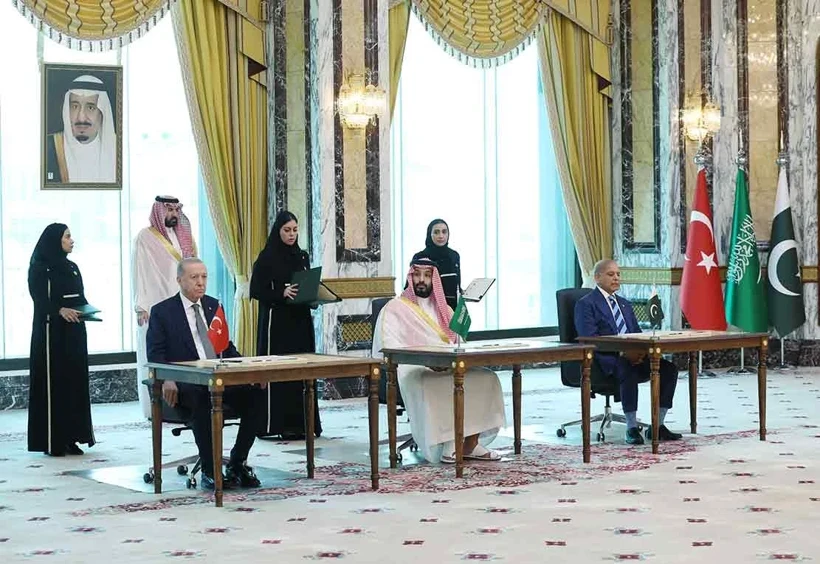
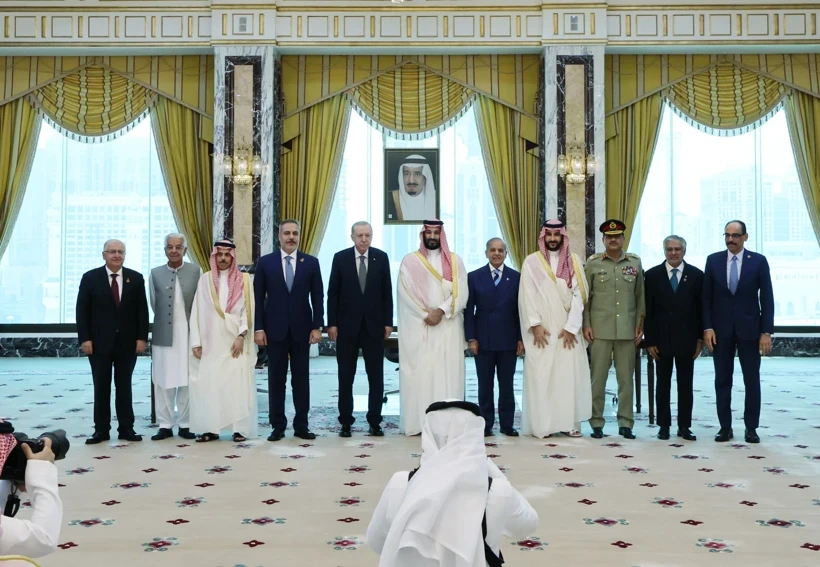
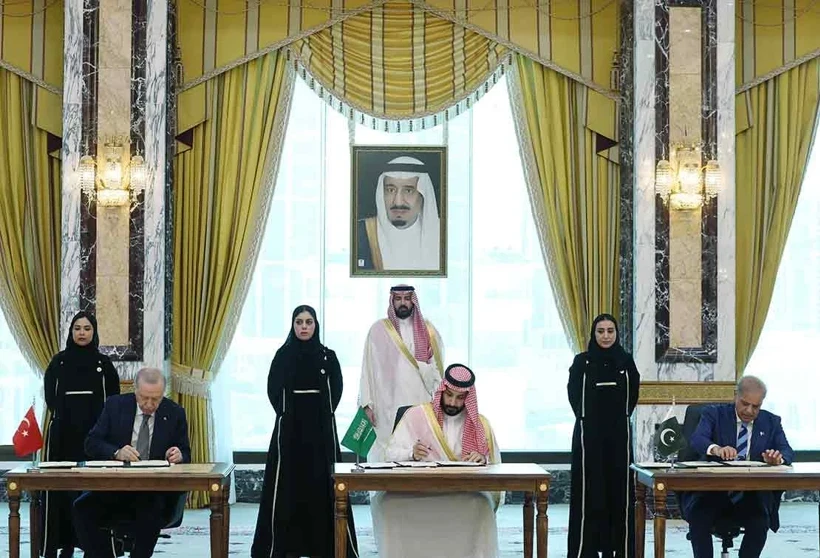
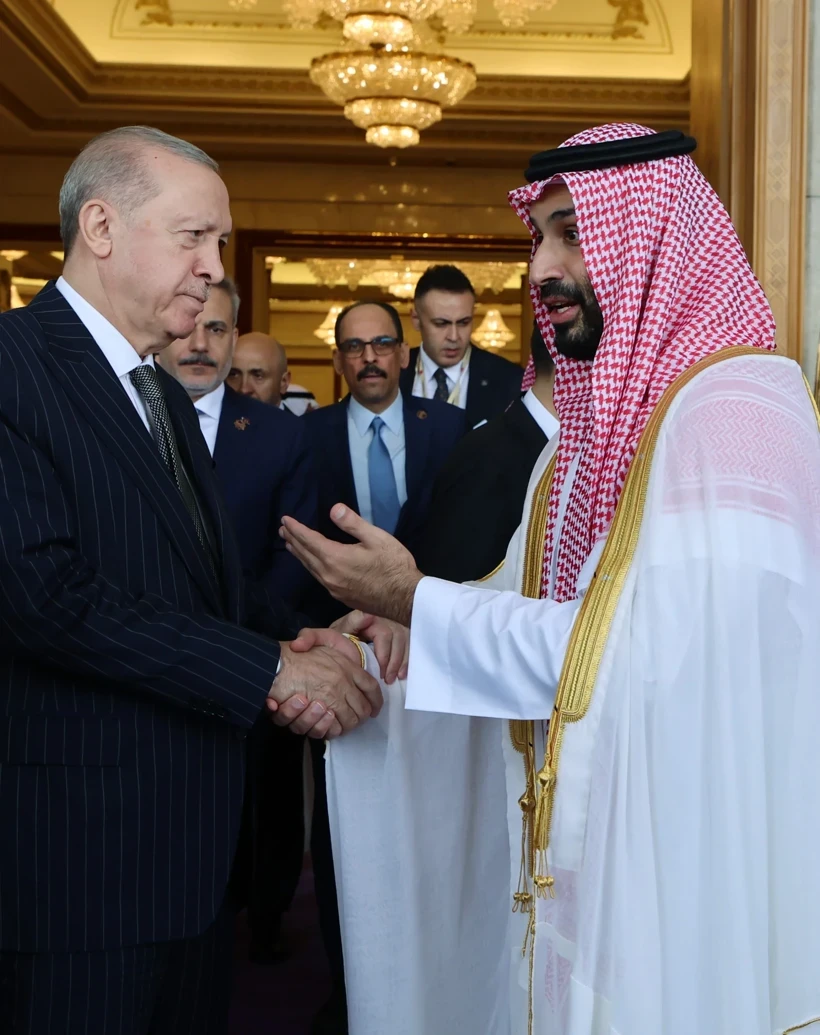
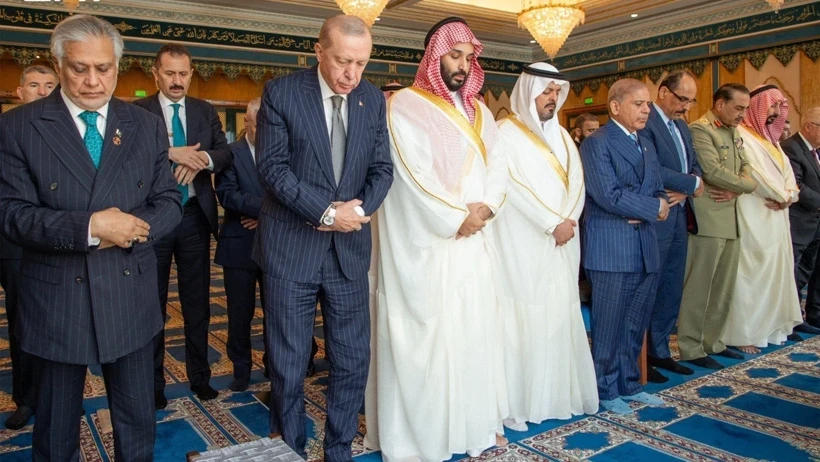
MECCA, Saudi Arabia — Türkiye, Saudi Arabia and Pakistan signed a landmark mutual defense agreement in Mecca on August 7, declaring that an armed attack against any one of the three countries would be regarded as an attack against them all.
The agreement was signed by Turkish President Recep Tayyip Erdoğan, Saudi Crown Prince and Prime Minister Mohammed bin Salman and Pakistani Prime Minister Shehbaz Sharif. The three governments said the pact is intended to strengthen collective deterrence and deepen defense cooperation, while stressing that it is defensive and does not target a specific country.
Erdoğan said the agreement also reaffirms the right of self-defense under Article 51 of the United Nations Charter and is open to other countries seeking to contribute to regional peace, prosperity and stability.
An attack on one will be considered an attack on all three
The central provision of the Mecca agreement establishes a collective-defense commitment among Türkiye, Saudi Arabia and Pakistan.
According to the joint statement released by Türkiye's Directorate of Communications, an armed attack against any one of the three states will be considered an attack against all of them. The agreement also calls for broader cooperation across defense-related fields.


The wording gives the trilateral arrangement a stronger security dimension than conventional military cooperation agreements based mainly on training, procurement or joint exercises.
However, significant operational questions remain unanswered. Reuters reported that the public statement did not specify precisely what military obligations each country had accepted or whether an attack would automatically require armed intervention by the other two signatories.


That distinction is important. The collective-defense clause establishes a political and security commitment, but the publicly available documents do not set out a joint command structure, predetermined troop commitments or an automatic military response mechanism.
Ankara says the pact is not an alternative to NATO
The agreement immediately raised questions over how the new security arrangement would interact with Türkiye's membership in NATO.
Türkiye's Directorate of Communications rejected claims that the Mecca pact conflicts with NATO's Article 5 or establishes a competing alliance. Ankara described it instead as a complementary regional security mechanism that does not alter Türkiye's existing international alliance commitments.
The Turkish government said the agreement is designed to enhance deterrence, military training, defense-industry cooperation and technology sharing rather than establish an offensive military bloc.
This means Türkiye is presenting the Mecca framework as an additional layer of regional cooperation rather than a substitute for NATO.
Reuters likewise reported that a Turkish official described the pact as purely defensive and said it did not cancel or override the signatories' existing agreements with other states.
Defense industry cooperation will be expanded
The agreement extends beyond the mutual-defense provision.
Erdoğan said the three countries intend to develop their security and defense cooperation, pursue joint defense-industry projects and strengthen cooperation against terrorism.
Türkiye's Communications Director Burhanettin Duran also said the pact is expected to increase military interoperability and deepen defense-industry cooperation among the three signatories.
The countries already have significant bilateral military ties. Reuters noted that Pakistan has provided military training and technical assistance to Saudi Arabia for decades, while Türkiye and Pakistan have developed cooperation involving military platforms and training. Saudi Arabia has also become an important customer for Turkish defense products.
The new agreement therefore creates a trilateral political framework around relationships that had largely developed on a bilateral basis.
What remains to be seen is whether this produces new joint weapons programs, coordinated military exercises, integrated air and missile defense arrangements or permanent security institutions.
Iran and Israel questions emerge amid regional tensions
Although the agreement explicitly says it does not target a particular country, its timing has led to questions about the wider Middle Eastern security environment.
Reuters reported that the three countries share concerns about escalating military tensions involving both Iran and Israel, while Saudi Arabia and other Gulf states have faced growing security pressures from the wider regional conflict.
Turkish officials, however, have avoided naming either Iran or Israel as a target of the pact.
Erdoğan said the agreement was intended to support peace, security and stability and reiterated Türkiye's preference for resolving regional crises through diplomacy, dialogue and respect for international law.
Saudi officials have similarly rejected interpretations portraying the arrangement as the foundation of a sectarian military bloc. Reuters reported that Saudi Deputy Minister for Public Diplomacy Rayed Krimly said the accord was not connected to creating a military axis, nuclear ambitions or an arms race.
The distinction between the agreement's formally stated purpose and its broader strategic consequences is likely to remain a major subject of regional debate.
Why is Egypt outside the agreement despite the R4?
Another question concerns Egypt.
Türkiye, Saudi Arabia and Pakistan already participate with Egypt in the four-country R4 consultation mechanism. The Turkish Foreign Ministry's official statement from the R4 meeting in Cairo on June 21 confirms that the grouping consists of Türkiye, Egypt, Pakistan and Saudi Arabia and coordinates positions on regional security and diplomatic issues.
Egypt, however, was not a signatory to the Mecca mutual defense agreement.
The publicly released statements from Türkiye and the three signatories do not provide an official explanation for Egypt's absence. There is therefore no confirmed basis for concluding that Cairo rejected the agreement, was deliberately excluded or plans to join later.
The distinction may partly reflect the different purposes of the two formats. The R4 is a diplomatic consultation mechanism, while the Mecca agreement contains a direct collective-defense commitment.
Erdoğan's statement that the new agreement remains open to other friendly countries means future expansion is possible, but no additional member has yet been officially announced.
The implementation of the pact will determine its strategic weight
The agreement brings together three states with significant military and geopolitical influence, but its long-term importance will depend on how its provisions are implemented.
Reuters described the signing as the result of nearly a year of negotiations and noted that the three countries already possess extensive military relationships. At the same time, the publicly available agreement leaves important questions about specific defense obligations unresolved.
Future developments to watch include the creation of joint military planning mechanisms, defense-industry projects, intelligence cooperation, military exercises and possible accession by other countries.
The response to a future security crisis would also provide the clearest indication of how the principle that an attack on one is an attack on all three operates in practice.
For now, the Mecca agreement establishes a new formal security framework linking Türkiye, Saudi Arabia and Pakistan while Ankara insists it remains compatible with Türkiye's NATO commitments and is designed as a defensive, regionally focused mechanism rather than a new rival military bloc.
WiseNewsPress.com
What's Your Reaction?
 Like
0
Like
0
 Dislike
0
Dislike
0
 Love
0
Love
0
 Funny
0
Funny
0
 Wow
0
Wow
0
 Sad
0
Sad
0
 Angry
0
Angry
0

Editor | Wise News Press — Delivering accurate, timely global news with integrity, insight, and editorial responsibility.


















Comments (0)