



War Reaches Cyprus: Iranian UAV Strikes British Sovereign Base
An Iranian drone attack struck the UK's Akrotiri base in South Cyprus, marking the first time the regional conflict has directly hit European Union territory.


BY AHMET TAŞ | WISE NEWS PRESS
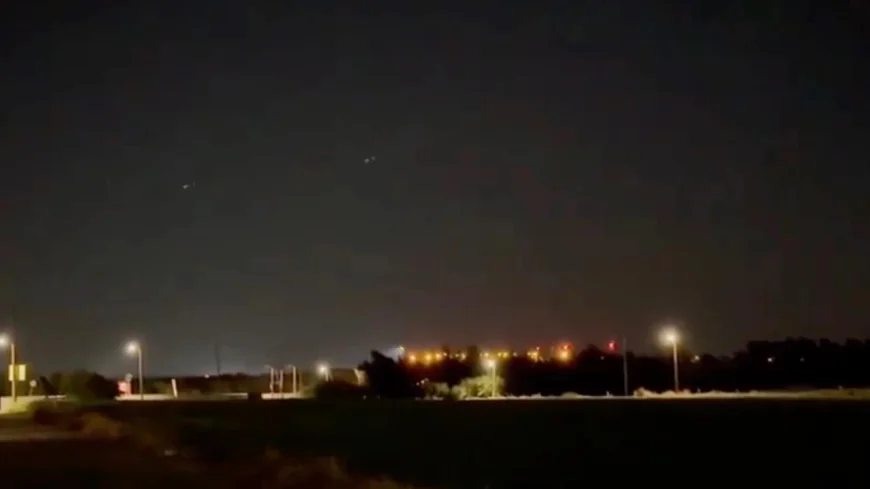
LIMASSOL, CYPRUS — The volatility of the Middle East has officially crossed into the Mediterranean as a suspected Iranian unmanned aerial vehicle (UAV) struck the British Sovereign Base Area of Akrotiri in the Republic of Cyprus (GKRY) early Monday.
The incident, which occurred at approximately 06:19 AM local time on March 2, 2026, represents a significant escalation in the ongoing regional conflict, marking the first direct Iranian military action against a territory of an European Union member state. The strike follows a weekend of unprecedented military activity, including a massive joint U.S.-Israeli operation that resulted in the death of Iranian Supreme Leader Ayatollah Ali Khamenei and several high-ranking officials.
Detailed Account of the UAV Strike on Akrotiri
The British Ministry of Defence confirmed that RAF Akrotiri was targeted by what they termed a "suspicious UAV attack." Residents near the base reported hearing multiple explosions followed by the sound of sirens and the immediate scramble of fighter jets stationed at the facility.
In an official statement, the UK Ministry of Defence emphasized that its force protection measures were at the highest level. "The base responded to defend our personnel, and we remain vigilant against further provocations," the statement read. Military analysts suggest that the base’s air defense systems were engaged to intercept multiple incoming threats, though at least one drone managed to penetrate the perimeter, causing an explosion on site.
Government Responses and Damage Assessment
Konstantinos Letymbiotis, the Government Spokesperson for the Republic of Cyprus (GKRY), confirmed through social media that the incident involved a UAV and resulted in "limited damage." He stated that national security protocols were immediately activated and that the local administration is in constant coordination with the UK government and the management of the British Sovereign Base Areas.


President Nikos Christodoulides is reportedly in continuous consultation with the National Security Council to monitor the situation. While Cyprus itself is not a combatant in the conflict, the presence of British sovereign territory on the island makes it a target for retaliatory strikes. Letymbiotis assured the public that the government would share more information as it becomes available, emphasizing that the primary focus remains the safety of all residents on the island.
Geopolitical Context: The Starmer Authorization
The attack on Akrotiri did not occur in a vacuum. Just hours prior to the strike, UK Prime Minister Keir Starmer had officially granted permission for the United States to utilize British military bases in the region for operations against Iran. Starmer defended the decision by characterizing Iran's recent regional maneuvers as "irresponsible," arguing that Tehran's actions had already placed British lives at risk.
Akrotiri serves as a vital strategic hub for Western operations in the Levant and the broader Middle East. Its use as a launchpad for U.S. aircraft involved in the February 28 strikes against Tehran likely made it a priority target for Iran's retaliatory "Epic Fury" campaign. By targeting a British base on EU soil, Tehran is sending a clear message to London and Brussels regarding the consequences of logistical support for U.S. and Israeli military actions.


Regional Escalation: Retaliation for the Death of Khamenei
The strike on Cyprus is part of a broader wave of Iranian retaliation that began following the assassination of Ali Khamenei. Iran has launched strikes against various targets across the region, specifically focusing on areas hosting U.S. military assets, including Qatar, the United Arab Emirates (UAE), and Bahrain.
The humanitarian cost of the initial U.S.-Israeli bombardment of Iran has been staggering. The Iranian Red Crescent reported that at least 201 people were killed and 747 others injured during the strikes on February 28. This high death toll, coupled with the loss of the regime's ideological leader, has fueled a state of "total war" mentality within the Iranian Revolutionary Guard Corps (IRGC), leading to the expansion of the conflict zone to include previously stable areas like Cyprus.
Implications for EU Security and NATO
The targeting of a location in the Republic of Cyprus, even if it is technically a British Sovereign Base, has sent shockwaves through the European Union. While the UK is no longer an EU member, the Republic of Cyprus is, and the proximity of the explosions to civilian areas has raised questions about the "spillover" effect of Middle Eastern wars.
Military experts warn that this could be the beginning of a new phase where "asymmetric threats," such as drone swarms and cyberattacks, are used against European infrastructure as a deterrent. NATO allies are currently reviewing their Mediterranean defense postures, as the strike proves that even heavily fortified bases like Akrotiri are not immune to Iran's modern UAV arsenal.
As of Monday morning, the situation at RAF Akrotiri remains tense. Additional air defense batteries are reportedly being deployed to the area, and civilian flight paths over the Eastern Mediterranean are being rerouted as a precaution. The world now waits to see if the UK and its allies will launch a direct counter-response from the very base that was just hit.
What's Your Reaction?
 Like
0
Like
0
 Dislike
0
Dislike
0
 Love
0
Love
0
 Funny
0
Funny
0
 Wow
0
Wow
0
 Sad
0
Sad
0
 Angry
0
Angry
0

Editor | Wise News Press — Delivering accurate, timely global news with integrity, insight, and editorial responsibility.


















Comments (0)