



Who is Ebru Yıldız, Named Germany's Doctor of the Year?
Dr. Ebru Yıldız, Director of the West German Organ Transplant Center, was named Germany’s Doctor of the Year 2025 for her efforts to raise organ donation awareness.
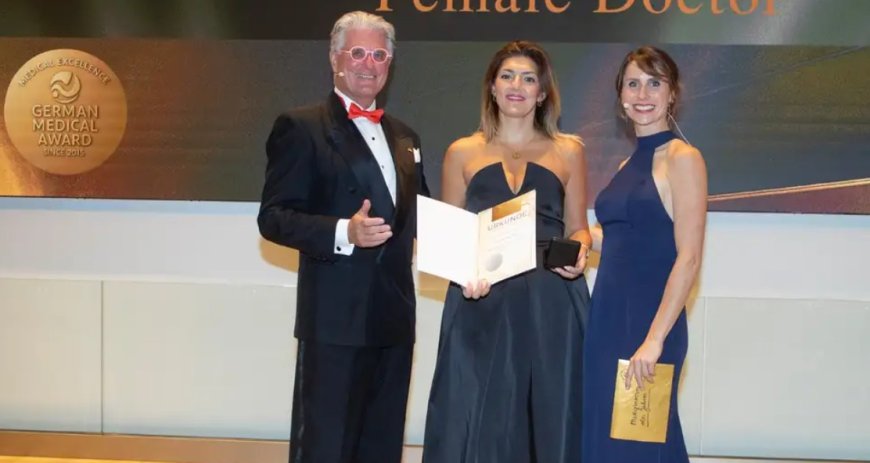


WISE NEWS PRESS / ESSEN, GERMANY — Nov. 11, 2025
Dr. Ebru Yıldız, who was selected as Germany's Woman Doctor of the Year, is a prominent figure known for her efforts to increase organ donation. Speaking to DW Turkish, Dr. Yıldız explained that one person can provide hope for up to seven others.
Dr. Ebru Yıldız is the General Director of the Organ Transplant Center at Essen University Hospital, one of Germany's leading organ transplant centers. Dr. Yıldız, a respected medical professional in the country, was honored with the Woman Doctor of the Year award at the German Medical Award 2025 for her work in raising public awareness of organ donation.
Speaking to DW Turkish about the award, Dr. Yıldız said the prize carries meaning not only as a personal achievement but also as a victory "on behalf of thousands of people who found life again through organ donation." Yıldız, who specializes in internal medicine, nephrology, intensive care, and organ transplantation, continued, "This award is not just mine, but belongs to everyone who has found new life through organ donation."
Championing Organ Donation Awareness


Yıldız has been working within the Essen University School of Medicine since 2001 and has served as the General Director of the West German Organ Transplant Center since 2019. Responsible for coordinating the center, which performs 250–300 organ transplant operations annually, Yıldız emphasizes, "I must reach more people now. Because every donation gives hope to more than one life."
Dr. Yıldız explained that she was nominated for the award by suggestion, not by her own application. "When I heard the news, I was both surprised and happy. But what delighted me most was that the issues I have worked on for years were deemed worthy of an award," she said.
Yıldız is not just a transplant specialist. She is a narrator who tries to make visible the life stories lost in the silence of intensive care. She initiated a quiet revolution in the hospital corridors to be the voice of patients who returned to life after transplantation.


"I talked to intensive care nurses and doctors. They used to say, 'Transplant patients are always in very severe conditions, why should we donate?' But they were only seeing the severely ill; they didn't know those who recovered after the transplant. I told them those stories." Yıldız’s unseen effort continued in conference halls, associations, schools, and nursing homes, conveying the stories of a mother embracing her child again, a young person returning to university, and a teacher reuniting with their classroom. She believes these stories have not only emotional but also perception-changing power.
'The Biggest Fear is Organs Being Taken Before Death'
Yıldız states that the biggest fear regarding organ donation is the worry that "organs will be taken before death" or that "they won't receive adequate treatment because they are an organ donor."
"This fear is real because people believe it. But medically, it is impossible to take organs before death. If brain death is not definitively confirmed, the organ donation process ends," Yıldız explains. "The transplant team leaves the process, and discussions are only held with the patient's relatives and the treating doctors. The focus shifts to comforting and painlessly supporting the patient."
Yıldız notes that often, brain damage is so advanced that there is no hope of survival. Therefore, treatment should not be prolonged, and the process must be ended peacefully for the patient's well-being.
One Person Can Offer Hope to Seven
Stating that she does not call directly on anyone to donate organs, Yıldız says, "My goal is for people to make their own decision. Don't leave this burden to someone else, your family, or your children. I cannot ask a mother or father to decide on organ donation for their child. Asking that question is harder for me than telling a patient they have a malignant disease."
Yıldız shared that one person can give the chance of life to up to seven people by donating organs. "The heart, lungs, two kidneys, liver, and intestines can be transplanted. Since the liver and lungs can be divided, hope can be given to even more people," she explained. Yıldız also reminded that tissues such as skin, eyes, and bone marrow can be transplanted.
"An organ donation can save more than one life, not just one person. This is one of the most miraculous aspects of medicine," she said.
Turkey is Ahead in Digital Awareness
Yıldız stated that in Germany, approximately 2,900 organ transplants are performed annually, with over 9,000 people on the waiting list, and an estimated total count of around 12–13,000. Noting that approximately 33,000 people are waiting for an organ transplant in Turkey, Yıldız emphasized that Turkey is more advanced than Germany in terms of digitalization and public communication to raise awareness and register as a donor.
"Turkey is much more advanced than Germany in this regard. Organ donation can be done via E-Devlet (e-Government). In Germany, there are still difficult stages like digital dual authentication. Even Turkish television series have scenes that encourage organ donation. I am working to make things easier in Germany too, especially by speaking with politicians," she said.
Dr. Yıldız’s award win in Germany added special significance to Turkey's Organ Donation Week, which runs from November 3–9.
Success Story from Adana to Germany
Dr. Ebru Yıldız was born in Germany in 1979 to a family from Adana, Turkey. She spent part of her childhood in Adana and started elementary school there.
Dr. Yıldız, who now heads one of Germany's leading organ transplant centers, concluded her remarks by saying, "I believe in the love of humanity; if we explain it correctly, no one will shy away from organ donation."
What's Your Reaction?
 Like
0
Like
0
 Dislike
0
Dislike
0
 Love
0
Love
0
 Funny
0
Funny
0
 Wow
0
Wow
0
 Sad
0
Sad
0
 Angry
0
Angry
0

Editor | Wise News Press — Delivering accurate, timely global news with integrity, insight, and editorial responsibility.















Comments (0)