



İbrahim Kalın says U.S.-Iran ceasefire requires cautious optimism
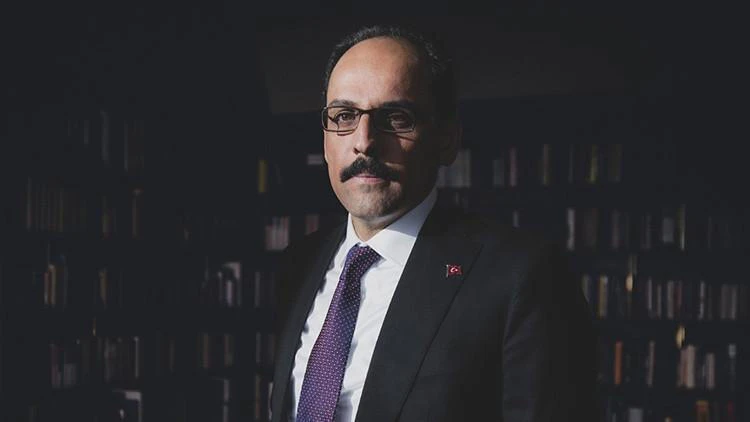
Turkey’s intelligence chief İbrahim Kalın welcomed reports of a U.S.-Iran deal but warned that difficult negotiations and major disputes still lie ahead.


By Ahmet Taş | Wise News Press
ANKARA, TURKEY — Turkey’s intelligence chief İbrahim Kalın welcomed reports of an agreement between the United States and Iran but warned that the most difficult phase would begin when the sides addressed the fundamental causes of the conflict.
Kalın said the announcement had been received positively but stressed that Ankara was maintaining a cautious approach because the ceasefire did not resolve disputes over Iran’s nuclear program, sanctions, maritime security and wider regional tensions.
His remarks came before U.S. President Donald Trump said the interim ceasefire was over while confirming that Washington and Tehran had agreed to continue negotiations. The latest development reinforced Kalın’s warning that the diplomatic process remained fragile and vulnerable to renewed military escalation.
Kalın welcomes the agreement but urges caution
National Intelligence Organization chief İbrahim Kalın said news of an agreement between Washington and Tehran had been welcomed by Turkey and other countries following the crisis.
“The news was welcomed by all of us, but we are in a period of cautious waiting.”


Kalın said the announcement should be regarded as the beginning of a difficult diplomatic process rather than a final peace settlement.
He noted that the parties would still have to address the substantive issues behind the confrontation through negotiations. These talks, he said, were likely to be complicated because they involved deep disagreements with security, political and economic dimensions.
Kalın’s emphasis on caution reflected the difference between a temporary halt in fighting and a durable political settlement. A ceasefire can stop immediate military operations, but lasting stability requires the parties to agree on enforcement, monitoring and the future handling of disputed issues.


Pakistan and Qatar praised for mediation efforts
Kalın thanked the countries that supported diplomatic efforts, particularly Pakistan and Qatar, and praised the determination shown by their leaders.
He expressed hope that the next phase would focus on building peace and contribute to the establishment of long-term stability across the Middle East.
Pakistan played a central role in previous efforts to establish a temporary ceasefire framework, while Qatar has remained involved in contacts intended to keep communication channels between Washington and Tehran open. Turkey and other regional governments have also urged restraint and supported continued diplomacy.
The involvement of several mediators is significant because the United States and Iran continue to have limited direct political trust. Regional intermediaries can transmit proposals, clarify the positions of both sides and reduce the risk that misunderstandings trigger another round of attacks.
However, mediation alone cannot guarantee an agreement. The two governments must still decide whether they are prepared to make concessions on issues they regard as essential to their security and sovereignty.
Nuclear policy and the Strait of Hormuz remain central
The future of Iran’s nuclear program is expected to remain one of the most difficult subjects in any negotiations.
Washington has demanded restrictions on Iran’s nuclear activities and the handling of its enriched uranium stockpile. Tehran has insisted on its right to civilian nuclear technology while seeking sanctions relief and guarantees against future attacks.
The Strait of Hormuz represents another major source of tension. The United States is seeking a clear Iranian commitment that the waterway will remain open to international shipping and that commercial vessels will not be attacked.
Iran, meanwhile, has continued to emphasize its own authority and security interests in the area. The strait is one of the world’s most important energy routes, meaning disruption can quickly affect oil prices, shipping costs and global economic stability.
These issues explain why Kalın described the coming period as difficult. Even if the parties agree to resume talks, reaching a common position on nuclear safeguards, sanctions and maritime security will require more than a temporary cessation of hostilities.
The ceasefire’s fragility quickly became apparent
Subsequent developments demonstrated how easily the diplomatic process could be disrupted.
Trump announced that the interim ceasefire was over following renewed military confrontation, although he later said Iran had requested further talks and that the United States had agreed to continue negotiations.
The escalation followed attacks affecting commercial vessels and renewed U.S. strikes against targets in Iran. Tehran and Washington accused each other of violating the existing arrangement, highlighting the absence of an effective and mutually accepted enforcement mechanism.
The continuation of negotiations despite the end of the ceasefire suggests that military action and diplomacy may proceed in parallel. This creates a highly unstable environment in which a single attack, miscalculation or disputed incident could undermine political talks.
Kalın’s cautious assessment therefore appears to have anticipated the central weakness of the arrangement: the parties had created a temporary diplomatic opening without resolving the mistrust that caused the conflict.
A durable agreement needs monitoring and guarantees
For a new ceasefire to hold, Washington and Tehran would need a clearer framework defining what constitutes a violation and how alleged breaches would be investigated.
A credible mechanism could include communication channels between military officials, monitoring arrangements supported by mediating states and agreed procedures for responding to incidents without immediately returning to large-scale strikes.
Security guarantees would also be important. Iran has sought assurances against further attacks, while the United States wants guarantees concerning nuclear activities, maritime navigation and threats to U.S. forces and regional partners.
Sanctions relief is another likely bargaining point. Tehran would expect measurable economic benefits from an agreement, while Washington would probably link any easing of sanctions to verifiable Iranian actions.
Without clearly defined obligations, both sides may interpret the same event differently and accuse the other of breaking the agreement. That dynamic has already contributed to the collapse of previous ceasefire efforts.
Turkey has a direct interest in preventing escalation
Turkey’s support for diplomacy is linked to both regional security and national economic interests.
A wider U.S.-Iran conflict could disrupt energy markets, increase maritime transportation costs, create new displacement pressures and intensify instability across the Middle East.
Ankara also maintains political and economic relations with Iran while remaining a NATO member and a strategic partner of the United States. This position allows Turkey to communicate with different sides, but it also means that a prolonged conflict would create difficult security and diplomatic consequences.
Kalın’s statement placed Turkey alongside countries seeking to transform the temporary diplomatic opening into a broader peace process. His reference to Pakistan and Qatar also underlined Ankara’s preference for a regional diplomatic mechanism rather than continued military escalation.
The challenge is that the political space for negotiations remains narrow. Renewed attacks may strengthen hard-line positions in both Washington and Tehran, making compromise more difficult even if official talks continue.
Diplomacy continues, but the outcome remains uncertain
The immediate future will depend on whether the United States and Iran can separate the negotiation process from continuing military incidents.
Trump’s statement that talks would continue indicates that diplomacy has not been abandoned. Yet the end of the interim ceasefire shows that negotiations alone do not guarantee restraint on the ground.
Kalın’s message therefore contained two distinct elements: cautious approval of the diplomatic initiative and a warning that the real test would come when the parties negotiated the underlying disputes.
A lasting settlement would require progress on the nuclear file, sanctions, the Strait of Hormuz, regional military activity and guarantees against renewed attacks. It would also require the support of mediators capable of keeping communication channels open during periods of heightened tension.
For Turkey, the priority remains preventing the confrontation from expanding into a wider regional war. The initial agreement offered an opportunity, but the latest escalation shows that the path from temporary ceasefire to lasting peace remains uncertain.
After Kalın’s remarks, President Trump said the interim ceasefire was over but confirmed that the United States and Iran had agreed to continue diplomatic negotiations.
WiseNewsPress.com
What's Your Reaction?
 Like
0
Like
0
 Dislike
0
Dislike
0
 Love
0
Love
0
 Funny
0
Funny
0
 Wow
0
Wow
0
 Sad
0
Sad
0
 Angry
0
Angry
0

Editor | Wise News Press — Delivering accurate, timely global news with integrity, insight, and editorial responsibility.















Comments (0)