



Zelenskyy says Ukraine’s Flamingo missile struck Russian facility
Zelenskyy said Ukraine used FP-5 Flamingo missiles to strike a Russian military plant in Cheboksary that supplies parts for drones and missiles.


By Yusuf İnan | Wise News Press
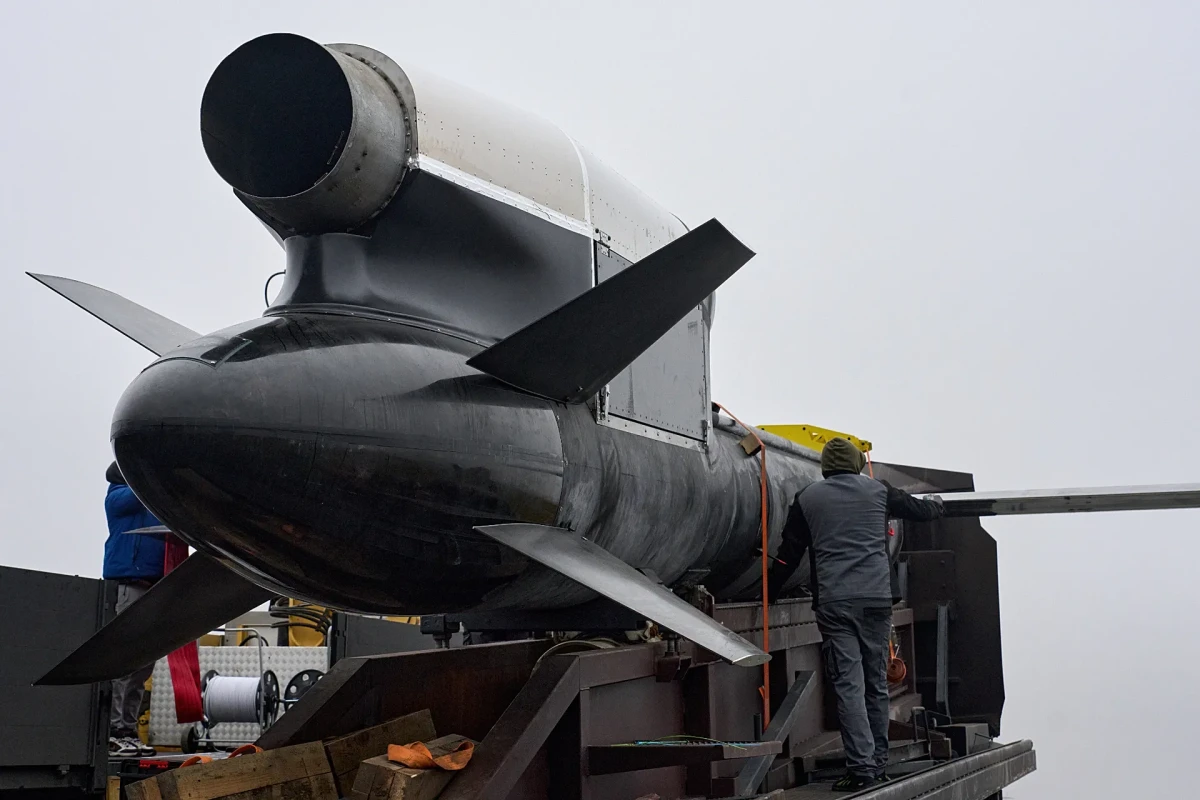
KYIV, Ukraine — Ukrainian President Volodymyr Zelenskyy said Kyiv used domestically produced FP-5 Flamingo missiles to strike a Russian military facility supplying components for drones and missiles.
According to Euronews, Zelenskyy said Ukraine would continue long-range strikes against Russian military facilities and oil infrastructure in response to Moscow’s attacks on Ukraine and as part of a broader effort to pressure the Kremlin toward direct negotiations.
Zelenskyy confirms Flamingo missile strike
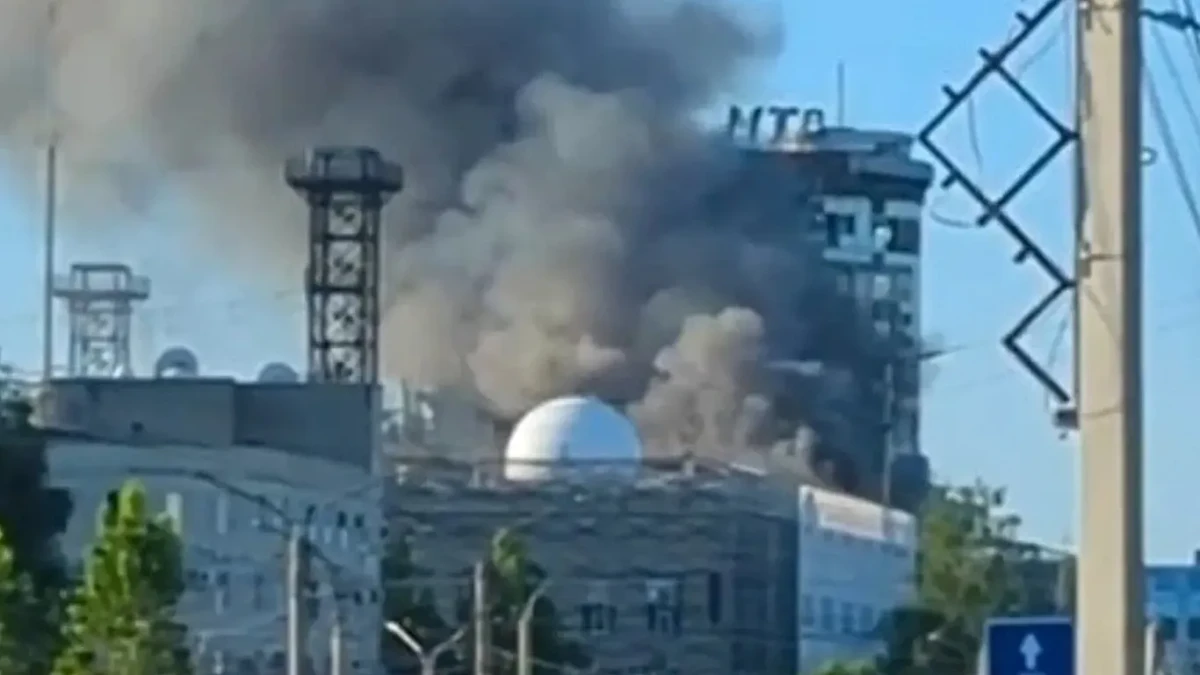
Zelenskyy announced the strike in a post on X, sharing video footage that he said showed a missile moving toward its target and smoke rising above Russian facilities.
“We continue to apply Ukraine’s long-range sanctions against Russian military facilities and the oil industry,” Zelenskyy said.
The Ukrainian president said FP-5 Flamingo missiles had struck a military factory in Cheboksary that supplies the occupying army with components for drones and missiles.


Cheboksary is the main city of Russia’s Chuvashia region and lies roughly 1,000 kilometers from the Ukrainian border. The distance of the strike underlined Kyiv’s growing ability to reach deep inside Russian territory with domestically produced long-range weapons.
Russian regional governor confirms attack
Oleg Nikolayev, the governor of Chuvashia, confirmed that Cheboksary had been attacked. In a Telegram statement, he said the city came under a rocket attack early in the morning.


Nikolayev said authorities were working to determine the number of casualties and the scale of damage to infrastructure. He did not provide detailed information about the specific target.
Local media outlets reported that the strike hit the VNIIR-Progress facility, which produces antennas for drones. Ukraine’s General Staff also identified the plant as the target.
Why VNIIR-Progress matters
The VNIIR-Progress facility is considered significant because of its role in Russia’s weapons supply chain. The plant is under sanctions by both the United States and the European Union.
According to Euronews, the facility produces satellite navigation receivers and Kometa antennas used in Shahed-type attack drones, Kalibr cruise missiles, Iskander-M ballistic missiles and guided aerial bombs.
For Kyiv, striking such a facility is not only a symbolic act but also a targeted attempt to disrupt Russia’s ability to sustain missile and drone attacks against Ukrainian cities and infrastructure.
The attack fits a broader Ukrainian strategy of hitting production, logistics and energy assets that support Moscow’s war effort.
Oil infrastructure was also targeted
The Cheboksary strike was reportedly part of a wider Ukrainian operation that also targeted Russian oil infrastructure in several regions.
The operation included the Kuibyshev oil refinery in Russia’s Samara region, located more than 900 kilometers from the front line. Two oil infrastructure sites in the Vladimir region, about 700 kilometers from Ukraine, were also reportedly targeted.
The Kuibyshev refinery processes around 3.7 million tons of crude oil per year. Its products are used by Russia’s defense industry and armed forces, making it a relevant target in Ukraine’s campaign against Russia’s war logistics.
Ukraine has increasingly focused on Russian energy assets, arguing that oil revenues and refined fuel products help sustain Moscow’s military operations.
What is the FP-5 Flamingo missile?
The FP-5 Flamingo is a Ukrainian-developed cruise missile that was first publicly presented in August 2025. It is reported to have a range of up to 3,000 kilometers and a warhead weighing up to 1,100 kilograms.
Those figures, if confirmed in operational use, would place the Flamingo among the most important domestically developed long-range weapons in Ukraine’s arsenal.
Ukraine has so far used the Flamingo missile on a relatively limited basis. Its confirmed use against targets inside Russia suggests Kyiv may be gradually expanding the role of locally produced long-range strike systems.
The development also reflects Ukraine’s wider push to reduce dependence on foreign-supplied weapons and increase domestic defense production under wartime conditions.
Fire Point is developing new systems
The Flamingo missile is produced by the Ukrainian company Fire Point. In early June, the company announced that it had conducted a test flight of a ballistic missile that could form part of a future air defense system.
The FP7.X is described as an interceptor variant of Fire Point’s FP7 ballistic missile, which is currently under development. The company says the missile may also be capable of striking ground targets.
Analysts note that a missile is only one element of an air defense system. The more complex components include radar networks, targeting systems, command-and-control infrastructure and integration with existing defense architecture.
Still, Fire Point’s work shows how Ukraine’s defense industry is moving beyond battlefield improvisation toward more ambitious long-range strike and air defense projects.
A lower-cost alternative to Patriot
Fire Point says its broader goal is to help build a unified, Europe-wide air and missile defense system.
Denys Shtilierman, one of the company’s partners, said recently that Fire Point was in talks with unnamed European firms to develop a new air defense system capable of intercepting supersonic ballistic missiles by the end of next year.
The project is being presented as a possible lower-cost alternative to the US-made Patriot system. Patriot batteries have played a crucial role in protecting Ukrainian cities from Russian missile attacks, but they are expensive and limited in number.
For Ukraine and Europe, the prospect of a more affordable layered defense system has become increasingly relevant as Russia continues to use missiles, drones and guided bombs in large-scale attacks.
Kyiv seeks pressure through deep strikes
Zelenskyy’s latest statement signals that Ukraine intends to continue striking military and energy targets deep inside Russia.
Kyiv argues that these attacks are a response to Russia’s ongoing strikes on Ukrainian territory and a way to reduce Moscow’s capacity to continue the war. Ukrainian officials also say pressure on Russia’s military-industrial base could force the Kremlin toward more serious negotiations.
Moscow, however, describes Ukrainian strikes inside Russia as attacks on Russian territory and has repeatedly threatened retaliation.
The Cheboksary strike shows that the war is no longer confined to the front line. Military production chains, fuel infrastructure and long-range weapons development are becoming central parts of the conflict’s next phase.
What's Your Reaction?
 Like
0
Like
0
 Dislike
0
Dislike
0
 Love
0
Love
0
 Funny
0
Funny
0
 Wow
0
Wow
0
 Sad
0
Sad
0
 Angry
0
Angry
0

Editor | Wise News Press — Delivering accurate, timely global news with integrity, insight, and editorial responsibility.






















Comments (0)