



A Terror-Free Türkiye Needs Apology, Truth and Victim Recognition
A lasting Terror-Free Türkiye process requires not only disarmament, but also public remorse, apology and recognition of victims’ suffering.


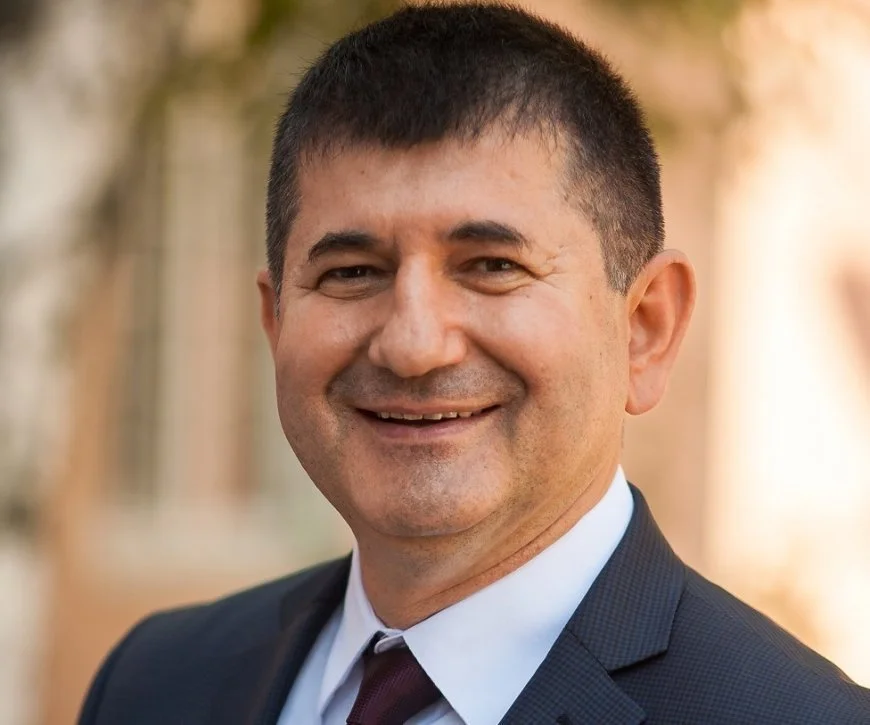
By Yusuf İnan
Journalist | Political and Strategic Analyst
ANKARA, TÜRKİYE — A credible Terror-Free Türkiye process cannot succeed through disarmament alone; it must also include apology, remorse and public recognition of victims’ suffering.
Türkiye is again discussing the possibility of a historic transition away from terrorism and armed violence. Yet any process described as “Terror-Free Türkiye” will face a central moral question: Can a society move toward peace while the pain of murdered teachers, doctors, engineers, babies, children, public servants and civilians remains unacknowledged by those responsible?


This question is not only emotional. It is political, academic and strategic. Peace processes fail when they ignore memory. They become fragile when victims feel erased. They lose legitimacy when the perpetrators of violence speak about the future without naming the suffering they caused in the past.
Disarmament is not the same as reconciliation
In conflict resolution literature, disarmament is only one stage of transition. A group may announce that it has laid down arms, dissolved itself or entered a political process. But reconciliation requires more than organizational statements. It requires truth, acknowledgement, remorse and a clear moral break from the methods of the past.
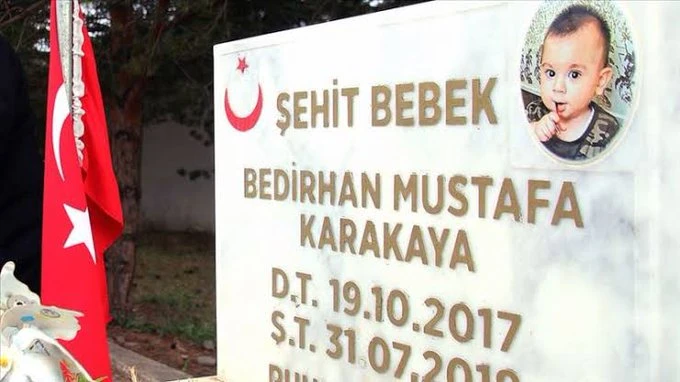
For Türkiye, this issue is especially sensitive because PKK violence did not target only soldiers or security forces. Teachers, health workers, engineers, municipal employees, children, babies and ordinary civilians were also killed in attacks over decades.


That is why a future-oriented peace language cannot be separated from the memory of victims. Any process that speaks only to political actors, but not to bereaved families, will remain incomplete.
Why murdered teachers are a national wound
Teachers killed by the PKK occupy a special place in Türkiye’s collective memory. A teacher is not a combatant. A teacher does not go to a remote district to wage war. A teacher goes to open a classroom, teach children, build trust and carry public service to places where the state, families and future generations meet.
Şenay Aybüke Yalçın, Necmettin Yılmaz, Neşe Alten and many others became symbols of this wound. Many of these teachers came from western or central regions of the country to serve children in the east and southeast. They did not go there with hostility. They went with notebooks, instruments, books and hope.
Therefore, the killing of teachers cannot be reduced to a “period of conflict.” It was an attack on education, childhood, public service and the possibility of shared life. If the PKK and its leadership are to speak about peace, they must answer one direct question: Do they publicly regret the killing of teachers who went to teach Kurdish children and all children of Türkiye?
Babies and civilians cannot be treated as footnotes
The most difficult moral test of any armed movement is how it speaks about civilians it harmed. Babies, children, mothers, fathers, passengers, doctors, nurses, engineers and ordinary workers cannot be explained away as “collateral damage.” A baby has no ideology. A teacher has no battlefield. A doctor has no front line.
A genuine peace process must therefore require a clear public statement: killing civilians was wrong, killing children was wrong, targeting public servants was wrong, and no political cause can justify such acts.
Without this moral clarity, the language of peace risks becoming tactical. Society may hear organizational repositioning, but not repentance. Victims’ families may feel that their loved ones have once again been pushed aside for political convenience.
Apology is not weakness; it is responsibility
In some political cultures, apology is treated as weakness. In truth, apology is one of the strongest signs of responsibility. A serious apology does not mean a vague expression of sadness. It means naming the act, recognizing the victim, accepting responsibility and committing that such actions will never be repeated.
For the Terror-Free Türkiye process, this distinction is vital. A statement such as “mistakes were made” would not be enough. Families who lost children, teachers, spouses and parents need a clear acknowledgement of what happened.
The PKK and Abdullah Öcalan, if they are to play any role in a claimed transition away from violence, must publicly answer whether they regret the killings of teachers, babies, civilians and public servants. This answer should not be hidden inside technical negotiations. It should be addressed to the people of Türkiye and to the world.
Why the international public also matters
The PKK is not only a Turkish domestic issue. It has long been listed as a terrorist organization by Türkiye and several Western governments and institutions. Its actions, networks and political claims have been discussed in international forums for decades.
For that reason, any claim of transformation must also be international in tone. A private message to the Turkish state would not be enough. A credible break with violence must be declared before world public opinion.
This matters because armed groups often try to preserve symbolic legitimacy even after ending armed activity. If the past is romanticized, if civilian deaths are blurred, or if killed teachers are not named as victims, then the ideological ground of violence may survive even after weapons are lowered.
Victim-centered peace is strategically necessary
A victim-centered approach is not only morally correct; it is strategically necessary. A process that excludes victims creates resentment. It strengthens suspicion among the wider society. It gives opponents of the process a legitimate argument: that the state is talking to perpetrators while families remain unheard.
By contrast, if the process includes public remorse, apology and recognition of victims, it may build a wider social foundation. Families may still grieve. Many may never forgive. But at least the state and society would not ask them to remain silent while others rewrite history.
A victim-centered framework would ask difficult questions: Who were the victims? What happened to them? Who accepts responsibility? How will their memory be protected? What guarantees exist that violence against civilians will never again be legitimized?
The strategic cost of silence
Silence has a cost. If PKK-linked actors speak of democracy, peace or political transition without addressing murdered civilians, the result may deepen distrust. Many citizens will see the process as incomplete or unjust.
This is especially true for families of teachers and children. Their pain is not abstract. Their loved ones had names, schools, homes, dreams and unfinished lives. A political process that ignores this human reality risks appearing cold and transactional.
Strategically, this weakens social consent. In democratic societies, peace cannot be imposed only from above. It needs a minimum level of moral acceptance. That acceptance cannot be built unless victims’ suffering is recognized.
A new language must begin with truth
If a Terror-Free Türkiye process is to become more than a security formula, it must develop a new language. This language should not glorify violence, romanticize armed struggle or erase the grief of families. It must begin with truth.
The first truth is that civilians were killed. The second truth is that teachers and public servants were targeted. The third truth is that children and babies died. The fourth truth is that no future political project can be morally credible unless these facts are acknowledged openly.
Only after truth can apology have meaning. Only after apology can trust begin. And only after trust can a lasting political transition become possible.
Conclusion: No lasting peace without moral accountability
A Terror-Free Türkiye is a necessary and valuable goal. But it cannot be built only through security arrangements, organizational declarations or political bargaining. It must also pass through the conscience of society.
The PKK and Öcalan must publicly declare remorse for the killing of teachers, doctors, engineers, babies, children, public servants and civilians. They must apologize not only to the state, but to families, to Türkiye and to the world.
Weapons falling silent is important. But naming who those weapons killed is more important. True peace begins not when perpetrators disappear quietly from the stage, but when victims are seen, crimes are named, remorse is expressed and a clear promise is made that such violence will never again be justified.
Yusuf Inan
Yusuf Inan is a journalist and writer. He serves as Editor-in-Chief of UAPresa.com, WiseNewsPress.com, SehitlerOlmez.com and YerelGundem.com, and specializes in strategic and political analysis of Turkish and global affairs.
What's Your Reaction?
 Like
0
Like
0
 Dislike
0
Dislike
0
 Love
0
Love
0
 Funny
0
Funny
0
 Wow
0
Wow
0
 Sad
0
Sad
0
 Angry
0
Angry
0

Editor | Wise News Press — Delivering accurate, timely global news with integrity, insight, and editorial responsibility.







Comments (0)