



Could the Claims of a Coup Risk Against President Erdoğan Be Realistic?
Yusuf Inan analyzes coup rumors circulating around President Erdoğan, arguing that the real issue may be psychological warfare over Türkiye’s political future.



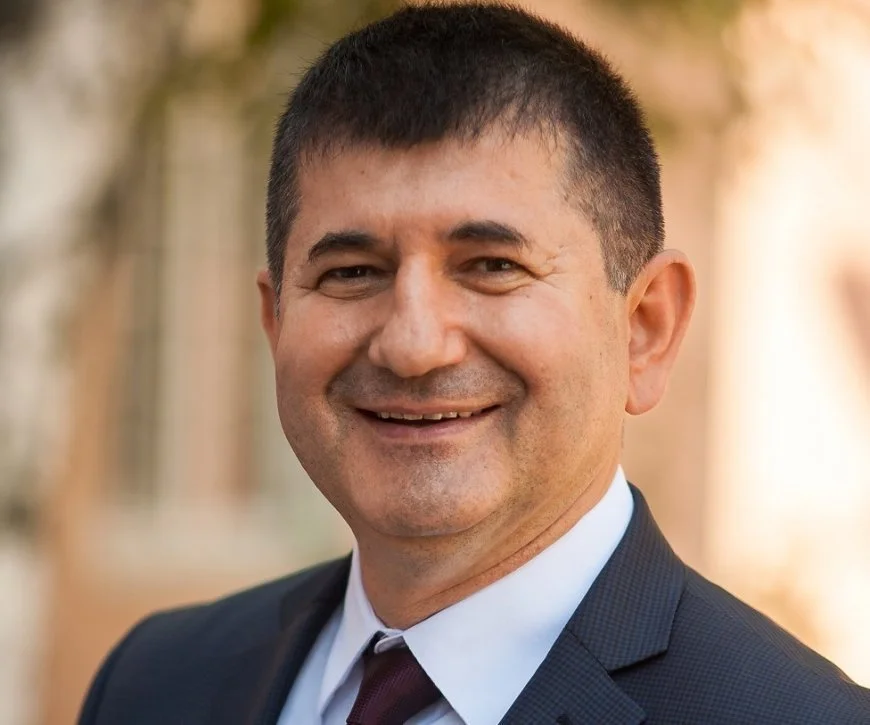
Yusuf Inan
Journalist | Political and Strategic Analyst
Could Coup Rumors Against Erdoğan Be Realistic?
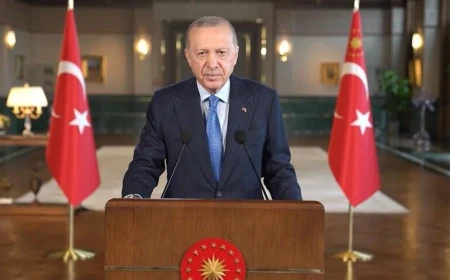
In recent days, a serious and sensitive subject has been quietly circulating through some YouTube channels, political commentary spaces and social media circles: the claim that someone very close to President Recep Tayyip Erdoğan may be preparing a political move against him with both internal and external support.
The word “coup” is not always used openly. Sometimes it is implied. Sometimes it appears between the lines. Sometimes it is hidden inside the question: “Who will govern Türkiye after Erdoğan?”
Ahmet Nesin has occasionally raised this topic on his YouTube channel. Veteran journalists such as Can Ataklı and Sabahattin Önkibar have also touched on similar suggestions indirectly at different times. In some broadcasts, an unnamed “power center” is discussed in a way that appears designed to make the audience guess who is being referred to.


So, could these claims be true?
Is there smoke without fire?
Or is the smoke being deliberately produced by small political fires lit by certain circles?


My view is clear: under today’s conditions, the possibility of a classic coup attempt against President Erdoğan in Türkiye is extremely weak. In fact, when the current state structure, security architecture, political balance and bureaucratic center are taken into account, I do not find such a scenario realistic.
Türkiye’s main centers of power have long been shaped around a single political center. The security bureaucracy, intelligence structure, judiciary, party backbone and state reflex largely move within the political order built by President Erdoğan. In such a system, I find it very difficult to believe that someone from Erdoğan’s close circle could independently launch a major power move against him.
Even if I saw it in a dream, I would not believe it.
But precisely for that reason, another possibility must be examined: could these rumors be part of a psychological operation rather than an actual coup preparation?
In Türkiye, politics is sometimes shaped not by direct moves but by rumors. One figure is promoted. Another is weakened. A story of internal family conflict is produced. A climate of distrust is created around a leader. The public is made to feel that “real power is now somewhere else.”
In such periods, even the word “coup” becomes a political instrument.
Even if the coup claim is not real, the coup suggestion can be useful for certain circles. It can be used to slow down a leader, turn his circle against itself, create anxiety within the party base and generate a climate of mistrust inside the state.
The real question today is this: who is circulating these claims? Through which channels are they being kept alive? Which figures are being pushed forward? Which figures are being targeted? And most importantly, who benefits from these rumors?
Is it a coincidence that the names of Bilal Erdoğan and Berat Albayrak have recently been discussed again in some circles? Could the idea that these figures may play a stronger role in renewing and carrying the AK Party forward have disturbed certain power groups?
If there is a belief that names such as Bilal Erdoğan and Berat Albayrak could become more influential in the future of the AK Party, then there will certainly be circles that are uncomfortable with this possibility. Because the renewal of the AK Party is not merely an internal party matter. It also means the reorganization of Türkiye’s future power architecture.
Viewed from this angle, the small flames being lit in the YouTube arena become easier to understand.
Some people may not be writing an open coup scenario. But they may be trying to create perceptions such as: “Erdoğan is weakening,” “his inner circle is divided,” “another center is rising inside the state,” or “the outside world now wants to work with someone else.”
This is something more subtle than a coup preparation.
It is an attempt to capture the psychological battlefield of politics.
Another point that draws my attention is that some of these suggestions are repeatedly kept alive in FETÖ-linked channels or propaganda circles close to that line. In these spaces, certain implied figures are sometimes promoted, sometimes presented as alternatives, and sometimes discussed with suggestions such as: “There is no hope from Erdoğan, but if this person governs Türkiye, things will improve.”
Is this a coincidence?
I do not think so.
The FETÖ mind has never played only for the present in Türkiye. It has always searched for cracks — inside the state, inside politics, inside families, between cadres and within the veins of political movements. It should not be surprising if the same mindset is now operating in different forms.
Yet caution is necessary here. It would also be wrong to connect every rumor to FETÖ. Türkiye has many different interest groups: old bureaucratic habits, new economic circles, international actors, media operators and figures making calculations inside political parties.
In a country like Türkiye, where power struggles are deep and harsh, rumors can sometimes be used like intelligence material. A rumor can be as effective as reality. Sometimes, an unreal rumor can produce more consequences than the truth itself.
President Erdoğan is a political actor with the experience to read these games. We are talking about a leader who has fought tutelage, coup attempts, party closure cases, the betrayal of July 15 and international pressure. I do not believe that such a political mind would take lightly the messages circulating in YouTube corridors.
But the issue is not only whether Erdoğan sees these suggestions.
The real issue is how the AK Party and the state mind manage these rumors.
If these claims are entirely baseless, the state and politics must extinguish them without allowing them to grow. If they are part of an attempt to design the future of the party, that must also be recognized. If there is an externally supported perception operation, its channels must be identified.
However, the greatest mistake would be to turn everyone against one another through suspicion.
Because sometimes the real purpose of coup rumors is not to carry out a coup. It is to poison loyalty, damage trust, weaken the leader’s circle and reduce the movement’s ability to act.
What Türkiye needs today is not panic, but calm strategic thinking.
The AK Party needs renewal. Türkiye needs a new political language, new cadres and fresh social energy. This renewal may be discussed through Bilal Erdoğan, Berat Albayrak or other names. But if this discussion is poisoned through coup suggestions, family conflict scenarios and stories of parallel power centers inside the state, Türkiye itself will be harmed.
The picture I see is this: a classic coup attempt against President Erdoğan does not appear realistic. But a psychological operation targeting Erdoğan’s circle, the future of the AK Party and Türkiye’s new power architecture should be taken seriously.
I do not claim to know everything. I do not have access to the state’s confidential files. I am simply reading, with nearly 30 years of journalistic experience, the public messages, implications and repeated patterns circulating in media and political commentary spaces.
Sometimes what is between the lines says more than the sentence itself.
Sometimes what matters is not whether a claim is true, but why it is being circulated and by whom.
That is what I am looking at in this matter.
Who is trying to create distrust around President Erdoğan through these rumors?
Who is trying to pull the future of the AK Party toward a line of their own choosing?
Who is disturbed by the possible influence of figures such as Bilal Erdoğan and Berat Albayrak?
Who is serving “post-Erdoğan” scenarios today?
And who is trying to contaminate Türkiye’s possibility of strong political renewal with coup implications?
The answers to these questions are more important than the rumor itself.
I am just a humble journalist.
I do not lean on the power of the state, nor do I believe in the whispers of dark circles. I write what I see, what I sense and what I think.
What I see today is this: the possibility of a coup against President Erdoğan is weak. But the possibility of psychological warfare targeting President Erdoğan’s circle, his family, the future of the party and Türkiye’s new political architecture is strong.
For this reason, Türkiye does not need fear. It needs clear thinking, clean politics and firm loyalty.
I believe that a global actor like President Erdoğan and the young minds who may play a role in Türkiye’s future will read these implications better than anyone else.
Because sometimes the real danger is not the approaching storm.
It is those who pretend there is a storm in order to change the ship’s course.
Yusuf Inan
Yusuf Inan is a journalist and writer. He serves as Editor-in-Chief of UAPresa.com, WiseNewsPress.com, SehitlerOlmez.com and YerelGundem.com, and specializes in strategic and political analysis of Turkish and global affairs.
What's Your Reaction?
 Like
0
Like
0
 Dislike
0
Dislike
0
 Love
0
Love
0
 Funny
0
Funny
0
 Wow
0
Wow
0
 Sad
0
Sad
0
 Angry
0
Angry
0

Editor | Wise News Press — Delivering accurate, timely global news with integrity, insight, and editorial responsibility.













Comments (0)