



Anger Management: A Functional Tool for Personal Growth
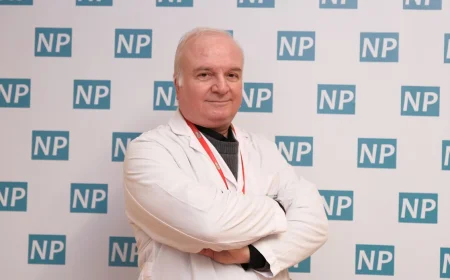
Prof. Dr. Murat Kurt explains that anger is an evolutionary tool for adaptation, noting that global anxiety is rising more than anger levels.



By Ahmet Taş | Wise News Press
ISTANBUL, TÜRKİYE — Prof. Dr. Murat Kurt, a faculty member at Acıbadem University’s Department of Psychology, emphasizes that anger should be viewed as a functional evolutionary tool for adaptation and motivation rather than a destructive emotion to be suppressed.
While modern society often imposes a "constant happiness" mandate, scientific research suggests that anger plays a critical role in helping individuals overcome obstacles and take action. According to Kurt, when managed correctly, anger is not inherently destructive but rather a functional force that prepares the body for action.
The Evolutionary Role of Anger
In psychological research, anger is classified as one of the six basic emotions, alongside happiness, sadness, fear, disgust, and surprise. Despite this, popular culture often mislabels anger as a "harmful" feeling that must be pushed aside. Prof. Dr. Murat Kurt points out the flaws in this perception, stating that anger has high evolutionary value.
"Anger is often confused with aggression," Kurt explained. "Anger is an emotion; aggression is a behavioral form that manifests when that emotion is released without control. Anger itself helps us adapt to changing environmental conditions and cross the barriers we encounter." Recent studies, including a 2023 publication by Prof. Dr. Heather Lench from the University of Texas, support this, showing that anger can actually improve performance in challenging tasks by triggering a state of "action readiness."
Neurobiology of Emotional Control
The brain does not produce anger as a purely uncontrolled explosion; instead, it utilizes a sophisticated balancing mechanism. When a threat or obstacle is perceived, the Amygdala triggers the emotional response. Simultaneously, the ventromedial prefrontal cortex intervenes to manage and regulate this reaction.


Prof. Dr. Murat Kurt warned that substance and alcohol use severely disrupt this biological equilibrium. "These substances take the control mechanism offline, allowing the amygdala to act in isolation," he noted. This lack of regulation is what often transforms a functional emotion into destructive behavioral aggression.
Global Trends: Anxiety vs. Anger
Contrary to the public perception that the world is becoming angrier, data suggests a different emotional shift. An extensive analysis of over 1.5 million people in 113 countries, conducted by Dr. Michael Daly and Dr. Lucia Macchia between 2009 and 2021, shows that global emotional distress rose from 25% to 31%. However, anger levels showed a statistically insignificant change of only 1.61%.
"We are not living in an angrier world, but rather a more anxious and sad one," Kurt observed. The research indicates that the rise in emotional distress is more pronounced in groups with lower education and income levels, proving how economic insecurity directly impacts human biology and emotional stability.


Practical Steps for Anger Management
Prof. Dr. Murat Kurt describes anger as an "approach emotion," unlike sadness or fear which lead to withdrawal. It pushes individuals to protect boundaries and act against injustice. To ensure this energy remains functional, Kurt outlines a four-step process for anger management:
-
Awareness: The first step is acknowledging the emotion by saying, "I am angry right now." Identifying the feeling helps mitigate its destructive power.
-
Questioning Thoughts: Individuals should evaluate whether the beliefs triggering their anger are exaggerated or irrational.
-
Identifying Triggers: Recognizing specific triggers allows for the preparation of "action scenarios," preventing the person from being caught off guard.
-
Impulse Control: Delaying a reaction by even a few seconds provides the brain enough time to consider consequences and develop alternative behaviors.
Kurt concluded by highlighting the importance of professional support, noting that psychological assistance can help individuals correct the faulty beliefs and destructive behaviors that lead to chronic aggression.
What's Your Reaction?
 Like
0
Like
0
 Dislike
0
Dislike
0
 Love
0
Love
0
 Funny
0
Funny
0
 Wow
0
Wow
0
 Sad
0
Sad
0
 Angry
0
Angry
0

Editor | Wise News Press — Delivering accurate, timely global news with integrity, insight, and editorial responsibility.





















Comments (0)