



Coups in the 'Backyard': A history of US interventions in Latin America
The capture of Venezuela's Nicolas Maduro is the latest chapter in a long history of US interventions in Latin America, ranging from the invasion of Panama to Operation Condor.
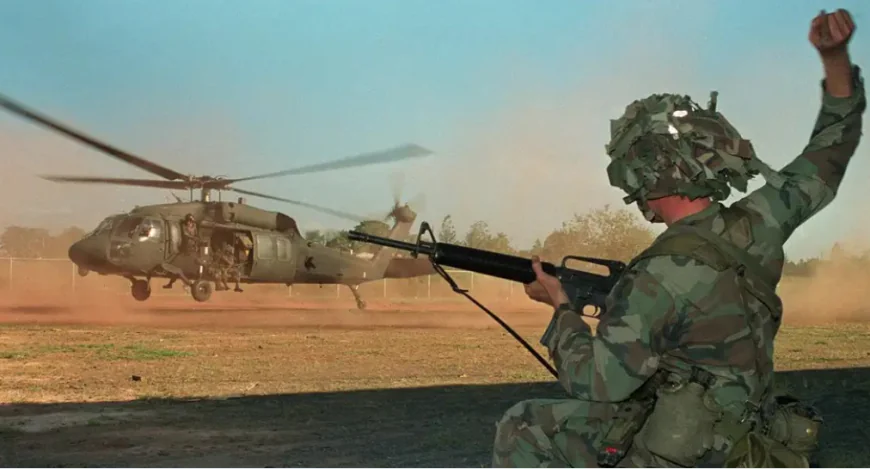


WISE NEWS PRESS / ANKARA, TURKEY — JAN. 3, 2026
The recent US military operation to capture Venezuelan President Nicolas Maduro and his wife has added a new link to the long chain of Washington's interventions in Latin America. For over a century, the United States has repeatedly intervened in the internal affairs of nations it views as its "backyard," often to protect its own interests or to counter ideologies deemed hostile.
From the Cold War to the war on drugs, the US dossier on toppling governments in the region is extensive. These interventions have left a lasting mark on the political landscape of the hemisphere, often leaving deep diplomatic scars.
The Panama parallel: From Noriega to Maduro
The operation against Maduro mirrors a historic event that took place exactly 36 years ago. In the final days of 1989, the US launched "Operation Just Cause," a military invasion of Panama.
On January 3, 1990, Panamanian dictator Manuel Antonio Noriega surrendered to US forces. Like Maduro, Noriega was accused of drug trafficking. He was subsequently tried in the United States, convicted, and remained incarcerated until his death in 2017. The parallel highlights Washington's recurring strategy of using law enforcement justifications for military action in the region.
The Cold War and CIA-backed coups
US interference intensified significantly following World War II. During the Cold War, the Central Intelligence Agency (CIA) backed numerous coups to overthrow democratically elected leaders who were left-leaning or critical of US policy.
The most prominent example remains the 1973 coup in Chile. Socialist President Salvador Allende was overthrown by General Augusto Pinochet, who enjoyed American support. A similar scenario unfolded in Argentina in 1976, where the US supported a military coup that removed the legitimate government.
The dark legacy of 'Operation Condor'
Throughout the 1970s and 1980s, the US facilitated Operation Condor, a clandestine network of intelligence and operations. This pact allowed the military dictatorships of Chile, Argentina, Uruguay, Paraguay, Bolivia, and Brazil to coordinate the repression of political opponents.
The operation resulted in systemic torture, extrajudicial killings, and the disappearance of thousands of dissidents, trade unionists, and intellectuals. The extent of US knowledge and involvement in these human rights abuses was confirmed by declassified CIA documents released during the Bill Clinton administration in 2000.
Shifting justifications
While the methods have remained consistent—regime change and military support—the justifications have evolved. During the 20th century, the primary stated goal was combating communism. In recent decades, as seen in Panama and now Venezuela, the narrative has shifted toward the "war on drugs."
Regardless of the rationale, Washington has historically provided military and economic aid to authoritarian but pro-US regimes, particularly in Central American nations like Guatemala and El Salvador, to maintain its geopolitical hegemony in the region.
What's Your Reaction?
 Like
0
 Dislike
0
 Love
0
 Funny
0
 Wow
0
 Sad
0
 Angry
0

Editor | Wise News Press — Delivering accurate, timely global news with integrity, insight, and editorial responsibility.













Comments (0)