



Cyprus and Lebanon sign maritime deal, Turkey reacts strongly
The Republic of Cyprus and Lebanon have signed a maritime border agreement, prompting criticism from Turkey regarding the rights of Turkish Cypriots amidst new EU aid proposals.


WISE NEWS PRESS / ANKARA, TURKEY — Nov. 27, 2025
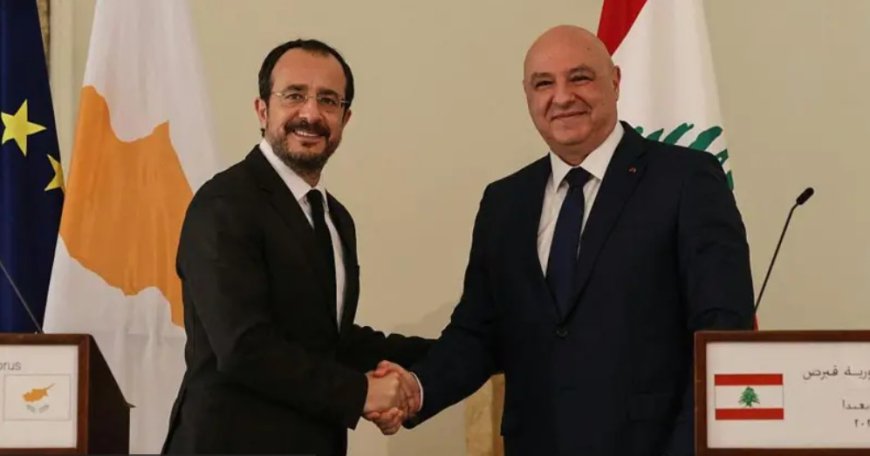
The Republic of Cyprus and Lebanon have officially signed an agreement to delimit their Exclusive Economic Zones (EEZ) in the Eastern Mediterranean, a move that has drawn immediate diplomatic criticism from Turkey. The deal, finalized in Beirut, aims to settle maritime boundaries to facilitate future energy cooperation but is viewed by Ankara as a violation of Turkish Cypriot rights.
This agreement marks a significant shift in regional dynamics, driven largely by Cyprus’s upcoming European Union presidency in 2026 and a proposed €1 billion EU aid package for Lebanon. However, Turkey maintains that such bilateral agreements exclude the Turkish Cypriot community and disregard Turkey's own continental shelf claims registered with the United Nations.
Ankara’s sharp rebuke
Following the signing ceremony between Cypriot President Nikos Christodoulides and Lebanese leader Joseph Aoun, the Turkish Foreign Ministry issued a statement condemning the move. Ministry Spokesperson Öncü Keçeli stated that the Greek Cypriot administration has "disregarded the Turkish Cypriots," who are co-owners of the island, in agreements signed since 2003.


"We would like to remind that the current administration does not represent the whole of the Island and has no authority to make such dispositions concerning the whole Island," Keçeli said.
While the specific area of the Cyprus-Lebanon deal falls outside Turkey's continental shelf registered to the UN in 2020, Ankara emphasizes that the agreement ignores the equitable rights and interests of the Turkish Cypriot population. The Turkish Cypriot administration in Northern Cyprus also declared the agreement "null and void."


Strategic timing and EU aid
The ratification of this agreement, originally drafted in 2007 and revisited in 2017, had been stalled for years due to political instability in Lebanon and diplomatic pressure from Turkey. However, Lebanon's deepening economic crisis, exacerbated by the 2020 Beirut port explosion, has created a new political reality.
Reports indicate that Cyprus leveraged its position as the incoming EU term president to push the deal forward. A proposed €1 billion EU aid package to Lebanon, with an initial €500 million installment expected soon, played a crucial role in securing Beirut's approval. President Christodoulides described the agreement as a "historic turning point" and a message of political cooperation based on international law.
Energy interconnection plans
With maritime borders settled, both nations are expected to accelerate plans for an energy interconnector system to link their electricity grids. This project, for which financing has been sought from the World Bank, aims to integrate Lebanon into a broader regional energy network.
Joseph Aoun noted that the agreement paves the way for new projects in renewable energy, defense, and search and rescue operations. Additionally, the deal allows Lebanon to initiate licensing processes for hydrocarbon exploration, a sector that has attracted interest from American companies following the resolution of similar maritime disputes between Israel and Lebanon.
What's Your Reaction?
 Like
0
Like
0
 Dislike
0
Dislike
0
 Love
0
Love
0
 Funny
0
Funny
0
 Wow
0
Wow
0
 Sad
0
Sad
0
 Angry
0
Angry
0

Editor | Wise News Press — Delivering accurate, timely global news with integrity, insight, and editorial responsibility.



















Comments (0)