



Erdoğan Advisor Proposes Special Law for Terror-Free Turkey Process
A chief advisor to President Erdoğan, Mehmet Uçum, proposed a special law for the 'Terror-Free Turkey' process, controversially citing a 1928 law enacted after the Sheikh Said Rebellion, which drew sharp legal criticism.
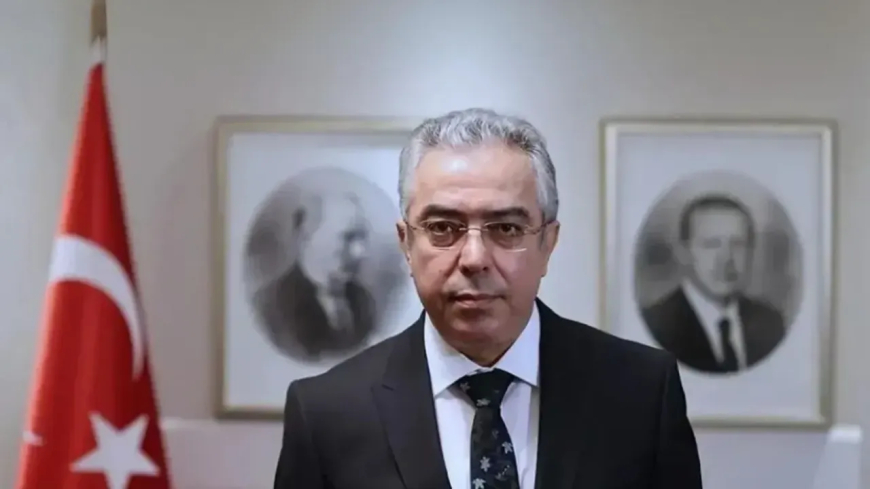


WISE NEWS PRESS / ANKARA, TURKEY — NOVEMBER 17, 2025
Mehmet Uçum, a chief advisor to President Recep Tayyip Erdoğan and Deputy Head of the Presidential Law Policies Council, has proposed the creation of a special, temporary law to provide a legal framework for the ongoing process known as "Terror-Free Turkey."
Uçum controversially suggested the proposed law could draw inspiration from a 1928 statute enacted after the suppression of the Sheikh Said Rebellion, but the proposal immediately drew sharp criticism from prominent legal experts who questioned the historical analogy and the lack of clarity surrounding the initiative.
The Controversial Historical Analogy
In an analytical article written for Anadolu Agency, Uçum referenced Law No. 1239, which the Turkish Grand National Assembly (TBMM) passed in 1928 after the 1925 Sheikh Said Rebellion, a revolt against the Republic launched with a call for Sharia law.


Uçum argued that the TBMM’s decision in 1928 to issue a single, special, and temporary legal regulation "has taken its place in the history of the Republic as an important legal policy."
"This experience is characterized in a way that will inspire at least a single, special, and temporary law approach specific to the process," Uçum commented regarding the current "transition period law."


Uçum’s Proposed Next Steps
Uçum also outlined several steps expected to be taken during the transition period:
-
The TBMM Commission making a decision on listening to İmralı (where the PKK leader is imprisoned).
-
Taking necessary steps for the Diyarbakır Mothers to reunite with their children.
-
Expanding and developing disarmament practices.
-
Making practical confirmations and administrative determinations regarding the effective cessation and disarmament of the defunct terror organization.
-
The Commission writing a legal report on the transition process.
-
The Commission outlining the perspective for developing democracy through its own reporting method.
-
Taking stronger steps towards integration in Syria, in line with the country's unity goal.
Legal Expert Ersan Şen Rejects Comparison
Criminal law professor Prof. Dr. Ersan Şen strongly objected to Uçum’s proposal and the historical analogy. Şen stated on X (formerly Twitter) that the 1928 law was "not passed by negotiating directly or indirectly with the leaders and extensions of the rebellion." Instead, it was a temporary law designed to re-establish unity between the state and the citizens misled by the rebels.
Şen rejected the use of the historical precedent, stating: "There is no need to say, 'Atatürk did this too.' Asking the question, 'What would Atatürk do if he were alive?' is, in my opinion, more appropriate."
Şen questioned the necessity of a special, temporary law if the terror organization has already "unconditionally surrendered and dissolved itself." He concluded with a critique of the lack of transparency:
"The first button was wrongly fastened. What is intended is not openly stated, and that is the problem."
What's Your Reaction?
 Like
0
Like
0
 Dislike
0
Dislike
0
 Love
0
Love
0
 Funny
0
Funny
0
 Wow
0
Wow
0
 Sad
0
Sad
0
 Angry
0
Angry
0

Editor | Wise News Press — Delivering accurate, timely global news with integrity, insight, and editorial responsibility.


















Comments (0)