


German family businesses soften stance on AfD firewall
The Association of Family Businesses in Germany is reconsidering its isolation of the far-right AfD party, inviting its MPs to events despite internal division and corporate backlash.


WISE NEWS PRESS / BERLIN, GERMANY — Nov. 25, 2025
German family businesses, long known for their staunch opposition to the far-right Alternative for Germany (AfD) party, are beginning to dismantle the "firewall" that once completely isolated the political group from corporate events.
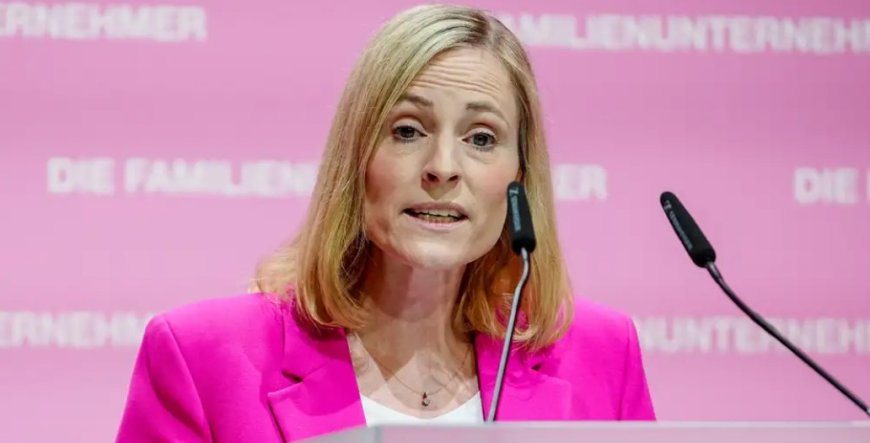
The Association of Family Businesses (Die Familienunternehmer), which represents over 6,500 companies, is reportedly re-evaluating its strict policy of exclusion. Marie-Christine Ostermann, the association's president, told Handelsblatt that the organization is redefining what the firewall means, moving away from total isolation to allowing AfD lawmakers to attend events like the recent "Parliamentary Dinner."
"For us, the firewall meant complete isolation... We lifted this practice at our last Parliamentary Dinner with Bundestag members," Ostermann said, though she clarified that the association still firmly rejects the idea of the AfD as a coalition partner in government.
Internal divisions and corporate backlash

The shift has exposed deep rifts within Germany's business community. While the Association softens its stance, the Foundation for Family Businesses (Stiftung Familienunternehmen), representing giants like Bosch and Schwarz Group, maintains a hard line. "AfD's program endangers family entrepreneurship in Germany," said Rainer Kirchdörfer, the foundation's chairman, affirming that extremist parties remain unwelcome at their events.
The decision to engage with the AfD has already had consequences. Handelsblatt reported that Deutsche Bank canceled a venue contract for next year's Parliamentary Dinner after the Association of Family Businesses invited AfD representatives to an event held at the bank's headquarters.


SMEs also debating engagement
The debate extends to small and medium-sized enterprises (SMEs). The German Association for Small and Medium-sized Businesses (BVMW) acknowledged that the strategy of isolation has failed to curb the AfD's popularity. Christoph Ahlhaus, BVMW General Manager, noted that a heated internal discussion is underway regarding how to approach the party, given its high polling numbers and potential to become the leading force in upcoming state elections in eastern Germany.
Despite record employment, Germany faces a severe shortage of skilled labor—a crisis many business leaders fear will worsen under the AfD's anti-migration policies. Major corporations like Siemens and Deutsche Bahn continue to urge voters to support democratic forces, warning that populism threatens the country's prosperity.
What's Your Reaction?
 Like
0
Like
0
 Dislike
0
Dislike
0
 Love
0
Love
0
 Funny
0
Funny
0
 Wow
0
Wow
0
 Sad
0
Sad
0
 Angry
0
Angry
0

Editor | Wise News Press — Delivering accurate, timely global news with integrity, insight, and editorial responsibility.










Comments (0)