



Germany 2026: Tough Year Ahead for Domestic Politics and Reforms
Germany faces a challenging 2026 as the government grapples with controversial pension reforms, a new military draft model, and critical state elections.



WISE NEWS PRESS / BERLIN, GERMANY — DEC. 25, 2025
Germany is entering a high-stakes 2026 as the federal government prepares to face a series of rigorous domestic challenges, ranging from critical state elections to deep-seated reforms in the pension and military sectors.
The year will be a significant test for the ruling coalition of the Christian Democratic Union (CDU), the Christian Social Union (CSU), and the Social Democratic Party (SPD). After a 2025 marked more by internal friction than consensus, 2026 is expected to see a deepening divide over the country's aging population and the rise of the far-right Alternative for Germany (AfD) party.
Pension Reform and Intergenerational Conflict
While the federal parliament recently passed a pension package, long-term structural reforms have been deferred to a commission expected to deliver proposals by mid-2026. The debate centers on whether to raise the retirement age from 67 to 70 or adopt a tenure-based system. Economist Jens Südekum has proposed a 45-year contribution model, allowing early-starting tradespeople to retire sooner than late-starting academics.
The 2026 budget reflects the strain of this system, with state contributions to pension funds reaching 128 billion euros—nearly one-fourth of the total budget. This has sparked protests among younger conservative lawmakers who argue the current model unfairly burdens the youth to protect minimum pension levels through 2031.
New Partial Military Service Model
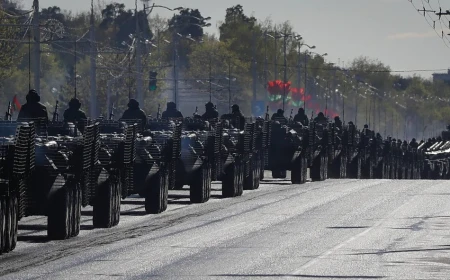
Starting in January, 18-year-old men will receive mandatory military service questionnaires to assess the country's defense potential. While response is mandatory for men, it remains optional for young women. Defense Minister Boris Pistorius aims to increase the active troop count from 184,000 to approximately 270,000 over the next decade, primarily through a volunteer-based approach.
The year 2026 will be decisive in determining whether enough volunteers step forward or if the government must reactivate the mandatory conscription suspended since 2011. Additionally, the plan includes integrating 200,000 reserve soldiers into the military structure.
Far-Right Surge and State Elections
Domestic stability will be tested in September during state elections in Saxony-Anhalt and Mecklenburg-Vorpommern. Opinion polls currently show the AfD as the strongest force in both regions, potentially leading with up to 40% of the vote. This surge poses a critical challenge to CDU leader Friedrich Merz’s "security wall" policy, which pledges no cooperation with the far-right party under any circumstances.
In the south, the state of Baden-Württemberg will also hold elections, where the Greens face the potential loss of their only state premiership. Candidate Cem Özdemir currently trails behind both his conservative CDU and AfD rivals, signaling a likely shift toward a CDU-led coalition in the region.
What's Your Reaction?
 Like
0
 Dislike
0
 Love
0
 Funny
0
 Wow
0
 Sad
0
 Angry
0

Editor | Wise News Press — Delivering accurate, timely global news with integrity, insight, and editorial responsibility.


















Comments (0)