



Russia began its own strategic fragmentation with Crimea and Ukraine
Russia’s wars in Crimea and Ukraine expanded NATO, shrank its European energy market and accelerated the erosion of Moscow’s post-Soviet sphere.


By Yusuf İnan | Wise News Press
Journalist and Author | Political and Strategic Analyst
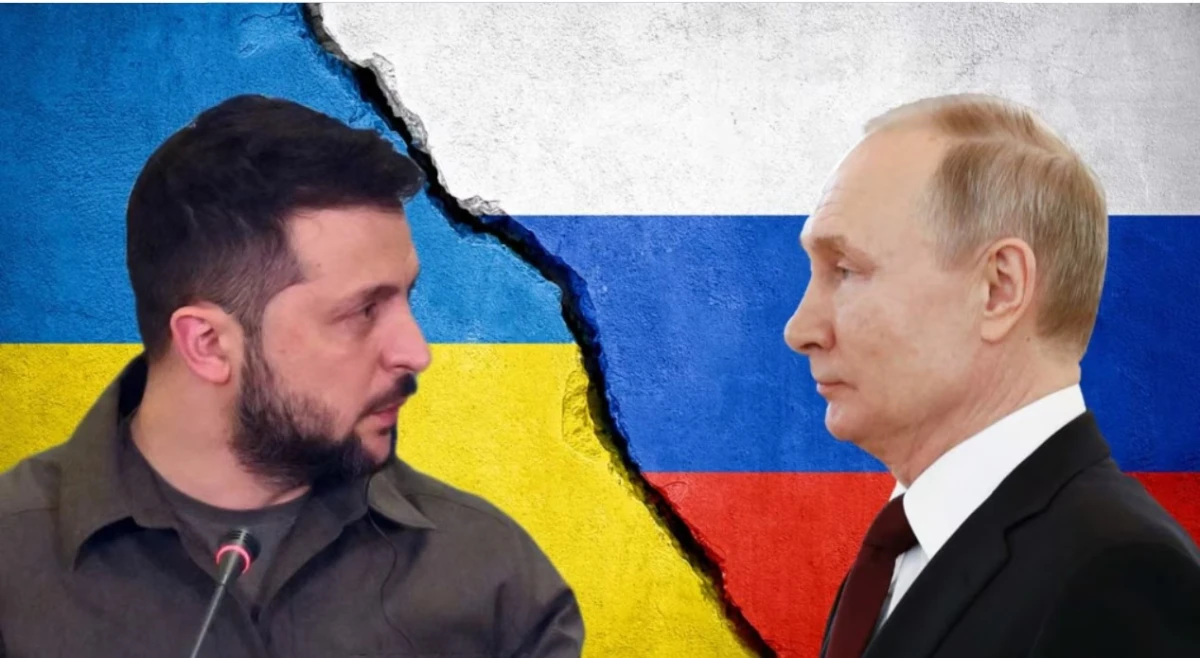
ANKARA, TÜRKİYE — Russia’s seizure of Crimea in 2014 and full-scale invasion of Ukraine in 2022 have brought Moscow territorial gains, but they may also have accelerated a deeper strategic fragmentation of the Russian-centered order surrounding the former Soviet space.
Russia itself has not broken apart. It remains a nuclear superpower with a large military, major energy resources, substantial industrial capacity and a powerful centralized state. The fragmentation discussed here is different: the weakening of Moscow’s post-Soviet sphere, the loss of economic interdependence with Europe and Ukraine, and the growing determination of neighboring states to diversify their security relationships.
The central paradox of Vladimir Putin’s war is therefore becoming increasingly difficult to ignore: several developments Moscow sought to prevent have instead accelerated because of the invasion.
Crimea strengthened Russia in the Black Sea — but the war enlarged NATO
For centuries, access to the Black Sea and the Mediterranean has been a central element of Russian strategic thinking.


Carnegie Endowment notes that Catherine the Great’s annexation of Crimea in 1783 gave Russia an important warm-water base and strengthened its ability to project power toward the Mediterranean. Crimea remains strategically valuable because of Sevastopol and the Black Sea Fleet.
But territorial control produced a much larger strategic reaction.
For decades, Finland and Sweden had remained militarily non-aligned. Both reversed that position after Russia launched its full-scale invasion of Ukraine.


Finland joined NATO in April 2023 and Sweden in March 2024. NATO itself explicitly says Russia’s invasion changed the long-standing political consensus in both countries.
That creates an extraordinary contradiction.
Moscow repeatedly presented NATO enlargement as one of the principal threats to Russian security. Yet the war intended partly to halt Western strategic expansion ultimately produced two additional NATO members in northern Europe.
Putin wanted greater strategic depth. Russia instead acquired a longer direct frontier with NATO.
The quick-war calculation became a four-year strategic burden
The often-repeated claim that Putin publicly promised to capture Ukraine “in three days” is not supported by a reliable public statement from the Russian president.
But evidence does show that Russia expected a rapid campaign.
Research by the Royal United Services Institute found that the original Russian invasion plan envisioned the main military phase lasting approximately 10 days, followed by several months of consolidating control over Ukraine.
That plan failed.
More than four years later, Russia continues to hold large areas of Ukrainian territory, but the battlefield has become a prolonged war of attrition.
In June 2026, the Institute for the Study of War assessed that Russian forces controlled about 99.8% of Luhansk Oblast and roughly 80% of Donetsk Oblast. By August, however, ISW was reporting slowing Russian advances and even net territorial losses during parts of the month.
Territory therefore matters, but the strategic balance cannot be calculated simply by coloring additional districts on a map.
Russia must ask what it has spent — economically, militarily and geopolitically — to obtain them.
Moscow turned one of its closest societies into a long-term adversary
Before 2014, Ukraine was not simply another neighboring country.
The two societies were connected by families, labor migration, language, industry, energy networks and enormous volumes of trade.
World Bank trade data show that in 2013 Russia received 23.8% of Ukrainian exports and supplied more than 30% of Ukraine’s imports, making it Ukraine’s dominant individual trading partner.
That relationship represented a form of Russian power that required no tanks.
Millions of people moved across the border, industrial supply chains were intertwined and Moscow possessed significant cultural and economic influence inside Ukraine.
War destroyed much of that strategic capital.
Russian forces are now attacking a country that historically contained some of the closest cultural, linguistic and family connections Russia possessed outside its own borders.
Even if Moscow ultimately controls all of Donbas, rebuilding the degree of voluntary Ukrainian dependence that existed before Crimea would be far more difficult.
This may be one of the war’s greatest Russian losses: territorial control increased while social and political influence collapsed.
The post-Soviet space is not joining NATO — but it is becoming less Moscow-centric
Another important distinction is necessary.
Former Soviet republics are not rushing one by one into NATO.
Kazakhstan, Uzbekistan, Kyrgyzstan, Tajikistan and Turkmenistan are not currently on a path toward NATO membership.
What is happening is subtler.
They are increasingly building relationships and regional mechanisms that do not depend exclusively on Moscow.
Armenia provides the clearest example. Prime Minister Nikol Pashinyan froze Armenia’s participation in the Russian-led Collective Security Treaty Organization in 2024. By 2026, Moscow itself was demanding clarity over Armenia’s future in Russian-led political and security structures as Yerevan deepened relations with Europe and NATO countries.
At the same time, Azerbaijan became a full participant in the Consultative Meeting of the Heads of State of Central Asia in November 2025, joining Kazakhstan, Kyrgyzstan, Tajikistan, Turkmenistan and Uzbekistan in a format capable of discussing regional security without Russia at the table.
The Organization of Turkic States is developing along a parallel track. Its 2025 summit in Gabala was held under the explicit theme “Regional Peace and Security.”
This does not mean Russia has disappeared from Central Asia or the Caucasus.
It means Moscow is no longer the only available center.
Türkiye, China, the European Union, Gulf states and indigenous regional institutions now provide alternatives.
That diversification may represent a more consequential form of post-Soviet fragmentation than formal border changes.
Russia did not lose every energy market — it lost much of its best one
The economic story also requires precision.
Russia has not lost all of its energy customers.
It successfully redirected large quantities of crude oil toward Asia. The U.S. Energy Information Administration says Asia and Oceania took 81% of Russia’s crude oil and condensate exports in 2024, with China and India accounting for the overwhelming majority.
But Russia has suffered a dramatic loss of its historically lucrative European market.
According to the European Commission, Russian gas fell from about 45% of EU gas imports before the war to 12% in 2025. Russian crude oil’s share fell to around 2%, while Russian coal has been eliminated from the EU energy mix. The EU has adopted legislation designed to end Russian LNG imports by the end of 2026 and pipeline gas imports by 2027.
Russia therefore still sells energy.
What has changed is its customer structure.
A supplier once able to balance Europe and Asia increasingly depends on a smaller group of giant Asian buyers. That may preserve export volumes, but it can reduce bargaining power.
Pressure is visible elsewhere.
Russia’s federal budget deficit reached 5.73 trillion rubles in the first half of 2026, according to Finance Ministry figures reported by Reuters. The World Bank expects Russian economic growth to slow to 0.8% in 2026, while the Bank of Russia’s key interest rate stood at 14% on August 21.
This is not economic collapse.
But it is a costly war economy facing increasingly difficult long-term trade-offs.
If Russia captures all of Donbas, does that make the war a victory?
Taking the remainder of Donetsk would unquestionably matter.
For Ukraine, losing the Sloviansk-Kramatorsk defensive belt would have serious military and political consequences.
For Moscow, completing the capture of Donbas would provide a powerful domestic victory narrative.
But tactical victory and strategic victory are not the same.
A final balance sheet would have to include Crimea and occupied Ukrainian territory on one side — and on the other:
Finland and Sweden joining NATO;
Ukraine becoming dramatically more hostile to Russian influence;
Europe dismantling its dependence on Russian energy;
Armenia distancing itself from Moscow’s security architecture;
Central Asia and Azerbaijan strengthening independent regional structures;
a prolonged, expensive war economy;
and Russia’s growing dependence on a narrower set of international partners and export markets.
Nuclear signaling does not erase that balance. Putin broadened Russia’s nuclear doctrine in 2024, lowering the threshold under which Moscow says nuclear use could be considered in response to certain conventional attacks.
Nuclear weapons guarantee that Russia remains a formidable power.
They cannot force neighboring societies to trust Moscow.
Indeed, repeated nuclear warnings may strengthen precisely the behavior Russia dislikes most: neighboring governments seeking alternative security relationships.
The historical comparison with Saddam Hussein should also be handled carefully. Saddam’s Iraq and Putin’s Russia are vastly different states, and history offers no automatic prediction of a leader’s personal fate. Saddam was eventually convicted by the Iraqi High Tribunal and executed after a proceeding that Human Rights Watch itself described as seriously flawed.
The useful lesson is narrower: military coercion, fear and short-term territorial gains do not by themselves establish long-term strategic success.
Russia has not fragmented — but the Russian-centered system is fragmenting
There is currently no sufficient basis to claim that the Russian Federation itself is about to break apart.
Its state institutions remain powerful. Its armed forces remain enormous. Its nuclear arsenal guarantees a unique strategic status. Its energy sector continues to generate revenue.
Underestimating Russia would therefore be a serious mistake.
But something around Russia has changed.
The post-Soviet strategic environment that survived the collapse of the USSR is becoming increasingly plural.
Ukraine is no longer an economic and social bridge into Russia’s orbit.
Northern Europe is more deeply embedded in NATO.
Europe is reducing Russian energy dependence.
The Caucasus and Central Asia are developing mechanisms that can operate without Moscow.
In this sense, Crimea and the invasion of Ukraine may have initiated not the territorial breakup of Russia, but the fragmentation of the geopolitical system that once made Russia far more powerful than its borders alone suggested.
That leads to a more important question than whether Russian forces eventually occupy the remaining part of Donbas:
What if Russia gains several Ukrainian regions but loses the political, economic and security environment that allowed it to dominate much of Eurasia?
If that is the final outcome of the war, the map may show Russian territorial expansion.
The strategic balance sheet may tell a very different story.
Yusuf İnan
WiseNewsPress.com
Yusuf İnan is a journalist, author, and political and strategic analyst. He serves as editor-in-chief of UAPresa.com, WiseNewsPress.com, SehitlerOlmez.com, SiyasetinSesi.com and YerelGundem.com. His work focuses on strategic and political analysis concerning developments in Türkiye and around the world.
What's Your Reaction?
 Like
0
Like
0
 Dislike
0
Dislike
0
 Love
0
Love
0
 Funny
0
Funny
0
 Wow
0
Wow
0
 Sad
0
Sad
0
 Angry
0
Angry
0
Yusuf İnan is a journalist, columnist, strategic analyst and head of the Wise News Press Media Group. His work focuses on international affairs, geopolitics, security and major social issues. Through his journalism, he promotes peace, dialogue, mutual understanding and responsible reporting while contributing to the development of international media projects.











Comments (0)