



Middle East at a crossroads: Syria, Iran, and Iraq in flux
Former Ambassador Namık Tan analyzes the fragile Syria peace pact, Iran's suppressed uprisings, and Iraq's political deadlock amidst Ankara's strategic silence.


BY AHMET TAŞ | WISE NEWS PRESS
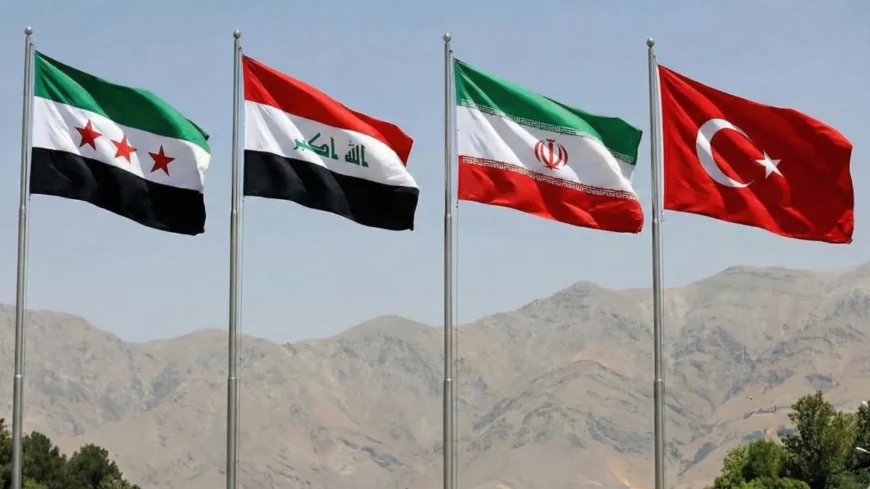
ANKARA, TURKEY — Former Ambassador and Member of Parliament Namık Tan warns that extraordinary developments in Syria, Iran, and Iraq are creating a regional shift, as Ankara maintains a notable and potentially strategic silence regarding its neighbors.
The fragile peace agreement reached in Syria on January 30, the brutal suppression of civil uprisings in Iran, and the looming government crisis in Iraq present a complex challenge for Turkish foreign policy. As the regional landscape is reshaped under the shadow of the Trump administration's "hazed" military posture, Tan suggests that Turkey’s current passivity may either be a sign of periodic indifference or a radical departure from its previous "world-ordering" rhetoric.
Syria’s "Creative Ambiguity" and the Jan 30 Pact
The cessation of hostilities in Syria following the January 30 agreement is a scenario Ankara should theoretically welcome. However, the details of the pact between the Syrian Transitional Government and the Syrian Democratic Forces (SDF) remain shrouded in what diplomats call "creative ambiguity." This approach leaves specific provisions open to interpretation, particularly concerning the long-term status of autonomous regions.
Following the defection of local Arab tribes to the Damascus side, the SDF has retreated into pockets with dense Kurdish populations, such as Kobane and Qamishli/Hasakah, to secure its survival. Rights previously granted to Syrian Kurds by presidential decree—such as citizenship and native language rights—are now being codified. Tan likens the spirit of this agreement to General Fuad Chehab’s post-WWII Lebanese philosophy: "In revolution, there is no winner and no loser." While a kanly civil war is now in the rearview, the success of this transition depends entirely on the drafting of a pluralistic and inclusive constitution.
Meanwhile, Ankara’s stance remains an enigma. While President Erdoğan has aligned much of his foreign policy with President Trump, the Turkish Ministry of National Defense recently felt compelled to deny reports that Turkey would reduce its control in the Serekaniye/Rasulayn region to a few symbolic military bases. This lack of transparency has created a vacuum filled by speculation.


Iran: The "Venezuela Formula" and Regional Deterrence
While the situation in Syria has temporarily stabilized, tensions are escalating in Iran and Iraq. Reports from Iran suggest the regime has suppressed recent popular uprisings through the brutal killing of thousands of citizens. With the internet severed for over 20 days, acquiring reliable data remains difficult.
The United States has moved military assets to the region, yet President Trump’s objectives remain unclear. Some analysts suggest a "Venezuela Formula" is being applied: using sanctions and military encirclement to force a change in regime behavior rather than an outright collapse. However, the European Union's recent decision to list the Revolutionary Guards as a terrorist organization signals a significant escalation in Western pressure.
Tan points out that while Iran’s air defense capabilities have been largely neutralized, its ballistic missile capacity remains intact. This poses a direct threat to neighboring countries that Iran might perceive as collaborators. Furthermore, the 86-year-old Ayatollah Khamenei’s succession remains a critical variable; the Revolutionary Guards, who control nearly half of the Iranian economy, may seek to establish an even stricter order to protect their multi-billion dollar interests.


Iraq: The Maliki Deadlock and Trump's Sanctions
In Iraq, the influence of Iran is being tested through the political process. The Shiite majority in Parliament has nominated former Prime Minister Nuri al-Maliki to lead the new government. Maliki’s previous tenure was marked by sectarian tension and corruption, which many blame for the rise of ISIS.
Current Prime Minister Mohammad Shia al-Sudani’s support for Maliki has effectively placed the nominee directly in the crosshairs of the Trump administration. Trump has openly opposed Maliki’s premiership and threatened Iraq with severe sanctions. This leaves Baghdad in a precarious position: sticking with Maliki could lead to economic ruin through sanctions, while withdrawing his nomination would be seen as a surrender of national sovereignty. This deadlock is unlikely to be resolved until the future of the Iranian regime becomes clearer.
Ankara’s Strategy: Silence or Indifference?
Ankara’s reaction to these seismic shifts has been uncharacteristically quiet. During Iranian Foreign Minister Abbas Araghchi’s recent visit to Ankara, Turkish officials, including Foreign Minister Hakan Fidan, remained silent on issues of democracy and human rights concerning the Iranian protests.
Regarding Iraq, Turkey seems to have adopted a "whoever becomes Prime Minister is acceptable" attitude, a stark contrast to Erdoğan's historical efforts to prevent Maliki’s rise to power in 2006. Tan notes that if this silence is not merely a result of periodic indifference, it represents a total contradiction of the government's previous claims of "bringing order to the world."
The ultimate question remains whether Ankara will eventually recognize regional actors like the SDF's leadership in a diplomatic capacity, as it once did with others in the region. As the U.S. and Israel reportedly oversee new deals in Eastern Syria, the gap between Ankara's rhetoric and the geopolitical reality continues to widen.
What's Your Reaction?
 Like
0
Like
0
 Dislike
0
Dislike
0
 Love
0
Love
0
 Funny
0
Funny
0
 Wow
0
Wow
0
 Sad
0
Sad
0
 Angry
0
Angry
0

Editor | Wise News Press — Delivering accurate, timely global news with integrity, insight, and editorial responsibility.














Comments (0)