



NATO on High Alert Over Russia's New Nuclear-Powered Petrel Missile
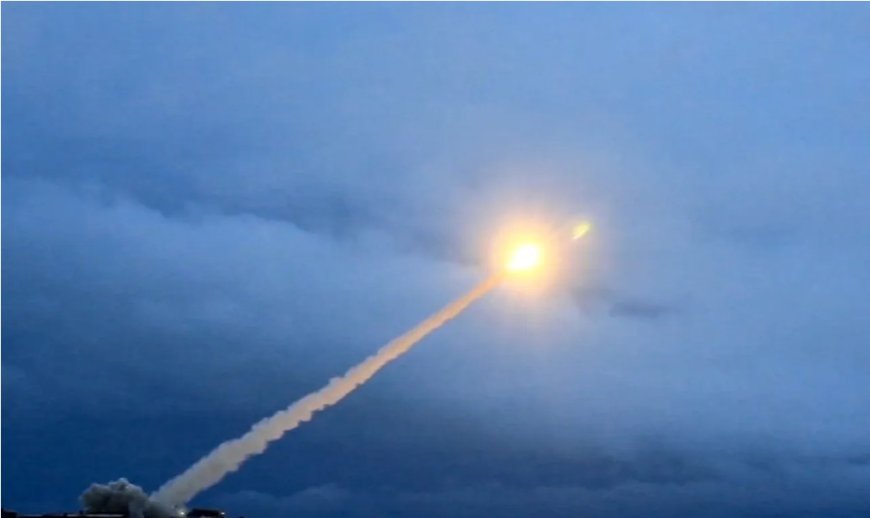
A confidential NATO intelligence report describes Russia's nuclear-powered cruise missile, the Burevestnik (Petrel), as "particularly concerning" due to its near-unlimited range and ability to bypass existing air defenses.


WISE NEWS PRESS / BRUSSELS, BELGIUM — NOVEMBER 17, 2025
A new Russian cruise missile, codenamed the "Petrel," has reportedly put NATO on high alert due to its nuclear propulsion system, which grants it an almost unlimited range and the capability to evade existing air defense systems.
The assessment, supported by Western intelligence and detailed in a confidential NATO document obtained by Die Welt, characterizes the Burevestnik (known to NATO as SSC-X-9 Skyfall) as "particularly concerning," signaling a dangerous new challenge to the military alliance's defensive strategy. Russian President Vladimir Putin publicly announced successful tests of the missile three weeks ago.
Evasion Capabilities and Unlimited Range
The most striking feature of the Burevestnik is its nuclear reactor. Unlike conventional cruise missiles, this propulsion system uses nuclear energy, theoretically providing the missile with nearly unlimited range.
According to the NATO document, the missile can reach speeds exceeding 900 kilometers per hour, is highly maneuverable, and can be launched from mobile platforms. These features allow it to follow long, circuitous routes to bypass NATO air defense systems, particularly through sparsely monitored areas like the southern and polar regions.
The document notes that "existing challenges [...] will be aggravated by the missile’s extreme range and maneuverability." Experts, however, point out that the missile does not reach hypersonic speeds, potentially making it vulnerable the longer it remains airborne.
Additional Strategic Threats
NATO experts are also examining other advanced Russian weapons, including the new mobile intermediate-range missile, the SS-X-28 Oreshnik. This missile, first tested in Ukraine in November 2024, has an estimated range of up to 5,500 kilometers and can be equipped with various munitions, including nuclear warheads.
-
Oreshnik Deployment: Russian state news agency Tass, citing Belarusian presidential spokesperson Natalia Eismont, announced that Belarus would deploy the Oreshnik hypersonic intermediate-range missile in December. The deployment is described by Belarusian President Alexander Lukashenko as a response to growing tensions from the West.
-
Poseidon Submarines: The NATO report also raises concerns about the Poseidon nuclear-powered underwater drones, expected to be operational by 2030. These long-range drones are designed to destroy coastal targets, naval bases, ports, and cities on the US East Coast, UK, and France. They are difficult to detect and attack while operating in deep waters, and NATO currently lacks the necessary high-speed, long-range anti-submarine torpedoes to effectively counter them.
The intelligence report explicitly highlights NATO’s deficiencies in mid- and long-range capabilities, particularly concerning nuclear weapons.
Risk of "Mini-Chernobyl" Accident
While some experts, like Fabian Hoffmann of the Oslo Nuclear Project, have called the Burevestnik "useless and unnecessary," others warn of the significant environmental risks associated with the nuclear engine.
The US rejected a similar nuclear reactor concept in the 1950s due to the inherent dangers. William Alberque, a senior fellow at the Pacific Forum and former NATO arms control director, suggests the biggest threat is during a potential engagement:
“If a Burevestnik were to be shot down, the radioactive material released from its nuclear reactor could spread over a wide area — a mini-Chernobyl in the sky.”
The Burevestnik has a history of dangerous incidents; five Russian scientists were killed during a test in 2019, and elevated radiation levels were recorded in the area. Independent nuclear expert Pavel Podvig, however, cautioned against labeling it a "flying Chernobyl," noting that a crash during takeoff or flight poses the greatest risk of radioactive leakage.
What's Your Reaction?
 Like
0
 Dislike
0
 Love
0
 Funny
0
 Wow
0
 Sad
0
 Angry
0

Editor | Wise News Press — Delivering accurate, timely global news with integrity, insight, and editorial responsibility.






















Comments (0)