



Russian lawmaker says Ukraine war should end by 2030 amid EU defence plans
Russian State Duma defence committee member Viktor Sobolev said Moscow should end the war in Ukraine by 2030, linking the date to EU defence plans.


By Ahmet Taş | Wise News Press
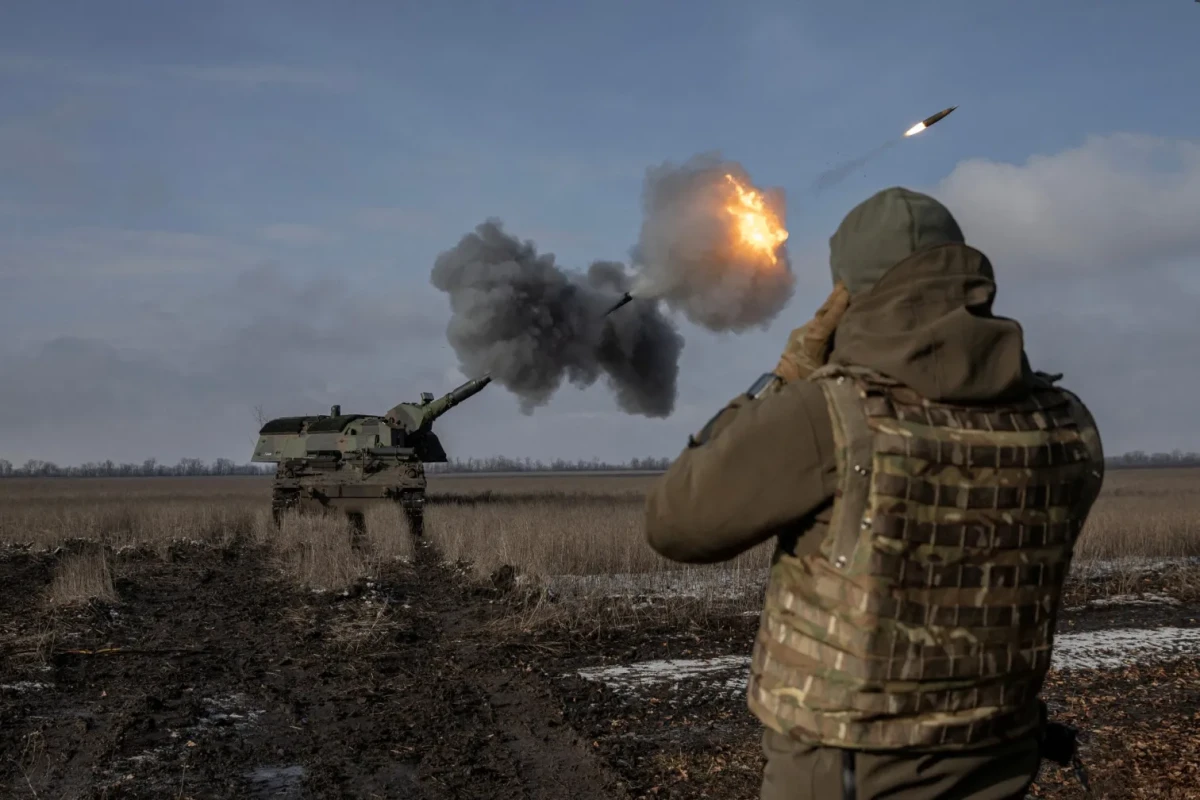
MOSCOW, RUSSIA — Russian State Duma defence committee member Viktor Sobolev has said Moscow should complete its war in Ukraine by 2030, linking the proposed deadline to Europe's expanding defence preparations and military investment plans.
Sobolev's remarks do not represent an officially announced Kremlin timetable for ending the war. Instead, they reflect the lawmaker's assessment that Russia should achieve its objectives in Ukraine before European states complete major elements of their Readiness 2030 defence programme.
Sobolev says the war should end by 2030
Sobolev, a lieutenant general and former commander of Russia's 58th Army, made the comments in an interview with Gazeta.Ru published on Aug. 24.
The Russian lawmaker claimed that Poland, Germany, France, Britain, Belgium, Norway, Finland and Sweden were preparing for a possible military confrontation with Russia and said Moscow should act before those preparations are completed.
“By 2030, we must fully complete the special military operation in Ukraine,” Sobolev said.


He added that Russia should end the campaign with what he described as an “absolute victory” for the Russian armed forces.
Russia officially refers to its war against Ukraine as a “special military operation.” Moscow launched its full-scale invasion of Ukraine on Feb. 24, 2022, escalating the conflict that began with Russia's annexation of Crimea and fighting in eastern Ukraine in 2014.
Sobolev also argued that Russia's armed forces should be reorganised after the war so they could respond to what he described as aggression by any geopolitical opponent on any strategic front.


The 2030 date is not an official Kremlin deadline
The distinction between Sobolev's statement and official Russian policy is significant.
No publicly announced decision by President Vladimir Putin, the Kremlin or Russia's Defence Ministry has established 2030 as an official deadline for ending the war in Ukraine.
Sobolev is a member of the State Duma's defence committee and belongs to the Communist Party faction. State Duma records confirm his participation in parliament as a Communist Party lawmaker, while Gazeta.Ru identifies him as a lieutenant general and former commander of the 58th Army.
His position gives the comments political and military relevance, but they should not be interpreted as a formal announcement of Russia's war planning.
The statement nevertheless provides an indication of how some Russian political and military figures are assessing the relationship between the war in Ukraine and Europe's longer-term defence buildup.
Why 2030 matters for European defence
The year cited by Sobolev is also the target date of the European Union's Readiness 2030 programme, associated with the earlier ReArm Europe initiative.
The European Commission describes the ReArm Europe Plan/Readiness 2030 as a package intended to provide EU member states with financial tools to rapidly increase defence investment and military capabilities. The framework could mobilise up to €800 billion in additional defence investment.
The broader Defence Readiness Roadmap 2030 calls on member states to close critical military capability gaps by the end of the decade.
Among its priorities are air and missile defence, drones and counter-drone systems, electronic warfare, military mobility, space capabilities and increased European defence production.
The programme also includes four major European projects: the European Drone Defence Initiative, Eastern Flank Watch, European Air Shield and European Space Shield.
The European Commission says the objective is to ensure Europe has sufficient capabilities, industrial capacity and readiness to respond to security threats by 2030.
EU documents frame the programme as defence readiness
Sobolev portrayed several European countries as preparing to fight Russia, but the EU's official Readiness 2030 documents frame the programme in terms of defence capability, deterrence and preparedness rather than an intention to launch a war against Russia.
The roadmap calls for enhanced surveillance and defence along Europe's eastern borders, including those facing Russia and Belarus, while stressing coordination with NATO's territorial defence plans.
It also aims to create a European Air Shield capable of covering the full spectrum of air and missile defence and to develop a comprehensive European system of defence-related space capabilities.
The Commission's definition of defence readiness includes the ability of member states to anticipate, prevent and respond to defence-related crises.
Russia and NATO countries have sharply different interpretations of Europe's military expansion. Moscow has repeatedly described NATO's buildup and military support for Ukraine as threats to Russian security, while European governments argue that Russia's invasion of Ukraine demonstrated the need for stronger deterrence and defence capabilities.
Ukraine is part of the EU's Readiness 2030 strategy
Ukraine itself occupies a significant place in Europe's Readiness 2030 plans.
The European Commission says the objective is to ensure Ukraine can defend itself and deter another Russian attack while integrating the Ukrainian defence industry more closely with Europe's industrial base.
The roadmap includes cooperation on drone technology, defence production, ammunition, military training and greater integration between Ukrainian and European defence companies.
It also calls for the continuation of European military assistance to Ukraine and proposes monitoring the volume of EU military support, ammunition deliveries and investment in Ukraine's defence industry.
The Commission argues that lessons learned from Ukraine's battlefield experience — particularly in drones, electronic warfare and rapidly developed military technology — can contribute to Europe's own defence preparations.
This makes 2030 an important benchmark not only for EU member states but also for the long-term relationship between Ukraine and Europe's defence architecture.
War's duration remains uncertain
Sobolev's statement comes as questions about how and when the Russia-Ukraine war could end remain unresolved.
Diplomatic initiatives have continued alongside fighting, but Kyiv and Moscow remain divided over territory, security guarantees and the conditions required for any lasting settlement.
Wise News Press previously reported that the Kremlin said it had received no concrete new peace proposal as discussions continued over possible ceasefire initiatives and renewed negotiations.
Ukraine says any settlement must protect its sovereignty and provide credible safeguards against another Russian invasion. Moscow continues to press territorial and security demands that Kyiv has rejected.
Against that background, Sobolev's reference to 2030 should be understood primarily as a Russian lawmaker's strategic assessment rather than a prediction that the conflict will necessarily continue until that year.
His comments instead connect two separate timelines: Russia's ongoing war in Ukraine and Europe's stated goal of achieving substantially stronger defence readiness by the end of the decade.
Whether the war ends well before 2030 — or continues in some form for years — will depend on battlefield developments, political decisions in Moscow and Kyiv, international military support and the prospects for negotiations.
For now, neither Russia nor Ukraine has announced an agreed timetable for ending the conflict.
WiseNewsPress.com
What's Your Reaction?
 Like
0
Like
0
 Dislike
0
Dislike
0
 Love
0
Love
0
 Funny
0
Funny
0
 Wow
0
Wow
0
 Sad
0
Sad
0
 Angry
0
Angry
0
Ahmet Taş is a journalist, editor and Turkey Office Manager of the Wise News Press Media Group. He works across news, digital media and international publishing, focusing on accurate, responsible and accessible journalism. He contributes to the development of media projects that bring important political, social and global developments to a wider international audience.











Comments (0)