



Trump calls for 7-nation coalition to secure Strait of Hormuz
Amid the Iran war and global energy crises, US President Donald Trump has called on seven nations to form a coalition to secure the Strait of Hormuz.


By Ahmet Taş | Wise News Press
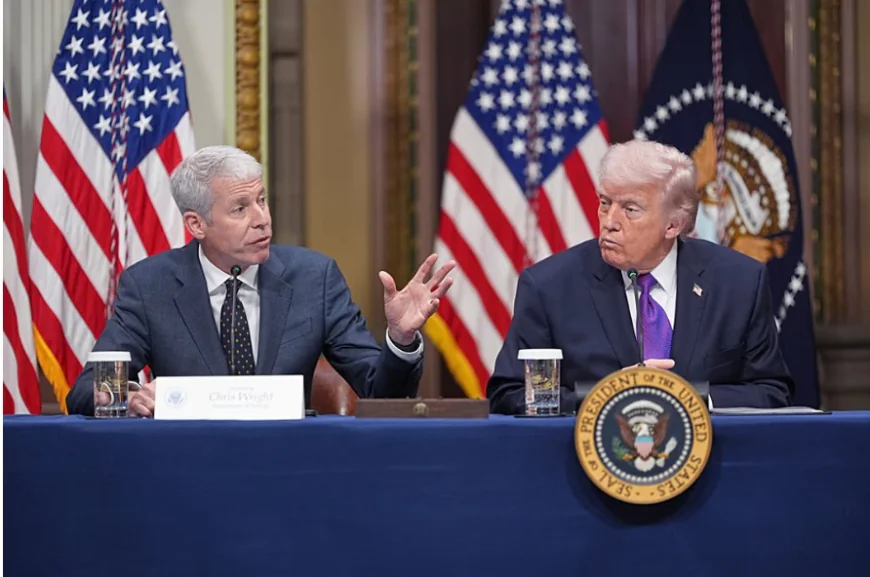
WASHINGTON, US — US President Donald Trump has called on seven nations to join an international coalition to secure the Strait of Hormuz and escort stranded oil vessels amid the ongoing Iran war.
The initiative aims to resolve the global energy supply crisis triggered by the conflict, as the virtual closure of the critical waterway—where nearly a fifth of global crude oil passes—continues to shake international markets.
According to reports, Washington is pressing its allies, who are heavily reliant on Middle Eastern crude oil, to provide warships and military assets. Speaking to reporters aboard Air Force One, Trump confirmed his administration is negotiating with several countries but initially declined to name all of them. "I am demanding that these countries come in and protect their own land, because this is their own land," Trump said, asserting that the shipping channel is not a necessity for the US due to its independent oil access.
He noted that China receives about 90 percent of its oil through the strait, while the US receives very little, adding: "It would be nice if other countries also patrolled this with us, and we will help. We will work with them."
International reactions and negotiations
Trump has previously urged China, France, Japan, South Korea, and the UK to join US forces in the region. According to the AP, while some targeted nations have commented on the proposal, they have not firmly committed their support.


US Secretary of Energy Chris WRIGHT stated he is in dialogue with several countries, expecting China to be a constructive partner in reopening the strait. Meanwhile, Chinese Embassy spokesperson Liu PENGYU said that all parties share the responsibility of ensuring a stable energy supply and that Beijing will strengthen communication with relevant parties to reduce tensions.
South Korea's Foreign Ministry noted the call, stating it would carefully review the situation in close coordination with the US. French President Emmanuel MACRON previously indicated that France is working on a potential international mission to escort ships, but emphasized it should happen "when conditions permit" and hostilities subside.
Iran's stance on waterway access
Addressing the US media, Iranian Foreign Minister Abbas ARAGHCHI stated that Tehran has been approached by a number of countries seeking safe passage for their vessels.


Araghchi mentioned that a group of ships from different countries was allowed to pass, asserting that the decision is up to the Iranian military and that the strait remains open to everyone "except the US and its allies."
Escalating military conflict and casualties
As the war enters its 17th day, the US and Israel continue their strikes against Iranian targets. During a Pentagon briefing, US Secretary of Defense Pete HEGSETH reported that Iran's missile attacks have decreased by up to 90 percent, and drone attacks have dropped by around 95 percent, following Washington's targeting of ballistic missile command centers and manufacturing facilities.
Israeli military spokesperson Effie DEFRIN claimed similar successes. "We have disabled more than 70 percent of the ballistic missile launchers," Defrin stated, noting that Israel has struck over 2,000 targets using more than 10,000 different munitions throughout the war.
Despite this, Iran continues to launch daily retaliatory missile and drone attacks against Israel and Gulf Arab states, targeting infrastructure and energy facilities. According to health ministries, the war has resulted in over 1,300 deaths in Iran and more than 820 in Lebanon. The UN has warned of an unfolding humanitarian catastrophe in Lebanon, where nearly 1 million people have been internally displaced since the conflict escalated.
What's Your Reaction?
 Like
0
Like
0
 Dislike
0
Dislike
0
 Love
0
Love
0
 Funny
0
Funny
0
 Wow
0
Wow
0
 Sad
0
Sad
0
 Angry
0
Angry
0

Editor | Wise News Press — Delivering accurate, timely global news with integrity, insight, and editorial responsibility.














Comments (0)