



Trump targets Iranian leadership in Venezuela scenario
The Trump administration is reportedly shifting toward a targeted "political engineering" strategy in Iran, seeking a leadership change rather than a total state collapse.


By Ahmet Taş | Wise News Press
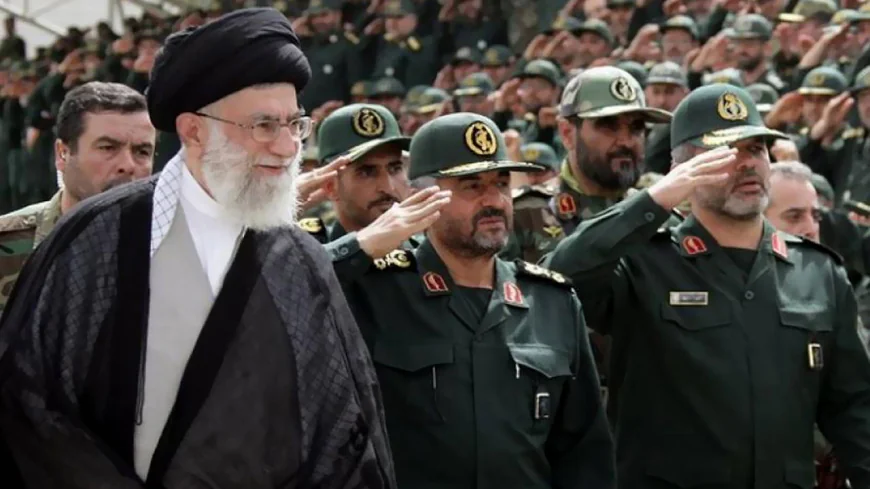
WASHINGTON, USA — The Trump administration is reportedly planning a targeted "political engineering" move against Iran’s top leadership to force a power shift while avoiding a total collapse of the state apparatus.
Recent reports suggest that Washington’s goal is not a full-scale regime change but a "Venezuela-style" scenario where internal pressure leads to a change at the top of the hierarchy. While the Iranian government faces a deep economic crisis and internal protests, intelligence reports indicate that the elite leadership remains largely unified, complicating any outside attempts to fracture the administration.
Focus on leadership over regime change
Western sources indicate that Trump aims for a scenario where the head of state leaves office without the entire government structure being dismantled. Senior Israeli officials familiar with the joint planning suggest that if the objective is truly to topple the regime, air strikes alone would be insufficient, necessitating a ground presence that is currently not part of the primary discourse.
Furthermore, experts warn that even if Supreme Leader Ali Khamenei is targeted, the system is designed to produce immediate successors. Currently, the 86-year-old leader has reportedly reduced his public visibility and handed daily management tasks to senior advisors like Ali Larijani and figures close to the Revolutionary Guard, though he retains the final say on nuclear strategy and war.
Potential role of the Revolutionary Guard
Some Western diplomats argue that a shift in leadership could break the current deadlock in nuclear negotiations and pave the way for more cooperative relations. However, the lack of a clear successor to Khamenei raises concerns that the Iranian Revolutionary Guard Corps (IRGC) might take complete control of the state.
According to regional officials, any successor perceived as being pushed forward by foreign pressure would likely be rejected by the domestic base. This could inadvertently strengthen the IRGC’s grip on power, potentially escalating the nuclear crisis and regional instability rather than resolving it.
Regional risks and energy security
Diplomats warn that if Iran descends into a deeply divided state, it could face a civil war similar to the aftermath of the 2003 US invasion of Iraq. Such a collapse would likely trigger massive refugee flows and disrupt oil shipments through the Strait of Hormuz, a vital artery for global energy.
Despite these risks, the focus in Washington remains on a "surgical" political outcome. The administration appears to be betting that targeted pressure on the "point of the pyramid" will yield results without the catastrophic costs of a total state failure.
What's Your Reaction?
 Like
0
 Dislike
0
 Love
0
 Funny
0
 Wow
0
 Sad
0
 Angry
0

Editor | Wise News Press — Delivering accurate, timely global news with integrity, insight, and editorial responsibility.
















Comments (0)