



Putin faces Ukraine war pressure as Russia’s elite cracks widen
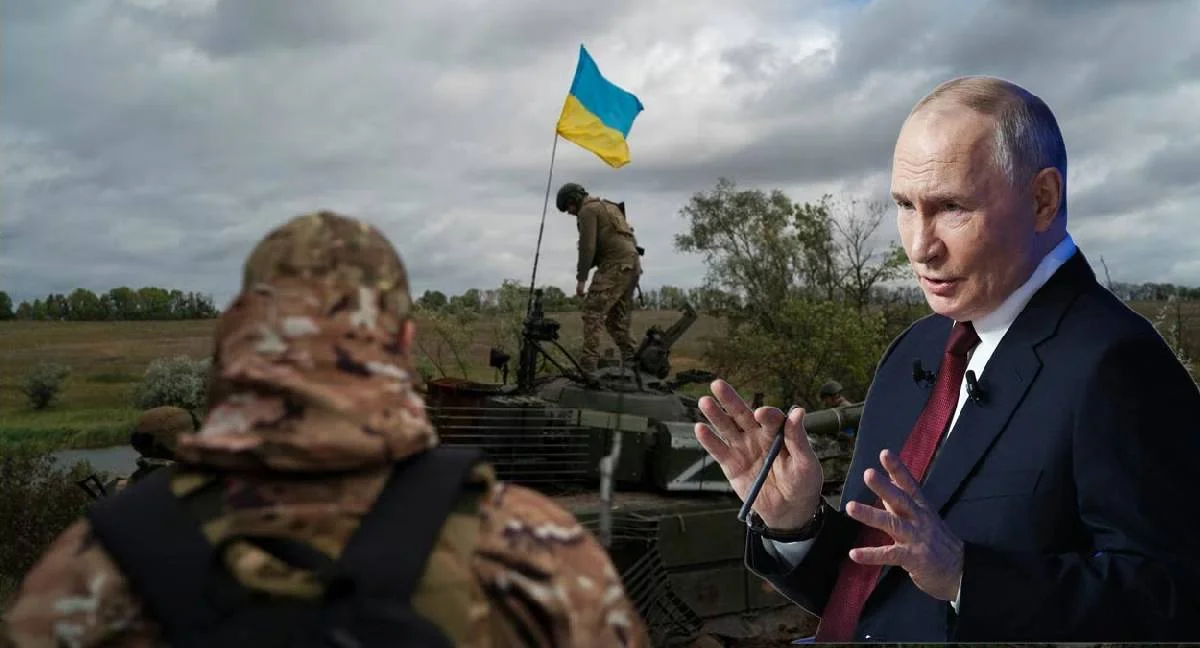
A Financial Times analysis says Russia’s prolonged war in Ukraine is increasing pressure on Vladimir Putin as costs rise and elite unease grows.


By Ahmet Taş | Wise News Press
MOSCOW, Russia — A Financial Times analysis argues that Russia’s prolonged war in Ukraine could carry personal political consequences for President Vladimir Putin as military costs rise, battlefield goals remain unmet and pressure reaches Moscow.
According to the analysis cited by Karar, Russia’s failure to achieve its original objectives in Ukraine, the mounting human and economic toll of the war and signs of unease within parts of the Russian elite are raising new questions about the long-term durability of Putin’s rule.
Moscow is no longer insulated from the war
One of the central arguments in the analysis is that the Kremlin has struggled to keep the consequences of the war away from Russia’s major cities.
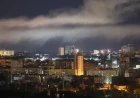
For much of the conflict, Moscow and St. Petersburg were presented as largely insulated from the direct effects of the war. But that perception has become harder to sustain as Ukrainian drones have reached targets inside Russia and security disruptions have become more visible.
The analysis points to repeated closures of major Moscow airports for security reasons, mobile internet outages, attacks on oil refineries and incidents involving senior military figures in the capital. These developments are presented as signs that the conflict is no longer confined to the front line.
For the Kremlin, this is politically sensitive. Putin has repeatedly framed the invasion as a “special military operation,” a term designed to limit the sense of national emergency. But when the consequences of the war are felt in Moscow itself, that framing becomes more difficult to maintain.


Victory Day symbolism looked weaker
The Financial Times analysis also focused on the symbolic meaning of this year’s 9 May Victory Day events in Moscow.
The absence of tanks and heavy weapons from the traditional military parade was described as striking. The analysis interpreted this as a possible sign that the Kremlin was concerned about the risk of Ukrainian drone attacks during one of Russia’s most important national ceremonies.
Victory Day is central to the Russian state’s historical identity. It is used by the Kremlin as a moment of military pride, national unity and political legitimacy. Any visible reduction in the display of military power therefore carries symbolic weight.


The analysis suggests that even at a ceremony designed to project strength, the Kremlin had to account for the security risks created by the war in Ukraine. That, in turn, highlights how the conflict has begun to affect Russia’s political and psychological center.
The human and economic cost is growing
The analysis says the cost of the war for Russia has become increasingly difficult to ignore.
It cites an assessment by Anne Keast-Butler, head of Britain’s GCHQ intelligence agency, that around 500,000 Russians have been killed in the war, with many more seriously wounded. The analysis presents this as a major long-term challenge for a country that was already facing demographic pressure before the invasion.
The war has also lasted longer than the Soviet Union’s fight against Nazi Germany in the Second World War, the analysis notes. Despite this, Moscow has still not taken all of Donbas and has suffered setbacks at different points of the conflict.
This contrast is politically damaging for the Kremlin. The Russian leadership expected a short and decisive campaign. Instead, the war has become a grinding conflict with high casualties, continued sanctions, growing defense costs and increasing pressure on the broader economy.
Unease is becoming visible among Russian elites
The analysis argues that signs of unease within Russia’s establishment are becoming more visible.
It points to an article in Russia in Global Affairs, a publication seen as close to the system, which argued that the goal of removing the pro-Western government in Kyiv was “fundamentally unattainable” unless Russia occupied all of Ukraine.
The article reportedly suggested that a negotiated peace could be in Russia’s interest. For the Financial Times, this kind of argument matters because it suggests that some influential circles in Moscow are beginning to question the scale, aims and sustainability of the war.
Such views do not necessarily mean that an organized challenge to Putin is imminent. But they suggest that the war is no longer being discussed only in terms of victory and endurance. Questions about cost, feasibility and political risk are becoming harder to avoid.
Military failures have reshaped Russian politics before
The analysis places the Ukraine war within a longer Russian historical pattern: major military failures have often produced major political consequences.
Russia’s defeat in the 1905 Russo-Japanese War contributed to unrest and constitutional reforms under the Tsarist system. The failures of the First World War helped create the conditions for the Russian Revolution.
The analysis also refers to the perception of failure during the Cuban Missile Crisis as one factor in Nikita Khrushchev’s removal from Soviet leadership in 1964. It also notes that the war in Afghanistan played a role in the decline of the Soviet Union.
The argument is not that history will repeat itself exactly. Russia under Putin is a highly controlled political system with limited space for open opposition. But the historical record suggests that when military campaigns become costly, prolonged and inconclusive, political systems in Russia can come under serious pressure.
Putin’s exit path remains unclear
Despite these pressures, the analysis stresses that it is difficult to predict how Putin could be removed from power.
Mass protests and conventional electoral politics are seen as unlikely paths to change. Previous anti-Putin protests in 2011-2012, 2019 and 2021 were suppressed with mass detentions and force.
The deaths and removal of prominent opposition figures also reduce the likelihood of an organized street-based challenge. Boris Nemtsov was killed near the Kremlin in 2015, while Alexei Navalny died in prison in 2024. Other opposition figures have been imprisoned, exiled or marginalized.
This leaves elite politics and the security apparatus as more plausible sources of risk for Putin. The analysis says the most serious challenge would likely come not from the street but from a split among powerful actors who conclude that the war is going badly and that Russia needs a different course.
The Prigozhin mutiny still matters
The analysis refers to Yevgeny Prigozhin’s 2023 mutiny as the closest Putin has come to losing control since taking power in 1999.
The Wagner founder’s rebellion failed, and Prigozhin later died in a suspicious plane crash. Since then, Putin has tightened control over armed formations and the security system.
Still, the episode showed that cracks can appear suddenly when military dissatisfaction, personal ambition and elite uncertainty combine. It also demonstrated that the Russian state’s image of total control can be more fragile than it appears.
For now, however, Putin appears to have reasserted control over the security establishment. That makes any immediate challenge less likely, but not impossible if the war continues to produce heavy costs and limited gains.
Many elites may still see Putin as the safer option
The Financial Times analysis also emphasizes why Russia’s elite may hesitate to move against Putin.
Alexander Gabuev of the Carnegie Russia Eurasia Center argues that much of the current elite was selected by Putin and remains personally loyal to him. Many benefit from the current system, many are under Western sanctions, and many do not trust each other enough to organize a conspiracy.
For those reasons, even elites who are privately worried about the war may still view staying with Putin as the safer option. Breaking with him would carry enormous personal risks.
This creates a paradox: the war may be weakening Russia strategically, but the internal system may still hold together because the costs of challenging Putin remain too high for those around him.
A war on an unsustainable path
The analysis concludes that there are major obstacles to Putin’s removal in the near term. Russia’s political system is repressive, the opposition is weakened, the elite is fragmented and the security apparatus remains largely under Kremlin control.
Yet the broader direction of the war is described as increasingly unsustainable. The conflict has lasted far longer than Moscow expected, consumed huge human and economic resources, and brought the war’s effects closer to Russia’s own cities.
The central conclusion is that the timing and mechanism of political change in Russia are difficult to predict. But if the war continues to impose rising costs without delivering a decisive victory, the pressure on Putin’s system is likely to grow.
The Financial Times analysis ends with a phrase often used in financial markets: something that cannot go on forever eventually stops.
For Putin, the question is whether the Ukraine war stops before it forces a deeper reckoning inside Russia’s own political order.
What's Your Reaction?
 Like
0
Like
0
 Dislike
0
Dislike
0
 Love
0
Love
0
 Funny
0
Funny
0
 Wow
0
Wow
0
 Sad
0
Sad
0
 Angry
0
Angry
0

Editor | Wise News Press — Delivering accurate, timely global news with integrity, insight, and editorial responsibility.












Comments (0)