



Understanding the Mahdi concept in Said Nursi's thought
Bediuzzaman Said Nursi views the Mahdi not as a mythological savior, but as a collective spiritual movement of the Ahl al-Bayt dedicated to reviving faith.


By Ahmet Taş | Wise News Press
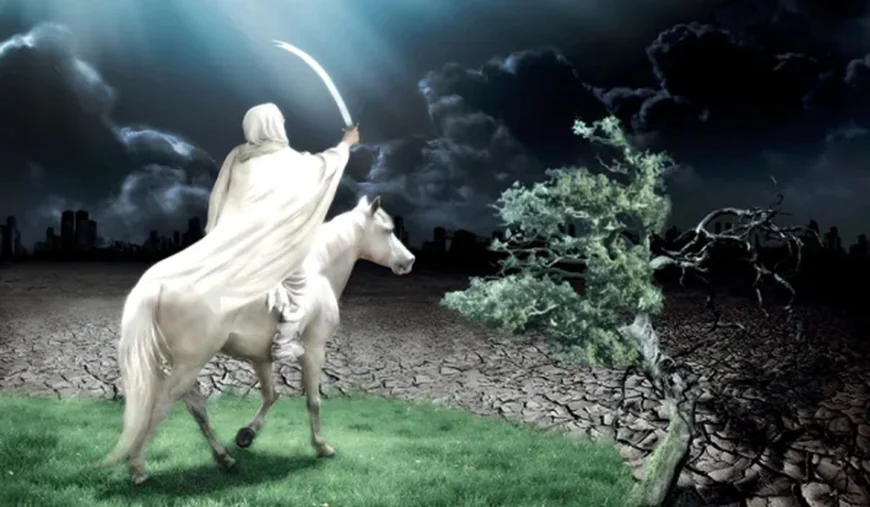
ANKARA, TURKEY — The concept of the Mahdi, a long-awaited savior in Islamic eschatology, is interpreted by prominent Islamic scholar Bediuzzaman Said Nursi not as a supernatural individual wielding a physical sword, but as a collective spiritual movement dedicated to reviving faith in the modern era.
Exploring the historical, etymological, and sociological roots of the expected savior, Nursi shifts the paradigm from passive waiting to active spiritual duty. He emphasizes that the true Mahdi movement will rely on the collective strength of the Prophet Muhammad's lineage to combat materialism, restore justice, and revive Islamic values through a rational, sociologically sound process.
The universal human quest for a savior
The renowned Muslim historian and sociologist Ibn Khaldun once stated, "Curiosity about the future is a characteristic of human nature." He argued that seeking to know how much time the world has left is a fundamental human trait. Throughout history, especially during difficult and oppressive times, people have consistently sought a "savior." Sometimes this figure is an unknown individual, sometimes a political leader, and other times a spiritual scholar. This expectation has historically helped societies endure hardships and find a degree of consolation.
The belief in an expected savior is not exclusive to Judaism and Christianity; it exists in almost all religions and cultures as a shared human hope and ideal of salvation. In Islamic tradition, this concept of a savior also exists and is referred to by various titles. Characterized primarily by the mission to save society from tyranny and establish justice, this figure is known by names such as "Imam," "Mujaddid" (Renewer), "Khalifa" (Caliph), and "Mahdi." While their specific identities or the sects that await them may differ—such as the Shia expectation of the Mahdi contrasting with the Umayyad expectation of the Sufyan—the common denominator is the emergence of a spiritually powerful figure who will lead a reform movement in the end times.
Etymological roots and historical manifestations
In its dictionary definition, the word mahdi simply means someone who has reached the right path or guidance. Essentially, "a person whom God has guided to the truth is called a mahdi." In this broad sense, any Muslim on the right path can be considered a mahdi. However, when the definite article "al-" is added (Al-Mahdi), it becomes a specific title referring to the figure prophesied by Prophet Muhammad to appear in the end times. According to traditions, this individual will emerge when the earth is filled with injustice and oppression, filling it instead with justice and equity.


Historically, the title has been attributed to many figures, including Prophet Abraham, Prophet Muhammad, the Four Rightly Guided Caliphs, and certain Umayyad and Abbasid rulers. Prophet Muhammad himself used the plural term mahdiyyun for his successors, advising his followers: "I urge you to adhere to my Sunnah and the path of my rightly guided and mahdi caliphs." This usage indicates that the term is not exclusively reserved for a single eschatological figure.
However, the power of the "expected Mahdi" concept has led to frequent exploitation. The first notable misuse occurred with Keysan, a freed slave of Ali, who claimed that Ali's son, Muhammad b. Hanafiyyah, had not died but was hiding to return as a savior. Throughout centuries, various individuals driven by ambition, political gain, or nationalist fervor have claimed the title. Some, like the Mahdi of Sudan or Somalia, utilized the title to rally their people against British and Italian colonial forces, providing tangible benefits to their homelands. Conversely, others, like the Kadiyani movement in India, used the concept to pacify Muslims under British rule. It is crucial to distinguish between genuine, pious scholars whom followers mistakenly labeled as the Mahdi, and charlatans who deliberately exploited the title to manipulate the masses.
ALT: Historical manuscript showing Arabic text regarding Islamic eschatology and the signs of the end times Caption: Throughout centuries, Islamic scholars have meticulously analyzed hadiths concerning the end times to separate authentic traditions from fabricated claims. (Photo: Museum Archive/Source)


The Mahdi in the Quran and prophetic traditions
The specific title "Mahdi" as an end-times savior does not explicitly appear in the Quran. However, the Quran frequently discusses reformers who rescue societies from darkness and corruption. Words sharing the same root, such as muhtadi (one who is guided), appear several times. Some scholars also point to the verse, "For every people there is a guide" (Ar-Ra'd, 13:7), as an implicit reference to the concept.
In the Hadith literature, the Mahdi is mentioned more explicitly, particularly in the collections of Abu Dawud, Tirmidhi, and Ibn Majah. While the primary collections of Bukhari and Muslim do not use the specific name "Mahdi," they refer to an "Imam" or "Khalifa" who will act as a savior. Prominent scholars like Ibn Hajar al-Asqalani have interpreted the "Imam" mentioned in Bukhari—who will lead the prayer when Jesus returns—as a direct reference to the Mahdi.
The defining characteristics of the Mahdi found in these traditions suggest that he will be from the lineage of the Prophet (Ahl al-Bayt), his name will match the Prophet's name, and he will bring an era of unprecedented justice and abundance.
The sociologist Ibn Khaldun famously applied strict criticism to Mahdi traditions, evaluating them through the lens of chain narrators. While some claim he completely denied the Mahdi concept, Ibn Khaldun actually concluded that "with very few exceptions, all of these hadiths are open to criticism." He did not deny the concept outright but applied a sociological principle: a leader cannot succeed merely by claiming a holy lineage; he requires the backing of a powerful group or nation—a concept he termed Asabiyyah (social solidarity).
Bediuzzaman Said Nursi's unique interpretation
Bediuzzaman Said Nursi approaches the Mahdi issue by harmonizing scriptural texts with rational and sociological realities. First, he addresses why the Mahdi's exact identity and time of arrival remain ambiguous. According to Nursi, this ambiguity is a requirement of divine wisdom, much like the hidden exact time of the Day of Judgment.
"Every era and every century is in need of the meaning of 'Mahdi' to strengthen spiritual resolve and save people from despair. Therefore, every century must have a share of this meaning. Furthermore, to prevent people from falling into heedlessness and to keep them vigilant, they must constantly fear the emergence of terrible figures who will lead hypocrisy. If the exact time were determined, the general benefit of continuous spiritual guidance would be lost," Nursi argued.
Nursi posits that there is not just one Mahdi, but a "Mahdi" for every century—a spiritual renewer (Mujaddid) who preserves the faith. He categorizes historical figures like the Abbasid Caliph Al-Mahdi in politics, and figures like Sheikh Abdul Qadir Gilani and Shah Naqshband in the spiritual realm, as individuals who performed parts of the Great Mahdi's duties.
ALT: A large gathering of people in a mosque courtyard symbolizing the collective spiritual strength of the Islamic community Caption: Said Nursi argued that the Mahdi's true strength lies in the collective spiritual identity (şahs-ı manevi) of the believers, rather than the miraculous power of a single individual. (Photo: Ali SOYAD/Source)
The collective power of the Ahl al-Bayt
Addressing Ibn Khaldun's sociological critique that a single person cannot change the world without a powerful backing, Nursi identifies the Mahdi's "army." He argues that the Mahdi's earthly power source is the Ahl al-Bayt—the descendants of Prophet Muhammad.
Nursi highlights that there is no family or community in the world as united, historically rooted, and spiritually driven as the lineage of the Prophet. Numbering in the millions globally, this lineage represents a massive, interconnected spiritual network. Nursi believed that the immense crises of the modern age would awaken the sacred zeal within this massive community. The Great Mahdi will act as the head of this collective entity, guiding them toward truth and reality. In Nursi's view, the Mahdi is not a lone superhero with a magic sword, but the focal point of a massive, dynamic social and spiritual movement.
The three foundational duties of the Mahdi
One of Nursi's most profound contributions to Islamic eschatology is his categorization of the Mahdi's mission into three distinct stages:
-
Faith (Iman): The primary and most crucial duty. The Mahdi will intellectually and spiritually dismantle the philosophies of materialism and atheism. By establishing a verified, investigative faith (tahkiki iman) in the hearts of the masses, he will perform his greatest societal repair.
-
Life (Hayat): Once faith is secured, the next phase is the revival of Islamic symbols and ethics in daily social life, repairing the moral fabric of society.
-
Sharia (Justice and Law): The final stage involves establishing broad social justice. Nursi emphasizes that this stage cannot be achieved alone; it requires the unified support of all believers, scholars, and the broader Islamic world.
Because the most critical issue in the modern era is the preservation of faith, Nursi suggested that if the Mahdi were to appear today, he would deliberately distance himself from partisan politics. Engaging in politics could cause the pure service of faith to be misunderstood as a tool for worldly power. By focusing entirely on faith, the Mahdi ensures that his primary mission remains uncorrupted in the eyes of the public.
A sociological and rational conclusion
Ultimately, Bediuzzaman Said Nursi does not view the Mahdi concept as a fundamental pillar of faith (Aqaid), meaning that denying the arrival of the Mahdi does not take one out of the fold of Islam.
Where there is corruption and destruction, there is a natural, sociological need for reform and goodness. The expectation of a reformer in times of intense moral and social decay is a reality of human history. However, Nursi strictly opposes the passive, lethargic waiting that the Mahdi concept sometimes induces. Waiting for a mythological figure to descend and fix all worldly problems is an evasion of personal religious duty.
Instead of waiting for an abstract hero, Muslims are called to actively participate in the ongoing struggle for good. By framing the Mahdi as a collective spiritual identity (şahs-ı manevi) operating within the natural laws of the universe, Said Nursi successfully rescues the concept from the realm of myths and false claimants, presenting it as a rational, actionable, and deeply sociological roadmap for spiritual renewal.
What's Your Reaction?
 Like
0
Like
0
 Dislike
0
Dislike
0
 Love
0
Love
0
 Funny
0
Funny
0
 Wow
0
Wow
0
 Sad
0
Sad
0
 Angry
0
Angry
0

Editor | Wise News Press — Delivering accurate, timely global news with integrity, insight, and editorial responsibility.



















Comments (0)