



Bicameral parliament could resolve Transnistrian issue: Expert
Former Deputy PM Ivan Gutu proposes a bicameral parliament and regional autonomies to reintegrate Transnistria without complex constitutional hurdles.


By Ahmet Taş | Wise News Press
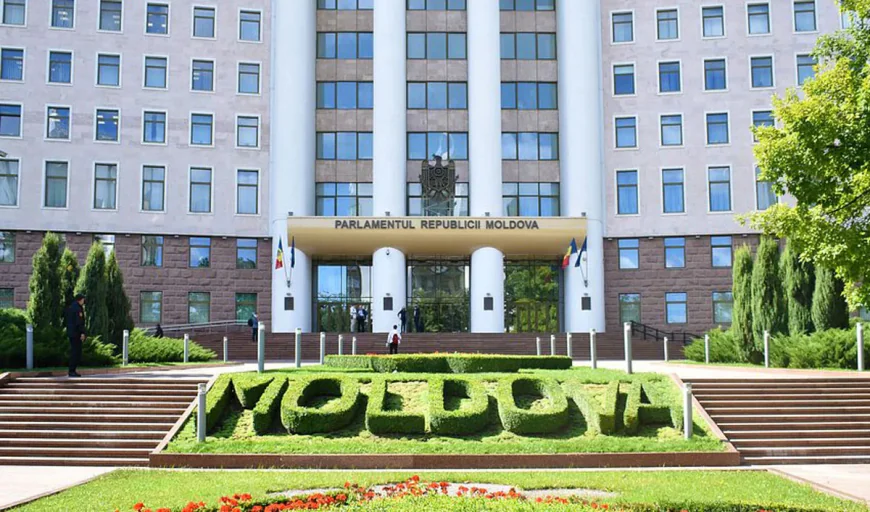
CHISINAU, MOLDOVA — Former Deputy Prime Minister Ivan Gutu proposed the creation of a bicameral parliament as a strategic and realistic solution for the long-standing reintegration of the Transnistrian region into Moldova.
The proposal, unveiled during a recent roundtable titled “Prospects of Moldova’s Reintegration,” suggests that granting Transnistria an autonomous status with broad rights—comparable to the existing model in Gagauzia—could facilitate a stable transition. According to Gutu, this framework is entirely compatible with the current legal structure of Moldova, potentially bypassing the need for arduous and politically sensitive constitutional amendments.
The bicameral structure and regional representation
Ivan Gutu, who also serves as the Chairman of the public association “Altă Moldova – Other Moldova,” emphasized that a legislative overhaul is necessary to ensure long-term stability. He proposed that Moldova transition from its current unicameral system to a bicameral parliament, consisting of a Chamber of Deputies and a Chamber of Regions.
This structure is designed to guarantee that representatives from all administrative regions have a direct and influential voice in national decision-making processes. Gutu argued that such a system would provide the necessary security guarantees for Transnistrian leaders, as their region would have a formalized role in the upper house of the legislature. Furthermore, he suggested that the leaders of these autonomous regions should be granted seats within the national government to strengthen the institutional links between central and local authorities.
Reintegration without constitutional deadlock
One of the most significant advantages of this formula, as noted by Gutu, is its administrative feasibility. Reintegrating a breakaway region often requires a complete redrafting of a nation’s constitution, a process that can take years and frequently ends in political deadlock. However, Gutu maintains that his model can be implemented within the existing legal framework of a unitary state.
By designating other regions of Moldova as "territorial autonomies" with balanced legal frameworks, the state can create a uniform system of equality. Gutu pointed out that bicameral structures are not a radical departure from regional norms, citing Romania and Belarus as neighboring examples where such systems currently function. He believes these models can be successfully adapted to meet the specific socio-political realities of Moldova.
Strengthening the unitary state
During the roundtable, Gutu described these proposals as a "concrete and realistic step" toward consolidating Moldova as a functional unitary state. He argued that the Transnistrian issue has remained frozen largely because of a lack of institutional guarantees for the region’s representatives. By creating a Chamber of Regions, the central government offers a permanent platform for dialogue and veto power on specific regional issues, which could diminish the influence of separatist rhetoric.
The proposal also aims to address the concerns of other ethnic and territorial groups within Moldova. By providing a clear and balanced legal framework for all regions, the government can prevent future friction and ensure that the reintegration of Transnistria does not lead to the marginalization of other areas. Gutu insisted that this approach would build "strong legal and institutional ties" that are currently missing in the fragmented political landscape.
A call for political analysis
The roundtable, which brought together various economic and political experts, concluded with a call for the current political class to analyze Gutu’s suggestions. The "Other Moldova" association intends to push for a broader public discourse on bicameralism as the 2026 political cycle progresses. Gutu noted that the primary goal is to move the conversation away from abstract peace talks and toward tangible institutional reforms that the Transnistrian side might find acceptable.
Economic considerations also play a role in this proposal. As a Doctor of Economics, Gutu highlighted that a stable, reintegrated state would be far more attractive to foreign investors. The current "frozen" status of the region acts as a significant deterrent to large-scale infrastructure projects and international trade agreements. A bicameral system that provides legal certainty could, therefore, serve as a catalyst for national economic growth.
As Moldova continues to navigate its path toward European integration, the resolution of the Transnistrian conflict remains a key requirement. Gutu’s model suggests that the solution may lie not in international intervention alone, but in a fundamental restructuring of how Chisinau shares power with its diverse regions. The political class now faces the task of determining whether they are willing to share legislative authority in exchange for territorial integrity.
What's Your Reaction?
 Like
0
 Dislike
0
 Love
0
 Funny
0
 Wow
0
 Sad
0
 Angry
0

Editor | Wise News Press — Delivering accurate, timely global news with integrity, insight, and editorial responsibility.














Comments (0)