



Cem Özdemir nears historic win in Germany's state election
Cem Özdemir could become Germany's first state premier of Turkish descent as he faces a tight race against the CDU in Baden-Württemberg's election.


By Ahmet Taş | Wise News Press
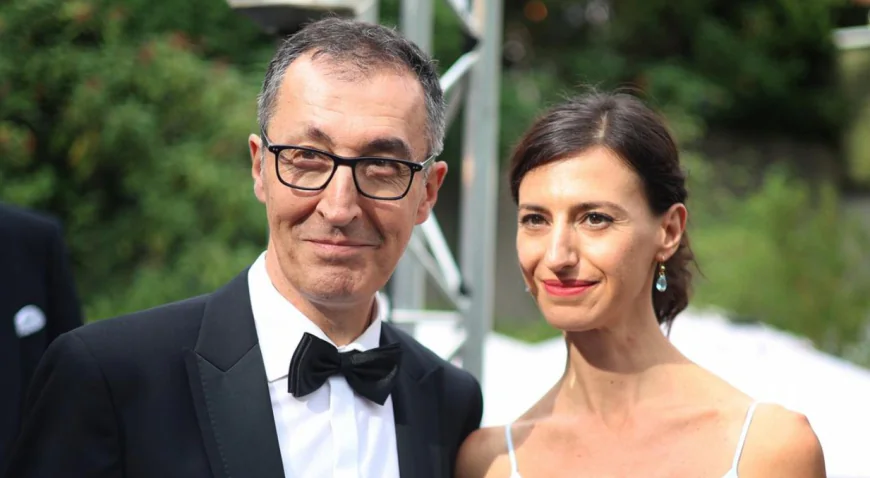
STUTTGART, GERMANY — Cem Özdemir, a prominent Green Party politician, is on the verge of making history as he competes to become the first state premier of Turkish descent in Germany during this Sunday's pivotal election in Baden-Württemberg.
The race in Germany’s industrial heartland is neck-and-neck between the experienced Özdemir and Manuel Hagel, the young challenger from the conservative Christian Democratic Union (CDU), with recent polls suggesting a statistical dead heat. Özdemir, who has served in federal politics since 1994 and held the roles of Minister of Agriculture and Minister of Education and Research, now stands at the most critical juncture of his three-decade career.
From humble beginnings to the top
Speaking from the Green Party headquarters in Stuttgart, Özdemir reflected on his journey, which began with his parents' migration to Germany decades ago. His mother arrived from Istanbul and his father from Tokat; they met in Bad Urach, where Özdemir was born in 1965.
"My mother came to Germany independently of my father, which was unusual for that time," Özdemir noted, describing his upbringing as the "classic struggle of a working-class child". After a rough start in primary school, he completed vocational training before finishing his higher education, a path he says taught him that anyone can find their way if given the opportunity.
His political spark was ignited during his school years, specifically through a campaign to save a local train line that was slated for closure. While skeptics claimed the train would never run again, Özdemir and a group of young activists convinced the public and the press to fight back. Today, that train is not only operational but fully electric, serving as a permanent reminder to him that a few dedicated individuals can change the course of democracy.


Confronting authoritarianism and extremism
Although Özdemir entered politics focusing on environmental issues, his immigrant background frequently pulled him into debates regarding integration and migration during the 1990s. He admitted that while he wanted to talk about the climate, questions were almost always directed at his roots.
Today, however, he views his diverse background as a bridge between communities. He expressed deep emotion over the support he receives from various groups, including the Syriac community, Kosovar youth, and Greek organizations. "The fact that the Syriac community included my wife and me in their Sunday prayers is an honor," he said.
Yet, this inclusivity has made him a target for radical elements within the Turkish diaspora. Özdemir has faced intense negative campaigns from supporters of Ankara's authoritarian leanings. He remains undeterred, viewing the opposition from extremists as a badge of honor:


"Ultranationals and extreme religious groups are campaigning against me. This doesn't sadden me; on the contrary, it shows I am on the right path. If supporters of Trump, Putin, or Erdoğan are against me, then I am doing something right."
He emphasized that under his leadership, all minority groups—Alevis, Kurds, and non-Muslims—would be under the state's protection. He drew a sharp contrast with the political climate in Turkey, stating that while some choose to imprison those with differing opinions, such a mindset will never be allowed to take root in Baden-Württemberg.
The automotive industry's economic crossroads
Baden-Württemberg is the engine room of the German economy, home to automotive giants like Mercedes-Benz and Porsche. Consequently, economic security is the top priority for the 7.7 million voters heading to the polls. Özdemir acknowledged the severe shocks the economy has faced, including the loss of Russian gas, fierce competition from China, and the threat of additional tariffs from the United States.
"Our economy and industry are built on exports," Özdemir explained, noting that the automotive sector must move quickly to survive the challenge of cheaper Chinese electric vehicles. His platform focuses on reducing bureaucracy and improving infrastructure to restore competitiveness. He argues that the state government must work in tandem with the automotive sector and labor unions to ensure the industry transitions successfully for future generations.
On the subject of the far-right, Özdemir was uncompromising. With the AfD (Alternative for Germany) polling at approximately 18-20%, he ruled out any possibility of a coalition. He argued that cooperating with the far-right "shrinks liberal democracy and grows extremism," citing examples from neighboring Austria. However, he made a distinction between the party leadership and its voters, stating it is the government's duty to listen to citizens who feel unheard.
Record voter turnout and youth engagement
The upcoming election marks the first of five state elections in Germany this year and introduces several historic changes to the voting process. For the first time, the voting age has been lowered from 18 to 16, allowing approximately 650,000 young people to cast their ballots for the first time.
The total number of eligible voters has reached a record 7.7 million in the state of 11.5 million people. Under the German system, voters will cast two ballots: one for a local district candidate and one for a party list. The state parliament, which currently holds 154 seats, requires parties to meet a 5% threshold to enter.
As the "Iran war" continues to cast a shadow over global stability, Özdemir also touched on international affairs, expressing his hope that the people of Iran—whom he described as a "society desiring freedom"—might one day be free from dictatorship.
Whether Özdemir’s pragmatic, centrist Green platform can hold off the CDU's surge will be decided this Sunday. His supporters hope that his "mosaic" approach to society will prove that Germany is ready for a premier who reflects its modern, diverse reality.
What's Your Reaction?
 Like
0
Like
0
 Dislike
0
Dislike
0
 Love
0
Love
0
 Funny
0
Funny
0
 Wow
0
Wow
0
 Sad
0
Sad
0
 Angry
0
Angry
0

Editor | Wise News Press — Delivering accurate, timely global news with integrity, insight, and editorial responsibility.














Comments (0)